
Real-World AI Token Success Stories: How Market Fit Turns Concepts into Powerhouses
Exploring breakthrough AI tokens that found their niche, scaled rapidly, and transformed bold ideas into industry-leading success.

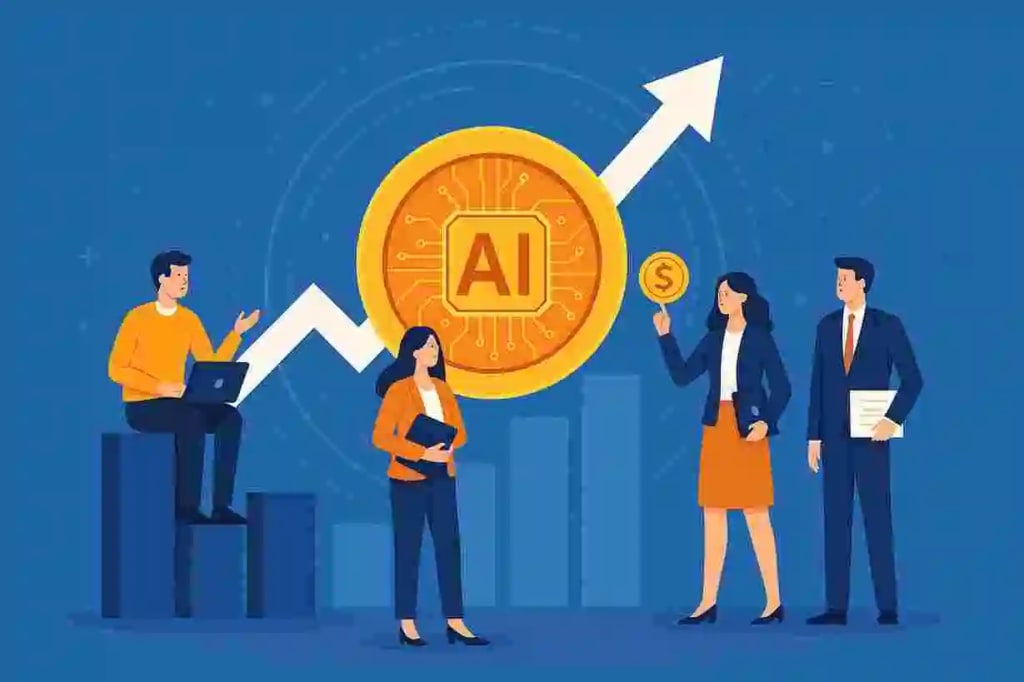
In the early days of blockchain adoption, token projects often thrived on speculative buzz, attracting large volumes of short-term investment without offering meaningful utility. As the market matured, that approach began to falter. Today’s token investors and users demand more than just whitepapers and lofty promises they want to see evidence of real-world application, ongoing usage, and measurable impact. This is particularly true in the rapidly emerging space of AI-powered tokens, where the fusion of artificial intelligence and blockchain technology has the potential to unlock transformative possibilities. However, only those projects that achieve genuine market fit where a token is deeply woven into a valuable ecosystem are proving to be sustainable success stories.
Understanding what separates these thriving AI token initiatives from those that fade away requires a close look at their underlying strategies. It means examining how they solve real problems, the ways they embed their tokens into essential processes, and how they foster strong, participatory communities. This blog explores the elements that define market fit for AI tokens and shares real-world examples that demonstrate how the right combination of utility, trust, and engagement can turn a concept into a long-term growth engine.
Defining Market Fit in the AI Token Era
Market fit for AI tokens goes far beyond exchange listings and temporary price surges. It is about achieving a sustainable alignment between the token’s purpose and the needs of its ecosystem. In successful cases, this alignment is visible in the daily use of the token, the consistency of network activity, and the depth of community involvement. Holders are not simply speculating on future gains they are actively using tokens to access services, stake in governance systems, or contribute data and computing resources.
True market fit also means that the AI token addresses a tangible problem in a way that competitors cannot easily replicate. In the AI space, this could mean enabling decentralized compute marketplaces, ensuring secure data sharing for model training, or providing incentives for community-driven AI development. These use cases ground the token in reality, making it indispensable to its user base. When a token is essential for performing a core function rather than being an optional payment method its demand becomes self-sustaining.
The DNA of Successful AI Token Projects
While no two AI token projects are identical, the most successful share a set of underlying characteristics. They are born out of clear, real-world problems that require both blockchain’s transparency and AI’s computational power. These projects build their tokens into the heart of the system from day one, ensuring that anyone engaging with the network must interact with the token. This could be through staking mechanisms that secure the network, fee payments for accessing AI tools, or rewards for providing valuable resources like training datasets or compute cycles.
In addition, thriving AI tokens focus on user experience from the earliest stage. Rather than locking utility behind complex onboarding processes, they allow new participants to immediately benefit from the ecosystem. This inclusivity attracts diverse participants, from developers and researchers to businesses and casual users. Over time, the token becomes not only a functional asset but also a symbol of belonging within the community. The result is an ecosystem where participants are not passive investors but active contributors whose engagement reinforces the token’s value.
Case Study: RNDR – The Compute-Backed Token
One of the most striking examples of AI token success comes from RNDR, a token tied to the Render Network. This decentralized marketplace connects creators and developers in need of GPU power with providers who have spare computational resources. In the age of AI model training, 3D rendering, and large-scale simulations, GPU power is both scarce and expensive. RNDR solves this by enabling a peer-to-peer exchange, with the RNDR token acting as the medium of transaction.
The genius of this model lies in its direct link between token demand and real utility. Every time a user rents GPU power, they must pay in RNDR. This ensures that demand for the token correlates directly with the demand for GPU compute. As AI and rendering workloads expand globally, RNDR benefits from an organic growth cycle. The platform’s adoption has been driven not by speculative hype but by genuine demand for the service it facilitates. This utility-driven approach has positioned RNDR as a standout in both the AI and blockchain sectors.
How Community Shapes Token Longevity
Even with a solid use case, an AI token’s long-term viability hinges on the strength of its community. A token may have robust technology and a compelling problem-solution fit, but without a committed base of users, developers, and advocates, growth can stall. Successful AI token projects understand this and actively cultivate their communities through transparent governance, incentive programs, and open communication channels.
Community involvement is often formalized through governance tokens that allow holders to propose and vote on network upgrades or operational decisions. This shared decision-making structure fosters loyalty, as members feel a sense of ownership in the project’s direction. In the AI token space, community governance can shape decisions about model development priorities, privacy protections, or partnership strategies. By giving token holders real influence, projects not only keep engagement high but also align incentives between developers and users.
The Importance of Trust and Transparency
Trust is another essential pillar for AI token success. Given the technical complexity of AI-blockchain integrations, users need confidence that the system is secure, compliant, and well-managed. Leading projects invest in independent security audits for their smart contracts, publish detailed technical documentation, and maintain open repositories where code can be reviewed. Legal clarity, particularly around compliance with evolving regulations, further reassures stakeholders that the project is built for longevity.
This transparency extends beyond technical and legal matters. Regular updates on milestones, partnerships, and usage metrics help maintain community trust. Rather than hiding behind vague promises, successful AI token teams are willing to share hard data even when it reveals challenges. This openness not only builds credibility but also invites the community to contribute to problem-solving.
Scaling Utility Through Partnerships
AI token adoption often accelerates through strategic partnerships that expand the token’s reach and relevance. By integrating with complementary platforms, successful projects can access new user bases without diluting their core mission. For instance, a decentralized AI compute marketplace might integrate with cloud service providers, enabling seamless access to both centralized and decentralized resources. Similarly, an AI data-sharing network could partner with research institutions to attract high-quality datasets and contributors.
These partnerships create a reinforcing loop: as more organizations rely on the network, token demand rises, which in turn supports further development and partnership opportunities. This is particularly important in AI, where data and compute needs are vast, and collaboration is often essential for innovation.
Measuring Success Beyond Price
A critical mistake in evaluating AI token projects is focusing solely on token price. While market valuation is important, it is only one metric among many that indicate health and sustainability. More meaningful measures include active wallet counts, transaction volume, staking participation rates, and the growth of on-chain applications. For AI tokens specifically, metrics like compute hours processed, datasets contributed, or model training jobs completed can provide a clearer picture of true adoption.
When these operational metrics show steady growth, they often precede price appreciation. By the time the broader market takes notice, the project has already established a foundation of real utility. This highlights the importance for both builders and investors to prioritize adoption indicators over short-term market movements.
Lessons for Future AI Token Builders
The real-world success stories of AI tokens like RNDR offer valuable guidance for new entrants in the space. Builders must start with a problem worth solving, ensure the token has an indispensable role in the solution, and design systems that encourage active participation. Security, compliance, and transparency are non-negotiables, as they underpin trust and attract serious stakeholders. Community engagement should be baked into the project’s DNA, with governance structures that empower rather than sideline token holders.
Finally, sustainable growth requires patience and a focus on utility. In a market that still rewards hype cycles, it can be tempting to chase short-term visibility at the expense of long-term adoption. The most enduring AI token projects resist this temptation, investing instead in infrastructure, partnerships, and features that expand real-world relevance.
Conclusion
AI tokens represent one of the most exciting intersections of technology in recent years. By combining blockchain’s decentralized trust model with AI’s transformative capabilities, they have the potential to reshape industries from content creation to scientific research. Yet the projects that will define this space in the years to come are not those with the flashiest marketing campaigns or the largest initial raises they are the ones that achieve true market fit.
The real-world success stories emerging today show that when an AI token becomes essential to performing valuable tasks, integrates trust and transparency, and builds an active, empowered community, it transforms from a speculative asset into a foundational component of its ecosystem. For builders, this means that the path to success lies not in chasing trends but in creating lasting value. For participants, it is a reminder that the best opportunities often lie in the projects solving real problems in ways that no one else can.
About the Creator
Jack santo
I am a Blockchain, Crypto, NFT, Metaverse, etc., enthusiast.
Keep reading
More stories from Jack santo and writers in 01 and other communities.
How to Create a Successful Token Marketing Plan for New Crypto Projects?
Creating a successful token marketing plan for new crypto projects is critical to gaining traction in a competitive and evolving market. As blockchain technology continues to transform various industries, crypto tokens whether they represent a cryptocurrency, utility, or asset require a strategic approach to marketing. Given the volatility and innovation of the space, a well-planned and executed marketing strategy is essential for ensuring visibility, building a community, and driving the adoption of your project. This is where an effective Token Marketing Service comes into play, offering specialized expertise in promoting new tokens, creating buzz, and reaching the right audience.
By Jack santo5 months ago in 01
Cracking a Gmail Account: Here Are the Hackers’ Methods
Every year, millions of Gmail accounts fall victim to cyberattacks, exposing personal, professional, and financial data to critical risks. According to Google’s annual security report, over 100,000 accounts are reported as compromised each month — and this figure represents only a fraction of actual incidents.
By Alexander Hoffmann5 days ago in 01
Saudi Arabia Outdoor LED Lighting Market Size and Forecast 2025–2033
Saudi Arabia Outdoor LED Lighting Market at a Glance The Saudi Arabia Outdoor LED Lighting Market is expected to reach US$ 957.4 million by 2033, rising from US$ 318.96 million in 2024, registering a strong CAGR of 12.99% during 2025–2033. This expansion is primarily driven by large-scale infrastructure development, mega smart-city projects such as NEOM, The Line, and Qiddiya, and the country’s accelerating transition toward energy-efficient and sustainable lighting systems. Supportive government regulations, declining LED prices, and growing public awareness about energy conservation are further strengthening market momentum.
By Renub Research4 days ago in 01
Wild Card Weekend Recap: What Happens Now?
I think I figured out why I love Wild Card Weekend so much. It's because it's the first playoff anything of the calendar year. The NFL season starts in the fall, and once upon a time, the champion was crowned either on or slightly before New Year's. The evolution of the NFL schedule has resulted in the playoffs starting just into the New Year, and currently, the final week of the season falls on the first weekend of the New Year, with Wild Card Weekend coming a week after that. So yes, chronologically, the NFL's Wild Card Weekend serves as the first playoff anything of the calendar year.
By Clyde E. Dawkins7 days ago in Unbalanced



Comments
There are no comments for this story
Be the first to respond and start the conversation.