
Prefabricated Warehouse vs. Modular Building: What’s the Difference?
Prefabricated Warehouse vs Modular Building
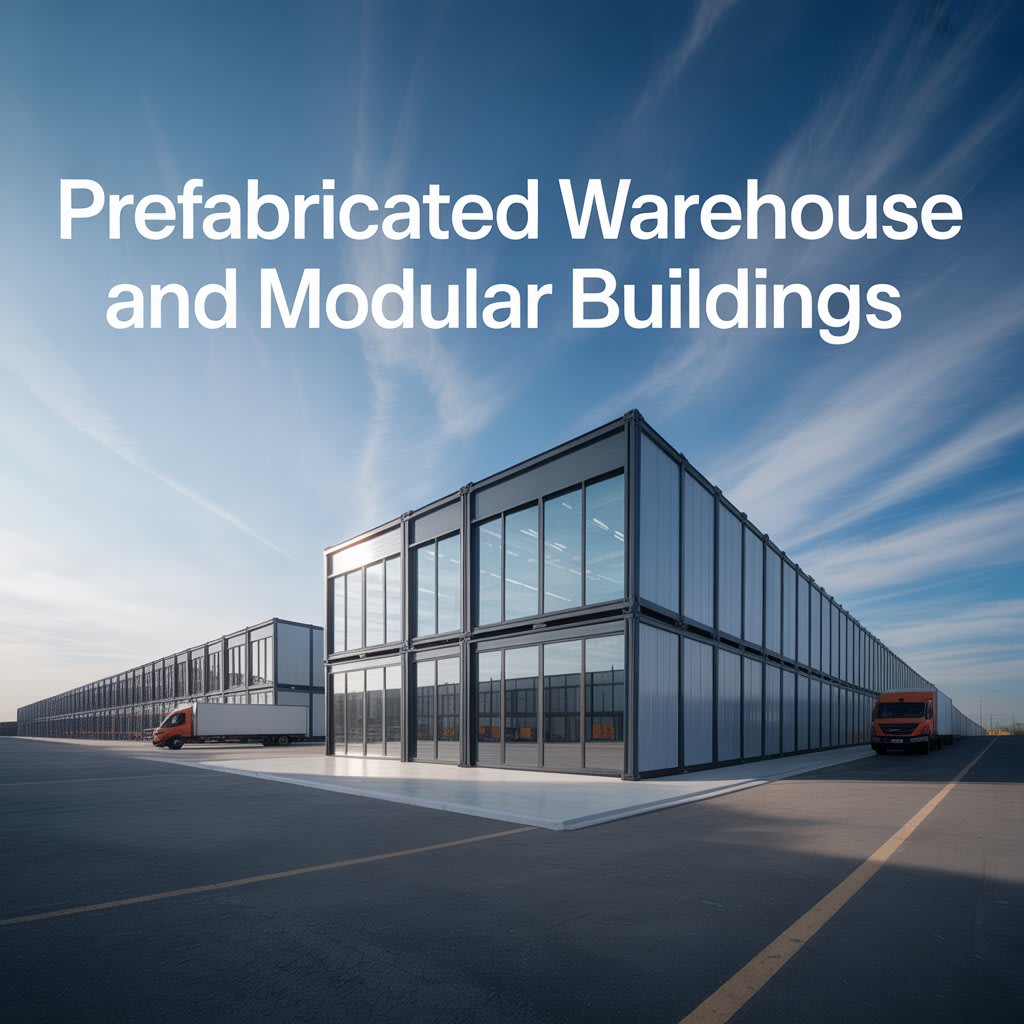
When it comes to rapid, cost-effective construction solutions, two terms frequently come up: Prefabricated Warehouse and Modular Building. While these are often used interchangeably, they are not the same. Both construction methods offer speed, flexibility, and savings over traditional builds, but their applications, design considerations, and construction processes differ.
Whether you're a logistics company planning to expand, a manufacturer eyeing storage solutions, or an investor considering commercial real estate, understanding the distinctions between these two can help you make an informed decision.
Understanding Prefabricated Warehouses
A Prefabricated Warehouse refers to a large-scale industrial or commercial structure that is built using prefabricated steel or metal components. These components are manufactured off-site in a controlled environment and then assembled on location.
These warehouses are primarily used for:
- Bulk storage of goods and equipment
- Supply chain and logistics facilities
- Cold storage units
- Manufacturing operations
Key features of prefabricated warehouses include:
- Long spans without interior columns for better space usage
- Steel frame construction with high durability
- Customization in terms of height, width, insulation, and design
Prefabricated warehouses are engineered to handle heavy-duty operations and are often chosen for their strength, speed of assembly, and low lifetime maintenance.
Understanding Modular Buildings
Modular buildings, on the other hand, are constructed using modules or sections that are produced in a factory setting and then transported to the building site for assembly. These structures are most commonly used for:
- Office spaces
- Educational buildings
- Clinics or medical facilities
- Temporary or semi-permanent housing
Modular construction allows for both temporary and permanent structures, depending on the design and materials used. Each module is self-contained and can be connected side by side or stacked vertically to form multi-story structures.
Key Differences Between Prefabricated Warehouses and Modular Buildings
Let’s dive deeper into what sets these two construction styles apart.
1. Purpose and Usage
- Prefabricated Warehouses are mainly designed for industrial and logistical operations, often requiring wide-open interiors and heavy equipment handling.
- Modular Buildings are more suited for human occupancy, such as offices, classrooms, and dormitories.
2. Design and Structure
- Warehouses typically feature high ceilings, reinforced flooring, and ventilation systems tailored for industrial needs.
- Modular buildings prioritize space partitioning, climate control, and comfort features such as windows, electrical fittings, and insulation.
3. Construction Method
- Prefabricated warehouses are constructed using large steel components like beams, panels, and columns, which are assembled using cranes and bolting mechanisms.
- Modular buildings are built section by section in a factory, then transported and installed like Lego blocks.
4. Timeframe and Installation
- Both offer significantly faster build times than traditional construction.
- Modular buildings often take slightly less time due to factory-finished interiors and fewer on-site finishing requirements.
5. Flexibility and Scalability
- Modular structures can be expanded or relocated with ease, making them ideal for growing businesses.
- Prefabricated warehouses can also be extended, but the process usually involves structural recalculations and larger components.
6. Cost Consideration
- Both options offer cost advantages due to minimized labor and time.
- Modular buildings may have higher per-square-foot costs due to internal finishes, while prefabricated warehouses offer better economies of scale for large-volume spaces.
When Should You Choose a Prefabricated Warehouse?
Opt for a Prefabricated Warehouse if:
- You require large, open-span areas for storage or machinery
- Your operations involve logistics, bulk goods, or cold chain requirements
- Durability and weather resistance are a priority
- You need a long-term solution that can handle heavy-duty usage
These warehouses are ideal for companies looking for robust infrastructure without the delays and costs associated with traditional concrete buildings.
When Is a Modular Building the Better Option?
Choose modular buildings when:
- The focus is on human-centric spaces (like offices, schools, or clinics)
- You need flexibility to relocate or expand later
- The project has time or site constraints (like remote locations or urban plots)
- You want minimal site disruption during construction
Modular buildings are highly adaptable and often favored in public infrastructure projects, disaster relief, or business expansions that require quick deployment.
Are There Overlaps?
Yes—in some cases, businesses use a Prefabricated Warehouse as part of a larger modular infrastructure. For example, a prefab warehouse may serve as a logistics hub, while adjoining modular units act as administrative or staff facilities.
Conclusion: Choosing the Right Fit
While both prefabricated warehouses and modular buildings share some advantages, like speed, cost-efficiency, and factory-controlled quality, their uses and construction approaches are different.
A Prefabricated Warehouse is your go-to solution if your business needs large, durable, and long-lasting industrial space. Meanwhile, modular buildings shine when you need versatile, people-focused environments that are quick to deploy and easy to customize.
Understanding these differences can help you make smarter construction decisions that align with your operational goals, timelines, and budgets. As off-site construction continues to revolutionize the industry, choosing the right method has never been more important.
About the Creator
Keep reading
More stories from writers in 01 and other communities.
US Lawmakers Push Bill to Screen Sales of Potentially Dangerous Synthetic DNA
In a move reflecting growing concern over the rapid advances in biotechnology, U.S. lawmakers have introduced legislation that would regulate the sale of synthetic DNA, a step experts say is essential to prevent potentially dangerous materials from falling into the wrong hands. The proposed bill, unveiled last week in Congress, would establish stricter screening requirements for companies that synthesize and sell DNA sequences, particularly those that could be used to create harmful pathogens. Synthetic DNA, often referred to as “gene fragments,” is a tool widely used in research laboratories, medical development, and biotechnology industries. While the technology has revolutionized medicine, allowing scientists to create vaccines, engineer microbes for environmental cleanup, and develop personalized therapies, it also carries inherent risks. Certain DNA sequences can be misused to produce viruses or toxins, making them a potential bioterrorism threat. Currently, the United States has guidelines in place for screening DNA orders, primarily led by the International Gene Synthesis Consortium (IGSC), a voluntary industry group. However, lawmakers and biosecurity experts have argued that voluntary compliance is insufficient to prevent malicious actors from obtaining harmful genetic material. The new bill seeks to codify these screening processes into law, ensuring that companies selling synthetic DNA are legally obligated to verify the identity and intent of customers. The legislation specifically targets sequences that could be used to manufacture dangerous pathogens, including those listed as select agents by the Centers for Disease Control and Prevention (CDC). Companies would be required to conduct thorough background checks and maintain detailed records of all orders. Violations could result in significant fines, criminal charges, or revocation of business licenses. “Advances in synthetic biology are outpacing the regulatory framework,” said Senator Elizabeth Warren, one of the bill’s co-sponsors. “We have a responsibility to ensure that these powerful tools are used to save lives, not put them at risk. This legislation is about striking a balance between scientific innovation and public safety.” Supporters of the bill argue that it is a proactive measure. The accessibility of DNA synthesis technology has grown exponentially over the past decade. Previously, creating genetic material for research was limited to well-funded laboratories, but now, small startups and even hobbyists can order custom sequences online. While this democratization of science has many benefits, it also raises the potential for misuse. Experts warn that without proper oversight, individuals or groups could theoretically synthesize harmful viruses, making biosecurity a critical concern. The bill also emphasizes collaboration with federal agencies such as the Department of Health and Human Services (HHS) and the Federal Bureau of Investigation (FBI). These agencies would provide guidance on threat assessment and help ensure that companies follow rigorous screening protocols. Additionally, the legislation calls for periodic audits and reporting requirements, ensuring transparency and accountability in the rapidly evolving synthetic biology sector. Industry response to the proposed legislation has been mixed. Some biotech firms support the measure, recognizing that standardizing safety protocols could prevent dangerous incidents and increase public trust in synthetic biology. “We welcome clear guidelines,” said Dr. Amy Chen, CEO of Genomic Solutions Inc. “The vast majority of scientists are responsible, but having enforceable standards protects both the public and the integrity of the field.” However, some smaller companies and independent researchers have expressed concerns that overly strict regulations could stifle innovation. They argue that compliance costs may disproportionately impact startups and academic labs, potentially slowing progress in areas like gene therapy, synthetic vaccines, and agricultural biotechnology. The lawmakers behind the bill have acknowledged these concerns and are reportedly considering exemptions or support programs for small businesses to mitigate the impact. Biosecurity experts also note that legislation alone cannot completely eliminate risk. “No system is foolproof,” said Dr. Michael O’Connor, a synthetic biology policy specialist. “Determined actors could still attempt to bypass regulations. But a legal framework for screening orders creates accountability and reduces the chances of accidental or malicious misuse. It’s an important step forward.” The bill has bipartisan support, reflecting a shared recognition of the potential threats posed by synthetic biology. In recent years, concerns over biosecurity have intensified due to high-profile incidents involving laboratory accidents, unauthorized research, and discussions about engineered pathogens in academic publications. Lawmakers see the legislation as a timely response to a technological landscape that is changing faster than existing regulatory structures. Beyond national security, advocates argue that the legislation could have broader benefits. By establishing clear standards, it could foster international collaboration, encouraging other countries to adopt similar measures. Standardized screening could also reassure the public that synthetic biology is being conducted responsibly, potentially reducing fear and misinformation about emerging biotechnologies. The legislative process is expected to take several months, with committee hearings scheduled to explore both the technical aspects of DNA screening and the potential economic impacts on the biotech sector. Lawmakers are seeking input from scientists, industry representatives, bioethicists, and public health officials to ensure that the final version of the bill strikes an appropriate balance between safety and innovation. As synthetic biology continues to advance, the introduction of this bill highlights the ongoing challenge of governing powerful new technologies. The goal is to prevent misuse while allowing legitimate research and innovation to flourish. If passed, the legislation would represent a significant step in ensuring that synthetic DNA—one of the most powerful tools in modern science—is handled responsibly and safely. Ultimately, the bill underscores a broader principle: as science pushes the boundaries of what is possible, society must develop mechanisms to manage risk without stifling discovery. Striking that balance is never easy, but proponents argue it is necessary to protect public health, maintain national security, and support the continued growth of the biotechnology industry. With Congress taking these measures seriously, the U.S. could set a global precedent for regulating synthetic DNA sales, showing that responsible oversight can coexist with scientific progress. As lawmakers, scientists, and industry leaders continue to collaborate, the hope is that society will benefit from the promise of synthetic biology while minimizing the risks inherent in its misuse.
By Saboor Brohi 3 days ago in 01
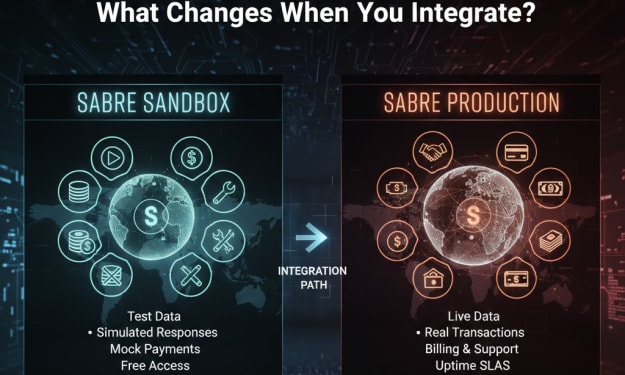
Sabre API Sandbox vs Production: What Changes When You Integrate?
Building a travel booking platform is exciting, but the real challenge begins when you move from testing to handling real users and real bookings. Many teams feel confident while working in a test environment, only to face unexpected issues when they go live. This is especially common when working with travel technology platforms, where data accuracy, pricing, and booking behavior can change dramatically outside a testing setup.
By Nico Gonzalez6 days ago in 01
Rachel Reviews: Lunch Tales: Teagan by Lucille Guarino
Well, I did enjoy this! Sometimes, all you need is just great storytelling and this is what Lucille Guarino delivers here. There's no big message to this book; it's just about folks and families, living their lives and coping with everything that's being thrown at them and finding their way. But when it's done well, like it is here, then you have characters to whom you can relate, tension which leaves you rooting for a better outcome, attraction which has your heart racing and an urge, as a reader, to see the characters happy with the people with whom they belong.
By Rachel Deemingabout 9 hours ago in BookClub



Comments
There are no comments for this story
Be the first to respond and start the conversation.