
Nvidia’s Project DIGITS: Your Personal AI Supercomputer
Revolutionizing AI development with desktop-sized power.

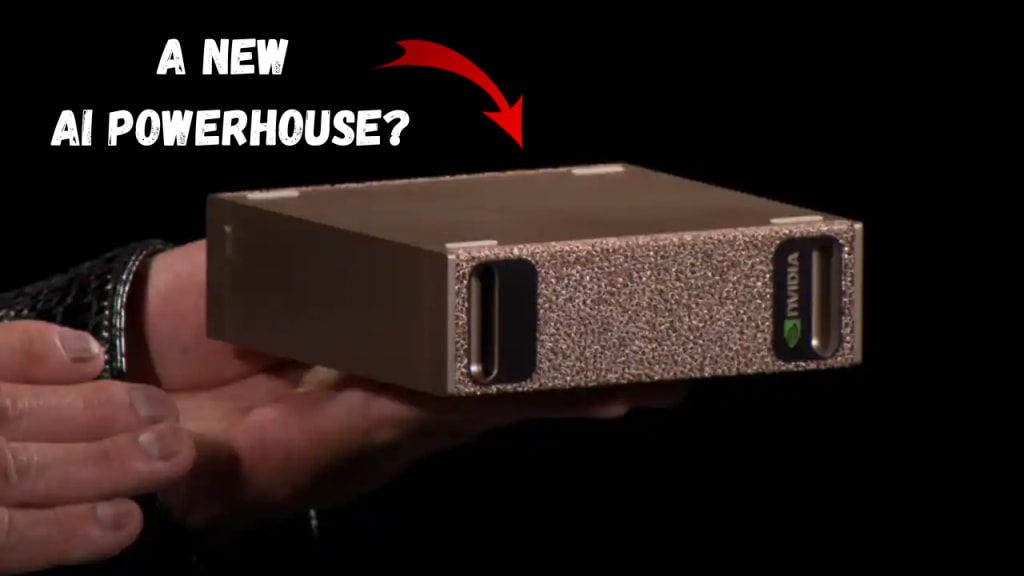
Know About Nvidia's Project DIGITS: The Personal AI Supercomputer Revolution
With its latest creation, Project DIGITS, Nvidia, a long-time pioneer in the computer industry, has the potential to drastically change how humans engage with artificial intelligence. Imagine being able to train sophisticated AI models, analyse enormous datasets, and spur innovation from your home office or lab with the computational capacity of a data centre compressed into a stylish desktop device. The launch of Project DIGITS at CES 2025 will mark a significant change in the democratisation of AI. Regardless of your background—developer, researcher, student, or tech enthusiast—this presentation addresses all you need to know about Nvidia's ground-breaking breakthrough.
________________________________________
What Is Project DIGITS? The Desktop Powerhouse
Project DIGITS is Nvidia’s answer to the growing demand for accessible, high-performance AI computing. Think of it as a personal AI supercomputer—a compact, energy-efficient machine that packs the muscle of a cloud server into a device smaller than a gaming PC. Starting at $3,000, it’s designed to empower users to train complex AI models locally, bypassing the need for expensive cloud subscriptions or corporate-grade infrastructure.
At its core, Project DIGITS is built to democratize AI development. Historically, only well-funded organizations could afford the computing power required for cutting-edge AI research. With Project DIGITS, Nvidia aims to level the playing field, enabling indie developers, universities, and startups to experiment with large language models (LLMs), robotics, healthcare analytics, and more—all from their desks.
________________________________________
Why Project DIGITS Matters: Bridging the AI Divide
To understand why Project DIGITS is revolutionary, consider the challenges of today’s AI landscape:
• Cloud Dependency: Training AI models often requires renting cloud servers, which can cost thousands of dollars monthly.
• Latency Issues: Uploading data to the cloud and waiting for results slows down experimentation.
• Resource Barriers: Small teams lack access to the hardware needed for ambitious projects.
Project DIGITS tackles these pain points head-on by offering:
• Localized Power: Run models instantly without waiting for cloud processing.
• One-Time Cost: A $3,000 investment replaces recurring cloud fees.
• Energy Efficiency: Consumes far less power than traditional data centers.
Nvidia isn’t just selling hardware—it’s fostering a new wave of innovation by putting industrial-strength tools in the hands of everyday creators.
________________________________________
Under the Hood: The Hardware Powering Project DIGITS
What makes Project DIGITS so powerful? Let’s dissect its groundbreaking components:
1. The GB10 Grace Blackwell Superchip: A Beast in a Box
The heart of Project DIGITS is the GB10 Grace Blackwell Superchip, a custom system-on-a-chip (SoC) co-designed with MediaTek. This hybrid marvel combines:
• Blackwell GPU Architecture: Nvidia’s latest GPU tech, optimized for AI workloads.
• 20-Core Arm-Based Grace CPU: Delivers raw processing power for multitasking.
• 1 Petaflop Performance: That’s 1 quadrillion operations per second at FP4 precision—enough to train models with 200 billion parameters.
To put this in perspective, the GB10’s performance rivals some of the world’s fastest supercomputers from just a decade ago—all while sipping power like a high-end desktop.
2. Unified Memory: No More Data Traffic Jams
Project DIGITS features 128GB of unified memory, shared seamlessly between the CPU and GPU. Traditional systems force data to shuffle between separate memory pools, creating bottlenecks. With unified memory, tasks like training neural networks or rendering 3D simulations happen faster because the hardware acts as a cohesive unit.
3. Storage and Scalability: Grow as You Go
• 4TB NVMe SSD Storage: Store massive datasets (like medical imaging libraries or video archives) locally for rapid access.
• Scalable Design: Link two DIGITS units via Nvidia’s ConnectX networking to handle models with up to 405 billion parameters—a feature previously reserved for server farms.
________________________________________
Software: The Brains Behind the Brawn
Hardware is only half the story. Project DIGITS ships with a curated AI software ecosystem to kickstart productivity:
1. Nvidia DGX OS: Linux, Optimized for AI
The machine runs on a custom Linux-based OS tailored for AI workflows. It supports popular tools like Docker and Kubernetes, making it easy to deploy containerized applications.
2. Pre-Installed Frameworks and Libraries
• PyTorch and TensorFlow: Build and train models using industry-standard frameworks.
• Jupyter Notebooks: Prototype ideas in an interactive coding environment.
• Nvidia NeMo: Fine-tune LLMs like GPT-4 or create custom chatbots.
• RAPIDS: Accelerate data science tasks with GPU-optimized pandas and scikit-learn.
3. Nvidia AI Enterprise Suite
This subscription-free package includes tools for model deployment, monitoring, and optimization. Think of it as a “AI developer’s toolbox” with everything from data labeling utilities to security features.
________________________________________
Real-World Applications: Who’s Using Project DIGITS?
Project DIGITS isn’t just theoretical—it’s already unlocking possibilities across industries:
1. Healthcare: Revolutionizing Diagnostics
Hospitals are using DIGITS to analyze 3D medical scans in real time, detecting tumors or anomalies faster than ever. Researchers can also process genomic data to identify disease markers, accelerating drug discovery.
2. Robotics: Training Smarter Machines
Startups are training autonomous drones and factory robots on DIGITS. By simulating environments and iterating models locally, developers reduce training time from weeks to days.
3. Creative Industries: AI-Driven Art and Design
Animators and game studios use DIGITS to render lifelike CGI or generate assets via tools like Stable Diffusion. A solo developer could create a blockbuster-quality game trailer without a render farm.
4. Academia: Teaching the Next Generation
Universities are integrating DIGITS into curricula, letting students experiment with LLMs and robotics—skills once limited to PhD candidates with server access.
________________________________________
Benefits vs. Challenges: Is Project DIGITS Right for You?
Pros
• Cost Savings: A one-time 3,000 purchase vs 10,000+ annually on cloud credits.
• Speed: No latency—test ideas instantly.
• Privacy: Sensitive data stays offline.
Cons
• Learning Curve: Requires basic AI/ML knowledge.
• Upfront Cost: Still pricey for hobbyists (though cheaper than cloud long-term).
________________________________________
The Future of Project DIGITS: What’s Next?
Nvidia plans to release DIGITS Nano, a scaled-down $1,500 version for educators and hobbyists, by 2026. They’re also expanding partnerships with open-source communities to build a library of plug-and-play AI models.
________________________________________
Final Thoughts: A New Era of Accessible AI
Project DIGITS isn’t just a product—it’s a movement. By placing supercomputing power on desktops worldwide, Nvidia is fueling a grassroots AI revolution. Whether you’re building the next ChatGPT competitor or analyzing climate data, Project DIGITS turns “what if” into “what’s next.” Ready to join the future?
________________________________________
OUR OTHER POSTS:-
1. Physics Wallah PiBook Review: Affordable Laptop for Students
2. Leonardo da Vinci: The Genius Who Shaped the Renaissance
3. Best Free AI Video Makers in 2025
5. How DeepSeek AI Was Created With a $6 Million Investment
FAQs About Nvidia’s Project DIGITS
1. What is Project DIGITS?
It’s a personal AI supercomputer by Nvidia, designed for developers, researchers, and students to run and train AI models locally.
2. How much does it cost?
Starting at $3,000, with options for upgrades like extra storage or memory.
3. What can it do?
It can train and run large AI models (up to 200 billion parameters) for tasks like language processing, robotics, and data analysis.
4. Do I need coding skills?
Basic AI/ML knowledge helps, but it comes with pre-installed tools like PyTorch and TensorFlow, plus tutorials for beginners.
5. Can I connect multiple units?
Yes! Two units can be linked for even more power, handling models with up to 405 billion parameters.
________________________________________
Please don’t forget to view our other POSTS.
About the Creator
Valuable Knowledge
See the growing technology of the world, Sub my profile to be connected to the world's Tech
Sub to Youtube Channel
https://www.youtube.com/@whatsnew9825?sub_confirmation=1
Keep reading
More stories from Valuable Knowledge and writers in 01 and other communities.
Top 10 Best Budget Smartwatches || Best budget smartwatches
Top 10 Budget Smartwatches in the USA: Affordable Tech for Every Lifestyle Smartwatches have evolved from luxury gadgets to essential tools for fitness, productivity, and staying connected. But you don’t need to splurge to get a reliable wearable. We’ve curated a list of the top 10 budget-friendly smartwatches in the USA, blending cutting-edge features, style, and value. Whether you’re a runner, a busy parent, or a tech minimalist, there’s something here for everyone.
By Valuable Knowledgeabout a year ago in 01
The Rise of AI Presentation Tools: Transforming the Way We Create Slides
Artificial intelligence is quietly reshaping how we work, learn, and communicate. One area where this shift is especially noticeable is presentation design. Creating slides used to mean hours of formatting, arranging content, and adjusting visuals. Today, AI-powered tools are simplifying that process, helping users turn ideas into polished presentations in a fraction of the time.
By charliesamuel2 days ago in 01
Understanding Behavioral Health: Why It Matters More Than Ever
Behavioral health is no longer a secondary conversation in healthcare — it is central to how we understand overall well-being. As awareness grows and stigma declines, more individuals, families, employers, and policymakers are recognizing that mental health, emotional wellness, and substance use treatment are essential components of a healthy society.
By Herrick Lipton4 days ago in 01
Review of 'Man on the Run'
My wife and I saw Man on the Run, a nearly 2-hour documentary on Amazon Prime, about Wings, Paul McCartney's group that flew around the world from shortly after The Beatles broke up in early 1970 to shortly after John Lennon was murdered at the end of 1980, making a Beatles reunion forever impossible.
By Paul Levinson6 days ago in Beat



Comments
There are no comments for this story
Be the first to respond and start the conversation.