
Navigating the Changing Trends in the UX World of Design and Development
Adapting Strategies for Evolving User Expectations
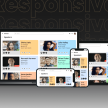

Staying ahead of the curve is crucial in the fast-paced realm of user experience (UX) design and development. Let's explore the evolving landscape of UX trends shaping digital experiences:
- Personalized User Experiences: One of the most significant trends in UX design is the shift towards personalized experiences. Today's users expect digital platforms to understand their preferences and behavior, delivering tailored content and recommendations. Personalization goes beyond simply addressing users by name; it involves leveraging data to create customized interfaces that cater to individual needs and interests.

- Mobile-First Design: With the rise of mobile devices, designing for mobile-first has become a standard practice. Mobile users now outnumber desktop users, making it essential to prioritize mobile experiences. Mobile-first design involves creating responsive layouts that adapt to various screen sizes and devices. By focusing on mobile usability and performance from the outset, designers can ensure that their interfaces are accessible and user-friendly across all platforms.

- Accessibility: Accessibility is a fundamental aspect of UX design that continues to gain importance. Designing interfaces that are accessible to all users, including those with disabilities, is not only a legal requirement but also a moral imperative. The Web Content Accessibility Guidelines (WCAG) provide a set of standards for creating accessible web content, covering aspects such as screen reader compatibility, keyboard navigation, and color contrast. By following these guidelines, designers can ensure that their interfaces are inclusive and usable for everyone.

- Voice User Interfaces (VUI): Voice user interfaces, such as voice-activated assistants and smart speakers, are becoming increasingly prevalent in today's digital landscape. Designing for VUI involves creating interfaces that understand and respond to natural language commands. Conversational design principles, such as providing clear prompts and error handling, are essential for designing intuitive VUI experiences. As voice technology continues to evolve, designers must stay informed about best practices and emerging trends in this area.
- AR/VR Integration: Augmented reality (AR) and virtual reality (VR) are revolutionizing the way users interact with digital content. From immersive gaming experiences to virtual product demonstrations, AR and VR offer endless possibilities for engaging user experiences. Designing for AR/VR involves creating 3D environments and interactions that feel natural and intuitive. As these technologies become more accessible, designers must explore ways to incorporate AR/VR into their design workflows.

- Minimalism and Simplification: In an age of information overload, minimalist design has emerged as a popular trend in UX. Minimalist interfaces are characterized by clean layouts, simple typography, and intuitive navigation. By reducing clutter and focusing on essential elements, designers can create interfaces that are visually appealing and easy to use. Simplification also extends to the content itself, with concise copywriting and clear messaging enhancing user comprehension.
- Microinteractions: Microinteractions are small animations or feedback loops that provide visual cues and enhance the user experience. From button animations to loading spinners, micro-interactions add a touch of personality and delight to interfaces. These subtle animations help guide users through the interface, providing feedback and confirmation. By incorporating micro-interactions into their designs, designers can create more engaging and interactive user experiences.
- Data-Driven Design: Data analytics are crucial in informing design decisions and optimizing user experiences. By analyzing user behavior and interaction patterns, designers can gain valuable insights into how users engage with their interfaces. A/B testing, heatmaps, and user surveys are just a few of the tools available for collecting and analyzing data. By leveraging data-driven design principles, designers can create interfaces that are not only visually appealing but also highly effective in achieving their goals.

- Dark Mode and Theming: Dark mode has become increasingly popular in recent years, with many users preferring dark interfaces for improved readability and reduced eye strain, especially in low-light environments. Designing for dark mode involves creating interfaces with dark color schemes and high-contrast elements. Additionally, offering customizable themes allows users to personalize their experience according to their preferences. Dark mode has become a standard feature in many apps and websites, and designers must consider it as part of their design strategy.
- Ethical Design: Ethical considerations are essential in modern UX design, as technology plays an increasingly significant role in people's lives. Designers must consider the ethical implications of their designs, ensuring that they prioritize user privacy, security, and well-being. This includes obtaining informed consent for data collection, being transparent about how user data is used, and designing interfaces that promote healthy usage habits. By designing ethically, designers can build trust with users and create experiences that enrich their lives positively.In conclusion, the UX world is dynamic, and embracing changing trends is essential for designing impactful digital experiences.
By staying informed and adaptable, designers and developers can create user-centric solutions that resonate with audiences in today's ever-evolving digital landscape.
About the Creator
Jimmy Franco
Hey, I'm Jimmy Franco, a passionate learner diving into UI/UX design. I'm eager to explore trends and design changes. Seeking resources and connections to learn and grow in this exciting field! Let's connect and innovate together! 🚀
Keep reading
More stories from Jimmy Franco and writers in 01 and other communities.
Is Building a TradeZella Clone the Right Move? Guide to Launch a Trading Platform
The trading digital environment has changed a lot over the years, and the traders now heavily depend on platforms that enable them to effectively monitor and analyze their trades. One of such platforms is the TradeZella, with its advanced trade journaling and analytics capabilities. To those who might be interested in coming up with a similar solution, a TradeZella Clone would be an effective place to start.
By Ibrahim Khan4 days ago in 01




Comments (1)
You crafted it well.