
Audit Evidence vs Audit Documentation: Key Differences Explained
A clear breakdown of how audit evidence and audit documentation differ and why both are essential for quality audits.

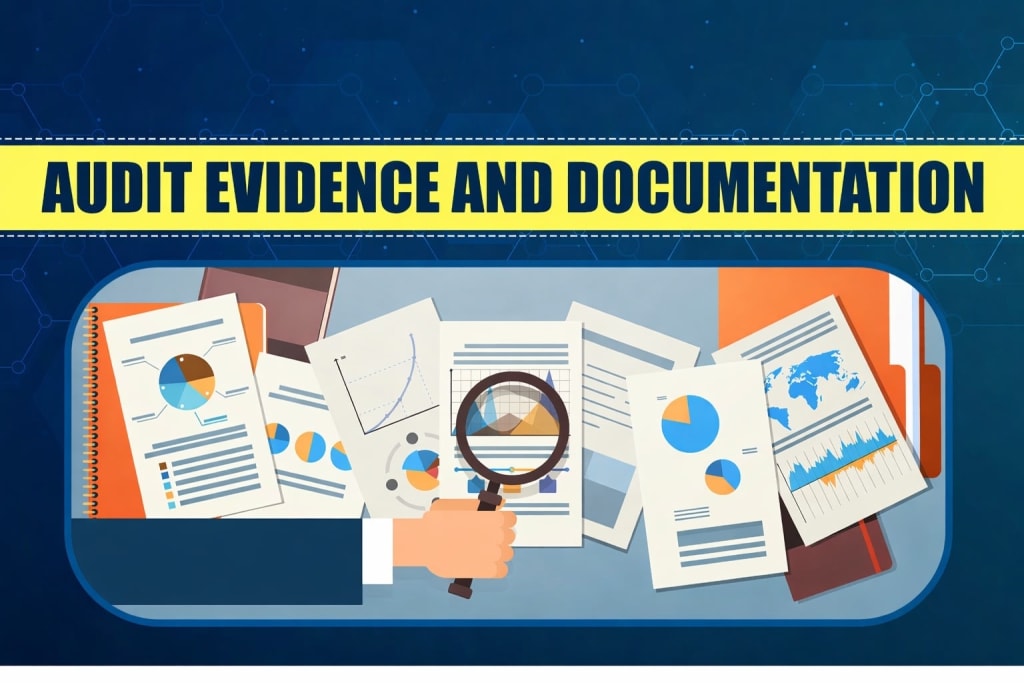
Audit evidence and audit documentation are closely connected concepts in auditing, but they serve different purposes in the audit process. Understanding their distinction is essential for auditors, Accounting students, and finance professionals who want to ensure compliance with international auditing standards and produce reliable audit reports.
This guide explains the meaning, differences, relationship, and practical examples of audit evidence and audit documentation in a clear, structured way.
What Is Audit Evidence?
Audit Evidence refers to the information an auditor collects to form an opinion on financial statements. It supports conclusions about whether financial records are free from material misstatement.
Core Characteristics of Audit Evidence
- Relevance - relates directly to audit objectives
- Reliability - trustworthy source and method
- Sufficiency - adequate quantity of information
- Appropriateness - quality and credibility
Common Sources of Audit Evidence
- Physical inspection of inventory
- External confirmations from third parties
- Analytical procedures
- Inquiry and observation
- Recalculation and reperformance
Audit evidence is the foundation of the auditor’s opinion. Without sufficient and appropriate evidence, an audit conclusion cannot be justified.
What Is Audit Documentation?
Audit documentation is the written record of audit procedures performed, evidence obtained, and conclusions reached. It provides proof that the audit was planned and executed according to professional standards.
Key Elements of Audit Documentation
- Audit procedures performed
- Evidence collected
- Judgments made by the auditor
- Conclusions reached
- Working papers and supporting files
Audit documentation creates an audit trail that allows reviewers, regulators, and future auditors to understand how the audit was conducted.
Key Differences Between Audit Evidence and Audit Documentation
Basis - Audit Evidence - Audit Documentation
Definition - Information used to support audit opinion - Record of audit work performed
Purpose - Supports conclusions about financial statements - Demonstrates how conclusions were reached
Nature - Raw information or proof - Structured record of audit process
Role in Audit - Input for auditor judgment - Evidence of auditor accountability
Examples - Bank confirmations, invoices, inventory counts - Working papers, audit files, checklists
Simple distinction:
👉 Audit evidence is what auditors collect
👉 Audit documentation is how auditors record it
Relationship Between Audit Evidence and Documentation
Audit evidence and audit documentation are interconnected components of a quality Audit.
- Evidence is gathered through audit procedures
- Documentation records those procedures and results
- Documentation proves that sufficient evidence was obtained
- Together they support the auditor’s final opinion
Without documentation, evidence cannot be verified. Without evidence, documentation has no substance.
Practical Example
Scenario: Inventory Audit
Audit Evidence
• Physical inventory count results
• Supplier invoices
• Inventory valuation calculations
Audit Documentation
• Inventory observation working paper
• Audit checklist for inventory procedures
• Auditor’s conclusion memo
This example shows that documentation captures how evidence was obtained and evaluated.
Why the Difference Matters
Understanding the distinction improves audit quality and compliance.
Benefits for Auditors
- Ensures proper audit trail
- Supports professional judgment
- Helps withstand regulatory review
- Reduces audit risk
Benefits for Organizations
- Enhances financial statement credibility
- Improves internal controls
- Strengthens governance transparency
Search engines also favor content that clearly distinguishes related concepts, which improves semantic relevance for auditing topics.
Common Misconceptions
Myth: Audit documentation is the same as audit evidence
Reality: Documentation records evidence but is not evidence itself
Myth: More documentation means better audit quality
Reality: Quality depends on relevance and reliability of evidence
Myth: Evidence only comes from documents
Reality: Evidence can be physical, analytical, or observational
How This Supports High-Quality Audits
A strong audit requires:
- Sufficient and appropriate audit evidence
- Complete and organized audit documentation
- Clear linkage between procedures and conclusions
When auditors properly distinguish and connect both elements, audits become more reliable, defensible, and compliant with professional standards.
Conclusion
Audit evidence and audit documentation play distinct yet complementary roles in auditing. Evidence provides the factual basis for the auditor’s opinion, while documentation records the process used to reach that opinion.
Understanding their differences strengthens audit quality, supports compliance, and ensures transparency in financial reporting. For anyone studying auditing standards or practical audit procedures, mastering this distinction is fundamental to professional competence.
About the Creator
Keep reading
More stories from charliesamuel and writers in 01 and other communities.
West Palm Beach’s Luxury EV Market Faces an Unexpected Challenge: Charging Accessibility
West Palm Beach has become one of Florida’s most concentrated markets for luxury electric vehicles. Along Worth Avenue and throughout gated communities stretching from Palm Beach Gardens to Boca Raton, high-end EVs are now a common sight. Sleek sedans and performance-driven electric models signal both environmental awareness and technological sophistication.
By charliesamuel11 days ago in 01
The Human Need for Connection: Friendship, Love, and Belonging
Humans are fundamentally social beings. From early childhood friendships to deep emotional bonds formed in adulthood, the relationships we build shape our emotional well-being, identity, and resilience. Meaningful connection helps people feel understood, valued, and supported, especially during periods of stress or personal change. Friendship and love are not optional aspects of life; they are essential human needs that contribute to psychological stability and long-term fulfillment. In broader cultural conversations about companionship, references may sometimes appear to concepts such as a Real Love Doll, often reflecting discussions about loneliness or simulated presence rather than genuine human exchange. Ultimately, these conversations reinforce how vital authentic, emotionally reciprocal relationships remain in sustaining true well-being.
By James Mburu5 days ago in 01
Compose Multiplatform for iOS Production Readiness in 2026
Engineering leaders must evaluate Kotlin Multiplatform today. The cross-platform UI debate has shifted recently. It is no longer about if it works. The focus is now on maintenance at scale. Compose Multiplatform (CMP) for iOS has reached a critical tipping point. Developers can share business logic and the UI layer. This works across both Android and iOS platforms. It provides a unified codebase for your team. It avoids the lag of web-based wrappers. It also lacks the overhead found in Flutter. This guide evaluates readiness for technical decision-makers. We focus on long-term stability and development speed.
By Devin Rosario3 days ago in 01




Comments
There are no comments for this story
Be the first to respond and start the conversation.