
Music Marketing: How to Dominate the Quietest Months in Music!
Why the music industry's quietest months are the best time to be heard. And be seen with less clutter.
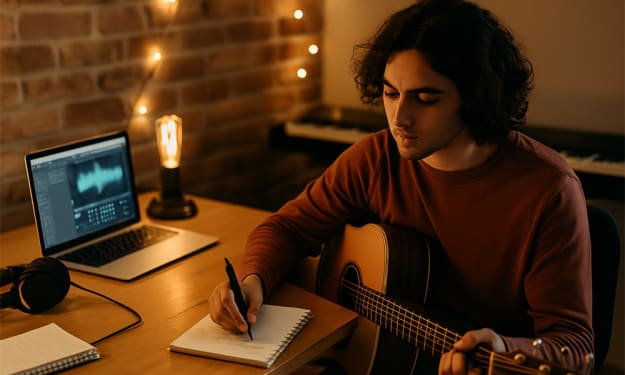
There is a specific kind of heartbreak that seems reserved for independent musicians.
It happens after six months of perfecting a mix. The cash has been saved for a music video. The release date is teased for weeks. A Friday in July is chosen because it feels like "summer vibe" season. The publish button is hit.
And… nothing.
Maybe a few friends share it. But mostly, the post gets buried under festival announcements, major label drops, and photos of people on vacation.
This is the inevitable result of trying to whisper in a room where everyone else is screaming.
There is a different approach, one that involves looking at the calendar for the empty spots. The "dead zones." The times when the industry shuts down, the labels go on holiday, and the noise stops.
We’re talking about January. Early February. The weird lull at the end of August.
Most artists are terrified of these months. The common thinking is, "Nobody releases music in January!" But that is exactly why smart artists should.
Here is a strategy to dominate the quiet months without burning out.
The "Ghost Town" Advantage
Here is the secret marketing gurus rarely mention: January is a buyer’s market.
When Christmas ends, the biggest advertisers in the world stop spending money. Target, Amazon, and Walmart pull back their budgets.
For an independent artist, that means Facebook and Instagram ads suddenly get cheap. Five dollars goes a lot further on January 5th than it does on December 15th.
Plus, consider the listeners. By the time New Year’s rolls around, everyone is tired of holiday music. They are setting resolutions. They are returning to the gym. They are commuting again. They are desperate for a new soundtrack to kick off their "fresh start."
While the major labels are nursing a holiday hangover, the listeners are wide awake.
The Problem: The Content Treadmill
Deciding to release in January is step one. Step two is facing the second wall: Burnout.
Knowing you need to post on TikTok, write a press release, update a website, and email a mailing list is one thing. Actually doing it is another. For a musician, staring at a blank screen to write copy is exhausting.
The solution is a system called "The Master Seed."
It’s a method to handle all the marketing work for a release in about one hour, using AI as a helper rather than a replacement.
Step 1: The Brain Dump (The Master Seed)
Instead of trying to write five different Instagram captions from scratch, the goal is to write one document.
Open a Google Doc. Label it "The Master Seed." Dump everything about the song into it. And that means everything:
- The Hook: What’s the headline news?
- The Heart: Why was this written? Was it a breakup? A breakdown? A breakthrough? Honesty is key.
- The Gear: Was a weird pedal used? Recorded in a closet? Audiophiles love these details.
- The Vibe: What colors does the song feel like? What movies would it fit?
- The Trivia: 10 random facts about the track.
This document becomes the "Source of Truth."
Step 2: The Factory
This is where the tools come in. Take that Master Seed, paste it into a chat with an AI (like Claude or ChatGPT), and treat the software like a virtual assistant.
The prompt is simple: "Here are the notes. Please turn this into a blog post for the website."
- Then: "Now turn the 'Heart' section into three scripts for TikTok."
- And then: "Now write a press release for local radio."
Because the AI is given the real story in the notes, the output doesn't sound like a robot. It sounds like the artist, just organized. It isn't about asking the AI to be creative; it’s about asking it to handle the formatting.
Step 3: The One-Week Sprint
Since the release is happening in a "quiet month," there is no need for a massive, drawn-out campaign. The goal is simply to own the week.
Because all the assets were generated from the Master Seed, they can be scheduled out effortlessly:
- Monday: Tease the vibe.
- Wednesday: Drop the song/video/album. Send the press release.
- Friday: Share the story (the "Heart").
The Bottom Line
The music industry is designed to make artists feel like they are always chasing something. Chasing trends, chasing the "right time," chasing the algorithm.
Stop chasing.
Wait for the room to get quiet. Wait for the big guys to go on vacation. Then, when the silence is loudest, step up to the mic.
You don't need a bigger budget. You just need a better calendar. And solid music marketing.
About the Creator
Keep reading
More stories from Richard Mulholland and writers in 01 and other communities.
Structured AI Prompts Can Inspire Music Marketing
For many musicians, the hardest part of releasing music isn’t writing or recording it — it’s everything that comes after. Between designing artwork, managing social media, answering emails, and trying to stand out on streaming platforms, it’s easy to lose track of why you started making music in the first place.
By Richard Mulholland2 months ago in Beat
Google Billionaire Larry Page Snaps Up 2 Miami Mansions for $173 Million
Billionaire and Google co-founder Larry Page has shelled out more than $173 million in recent weeks, snapping up a pair of luxury estates tucked deep within Miami's discreet Coconut Grove enclave. Page made the high-dollar moves as speculation intensified over his broader departure from California, where a proposed ballot measure targets billionaires with a sweeping one-time wealth tax.
By Dena Falken Esq4 days ago in 01



Comments
There are no comments for this story
Be the first to respond and start the conversation.