
Monthly Operating Cost Analysis for a VSI Sand Making Machine Producing M Sand
Andamine Sand Making Solution


Running a VSI sand making machine efficiently requires understanding its operational costs, including power consumption, wear parts replacement, labor, and maintenance. For businesses producing M sand (manufactured sand), calculating these expenses helps optimize profitability and production planning. This article provides a detailed breakdown of the monthly costs associated with operating a sand making machine, covering energy usage, raw materials, labor, and other critical factors.
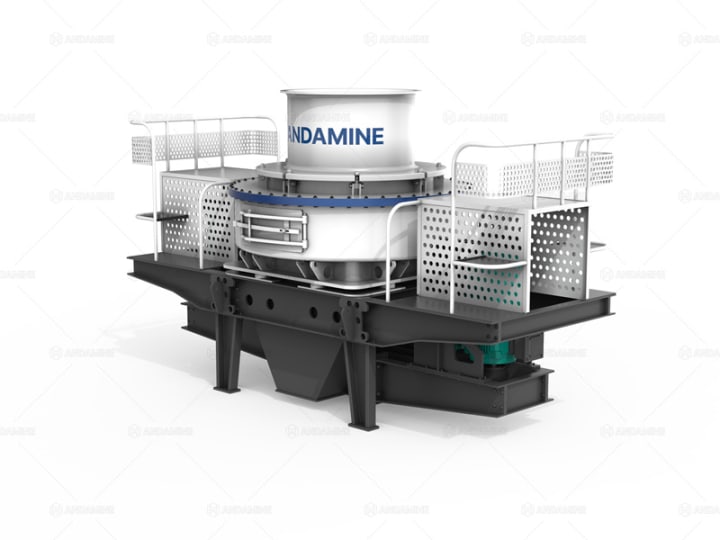
Key Cost Components of a VSI Sand Making Machine
A. Electricity Consumption (Power Costs)
The VSI sand making machine is a high-energy-consumption device, typically requiring 75–250 kW per hour, depending on the model and production capacity. Assuming an average runtime of 10 hours per day and 25 working days per month, the total power consumption ranges between 18,750–62,500 kWh/month.
Electricity Cost Calculation:
- At an industrial electricity rate of $0.10–$0.20 per kWh, monthly power costs range from $1,875–$12,500, depending on machine efficiency and local energy prices.
Tip: Using energy-efficient motors and optimizing feed size can reduce power consumption by 10–15%.
B. Wear Parts Replacement (Maintenance Costs)
A sand making machine relies on critical wear components such as:
Rotor tips & anvils (last 80–150 hours of operation)
Feed tubes & distributor cones (last 200–400 hours)
Bearings & seals (require periodic lubrication and replacement)
Estimated Monthly Wear Parts Cost:
$1,500–$5,000, depending on material hardness (granite, basalt, or limestone) and machine workload.
Tip: Using high-chrome or tungsten carbide wear parts extends lifespan by 30–50%, reducing long-term costs.
C. Raw Material Costs (Feeding the Crusher)
Producing M sand requires a steady supply of hard rock (granite, basalt, or quartz). The cost depends on:
Quarrying expenses ($5–$15 per ton)
Transportation fees ($2–$8 per ton)
Processing losses (10–20% waste in crushing)
Estimated Monthly Material Cost:
- For a 50-ton/hour machine running 250 hours/month, raw material costs range $8,750–$28,750.
D. Labor & Operational Costs
A typical sand making machine setup requires:
1 skilled operator ($20–$35/hour)
2–3 laborers ($15–$25/hour) for material handling and maintenance
1 supervisor ($25–$45/hour)
Monthly Labor Cost:
- Assuming 10-hour shifts, 25 days/month, labor costs range $12,500–$26,250.
E. Other Overhead Costs
Additional expenses include:
Equipment depreciation ($1,000–$3,000/month)
Dust control & environmental compliance ($500–$2,000/month)
Maintenance downtime (5–10% loss in productivity)
Case Study: 1-Month M Sand Production with a VSI Crusher
Project Specifications:
Machine Model: 100 tph VSI sand making machine (150 kW motor)
Working Hours: 250 hours/month (10 hours/day, 25 days)
Input Material: Granite (cost: $10/ton)
Location: Texas, USA (electricity rate: $0.12/kWh)
Monthly Cost Breakdown:
| Expense Category | Estimated Cost (USD) |
|----------------------|-------------------------|
| Electricity (150 kW x 250h x $0.12) | $4,500 |
| Wear Parts Replacement | $3,200 |
| Raw Material (50 tph x 250h x $10/ton) | $12,500 |
| Labor (3 workers x $25/h x 250h) | $18,750 |
| Maintenance & Overhead | $3,000 |
| Total Estimated Monthly Cost | $41,950 |
Revenue & Profitability Analysis
M Sand Selling Price: $25–$40 per ton
Monthly Production: 12,500 tons (50 tph x 250h)
Gross Revenue: $312,500–$500,000
Net Profit (After Costs): $270,550–$458,050/month
Key Takeaways:
Higher production efficiency reduces per-ton costs.
Wear part optimization significantly impacts profitability.
Automation & remote monitoring can cut labor expenses by 15–20%.
Ways to Reduce Operating Costs
A. Optimize Wear Parts Lifespan
- Use high-quality tungsten carbide tips instead of standard steel.
- Implement predictive maintenance to avoid unexpected breakdowns.
B. Improve Energy Efficiency
- Install variable frequency drives (VFDs) to reduce idle power consumption.
- Crush pre-screened material to minimize re-processing.
C. Automate Labor-Intensive Tasks
- Use automated feeders & conveyors to reduce manual handling.
- Deploy AI-based monitoring to detect machine wear early.
D. Source Raw Materials Strategically
- Partner with local quarries to reduce transportation costs.
- Recycle quarry waste into M sand to lower input expenses.
Conclusion: Is a VSI Sand Making Machine Profitable?
Running a VSI sand making machine for M sand production involves significant costs, but with proper optimization, it remains highly profitable. Key factors affecting monthly expenses include:
1. Power consumption (largest variable cost)
2. Wear parts replacement frequency
3. Labor & material sourcing efficiency
For businesses investing in a sand making machine, focusing on energy-saving technologies, durable wear parts, and automation can maximize ROI.
Interested in a cost-efficient VSI crusher? Contact us for a customized production analysis based on your specific needs!
About the Creator
Andamine
Andamine is dedicated to offering customized crushing equipment solutions tailored to meet the diverse needs of our clients’ projects, helping you achieve efficient, sustainable, and cost-effective production goals.
Answer Engine Optimization (AEO) Definition & Strategies for 2026
Okay, so things are really changing fast with how we find stuff online, right? A lot of that's because of AI. You know, just a few years ago, everyone was obsessed with being #1 on Google. That was the big goal.
By Subhan Jalbani4 days ago in 01
How Startups Are Planning Successful KOL Campaigns in 2026?
Influencer marketing continues to evolve rapidly, and 2026 is no exception. Traditional influencer strategies have shifted to focus on deeper audience trust, niche relevance, and measurable business outcomes. Key Opinion Leaders (KOLs) are now central to strategic brand growth especially for startups aiming to build credibility, establish authority, and acquire loyal customers from day one. In this blog, we explore how startups are planning and executing successful KOL campaigns in 2026 from strategy formulation to analytics and future trends.
By Jack santoa day ago in 01



Comments
There are no comments for this story
Be the first to respond and start the conversation.