
Mobile App Monetization Strategies: Beyond the App Store
I'll explore these strategies, share personal experiences, and provide the latest statistics from 2024 to guide you in choosing the best approach for your mobile app.

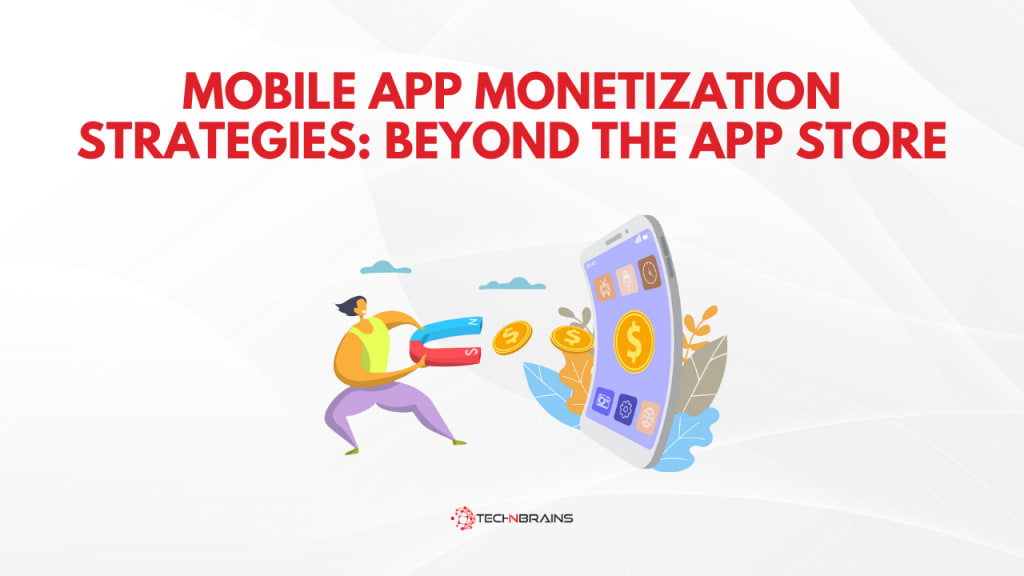
Monetizing a mobile app solely through app store sales is becoming increasingly difficult as competition grows. Relying only on traditional methods limits revenue potential and leaves your app vulnerable to policy changes or market saturation. Exploring diverse monetization strategies beyond the app store can unlock new revenue streams and ensure your app's long-term success.
In this blog, I'll explore these strategies, share personal experiences, and provide the latest statistics from 2024 to guide you in choosing the best approach for your mobile app.
App Monetization
According to a report by Sensor tower, the global app economy is $35.8 billion in just the first quarter of 2024. This growth is driven by more than just app downloads and in-app purchases. Developers are now looking for creative ways to monetize their apps outside of traditional app stores.
In my experience, relying solely on app store revenue can be limiting. It’s like putting stakes in everything for one outcome. If the app store policies change or your app gets lost in a sea of competitors, your revenue stream could take a hit. That’s why exploring alternative monetization strategies is crucial.
1. In-App Advertising
Introducing advertisements within your app is a widely used method for making money outside of app stores. You can generate income by incorporating ads into your app and getting paid based on the number of views, clicks, or actions taken. There are different types of ads you can use, including banner ads, interstitial ads, and rewarded video ads.
My Experience: When I worked with a mobile gaming company, we experimented with different ad formats. We found that rewarded video ads were particularly effective. These ads offered users in-game rewards in exchange for watching a short video. The engagement was high, and it provided a steady stream of income.
Tips: To maximize your revenue, prioritize showcasing ads that seamlessly blend with the user experience. Additionally, keep a close eye on ad performance to identify the most effective ad styles for your audience.
2. Freemium Model with In-App Purchases
The freemium model has become a go-to strategy for many app developers. Providing a free version of your app with fundamental features, while offering advanced features or content for purchase within the app. This strategy enables users to test your app before making a purchase, enhancing the chances of conversion.
What My Expertise say: I’ve seen the freemium model work wonders in various industries, from gaming to productivity apps. In one project, we developed a language-learning app that offered basic lessons for free but charged for advanced courses and additional features. The conversion rate was impressive, and users appreciated the ability to explore the app before making a purchase.
Tips: Consider offering time-limited promotions or discounts on in-app purchases to boost conversions. Regularly update your app with new content or features to keep users engaged and encourage repeat purchases.
3. Subscription Services
Subscription services have become a powerful monetization strategy, especially for apps offering ongoing value, such as streaming services, news apps, and fitness apps. With a subscription model, users pay a recurring fee, usually monthly or annually, to access premium content or features.
My Insights: I’ve worked on several subscription-based apps, and the recurring revenue model provides stability and predictability. For instance, a fitness app we developed offered personalized workout plans and meal recommendations through a subscription service. Users who saw consistent results were more likely to stay subscribed, leading to long-term revenue.
Tips: Offer a free trial period to attract new users and showcase the value of your subscription service. It’s also important to provide regular updates and new features to retain subscribers and reduce churn.
4. Affiliate Marketing
Affiliate marketing involves partnering with other companies to promote their products or services within your app. In return, you earn a commission for each sale or lead generated through your app. This strategy works well for apps with a large user base or a specific niche audience.
My Perspective: In one of our projects, we integrated affiliate marketing into an e-commerce app. We partnered with several brands and featured their products in our app. Users who clicked on these products were redirected to the brand’s website, and we earned a commission on every sale. This strategy was a win-win, as it provided value to our users while generating additional revenue.
Tips: Choose affiliate partners that align with your app’s content and audience. This ensures that the products or services you promote are relevant and valuable to your users. Be transparent about affiliate partnerships to maintain user trust.
5. Sponsorship and Partnerships
Sponsorship and partnerships offer another way to monetize your app beyond the app store. By collaborating with brands or companies, you can secure sponsorship deals that generate revenue. This could involve branded content, sponsored events, or even co-branded app features.
My Knowledge: I once collaborated with a well-known brand to sponsor a feature in a lifestyle app we developed. The brand’s logo was prominently displayed, and they provided exclusive content for our users. IWe were rewarded with a generous sponsorship fee in exchange. This not only boosted our revenue but also added value to our app by offering exclusive content that users couldn’t find elsewhere.
In 2024, mobile app sponsorships are expected to contribute significantly to overall app revenue, with brands increasingly looking to collaborate with popular apps to reach their target audiences. This trend reflects the growing recognition of apps as powerful marketing platforms.
Tips: When seeking sponsorships or partnerships, approach brands that resonate with your app’s mission and user base. Tailor the partnership to create a seamless integration that enhances the user experience rather than disrupting it.
Diversify Your Monetization Strategies
The world of mobile app monetization has evolved far beyond the app store. While traditional methods like paid downloads and in-app purchases still have their place, exploring alternative strategies can open up new revenue streams and make your app more resilient to market changes.
In my experience, the key to successful monetization is diversification. By combining multiple strategies, such as in-app advertising, subscriptions, and affiliate marketing, you can create a balanced revenue model that maximizes your earning potential.
As you explore these strategies, keep the user experience at the forefront. Monetization should enhance, not detract from, the value your app provides. By offering value, transparency, and seamless integration, you can build a monetization strategy that benefits both your users and your bottom line.
If you’re in the process of developing or revamping a mobile app, I encourage you to consider these monetization strategies. Experiment with different approaches, analyze the results, and adjust your strategy as needed. The landscape is constantly changing, and staying adaptable is key to long-term success in the mobile app market.
About the Creator
Muhammad Muzammil Rawjani
Muzammil Rawjani: Entrepreneur & tech enthusiast with 10+ years of software development experience. Co-Founder of TechnBrains, driving innovation & growth
Keep reading
More stories from Muhammad Muzammil Rawjani and writers in 01 and other communities.
How Generative AI is Revolutionizing Personalized Medicine
Personalized treatment plans involve customizing healthcare to match your individual biological makeup, genetic profile, and medical background. But here's the challenge: access to the vast amounts of data needed for personalized medicine is often limited by privacy concerns. I understand that sharing your entire medical history isn't always ideal, and rightfully so. This data scarcity delays the development of AI algorithms that can effectively learn and personalize treatment for each patient.
By Muhammad Muzammil Rawjani2 years ago in 01
Why Do OTC Crypto Platforms Exist Alongside Exchanges?
Crypto exchanges are often seen as the main place where digital assets are bought and sold. They provide open access, visible pricing, and instant execution for millions of traders worldwide. However, despite the growth and maturity of exchanges, OTC crypto trading platforms continue to exist and expand. Their presence is not accidental. OTC platforms serve specific needs that traditional exchanges are not designed to handle, especially when trade size, privacy, and execution control become critical. Understanding why OTC crypto platforms exist alongside exchanges helps clarify how different trading models support different market participants.
By smithtaylor2 days ago in 01
🔋 Hydrogen Fuel: Powering the Future of Clean Energy
As the world searches for cleaner, more sustainable energy sources, hydrogen fuel has emerged as one of the most exciting contenders ⚡. Often described as the fuel of the future, hydrogen promises zero emissions at the point of use, high energy efficiency, and versatility across multiple industries. But what exactly is hydrogen fuel, how does it work, and can it truly replace fossil fuels? Let’s explore 🚀.
By Toader Adelin5 days ago in 01



Comments
There are no comments for this story
Be the first to respond and start the conversation.