
How Generative AI is Revolutionizing Personalized Medicine
Unveiling the Future of Medicine: Generative AI and the Rise of Personalized Care

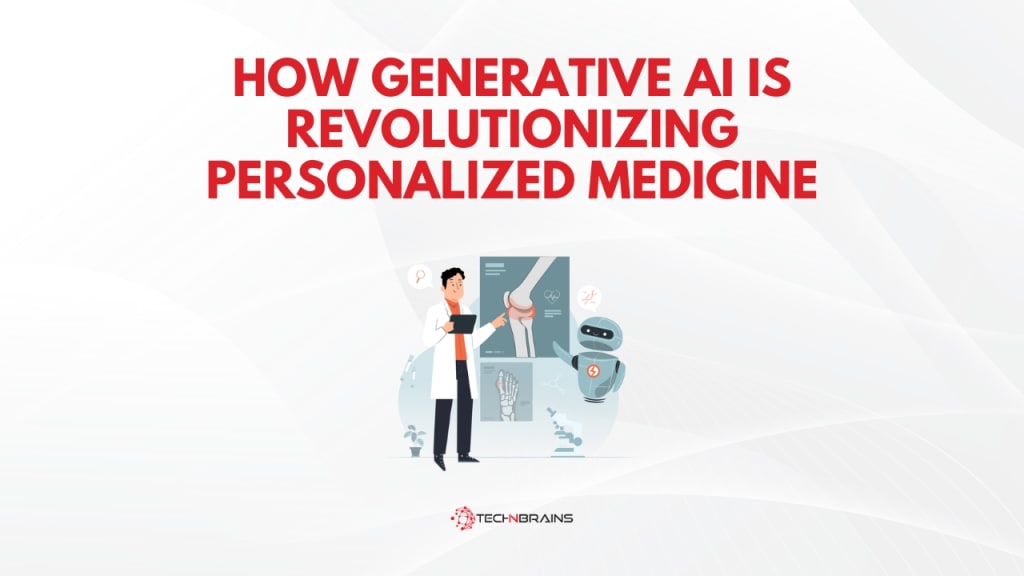
Personalized treatment plans involve customizing healthcare to match your individual biological makeup, genetic profile, and medical background. But here's the challenge: access to the vast amounts of data needed for personalized medicine is often limited by privacy concerns. I understand that sharing your entire medical history isn't always ideal, and rightfully so. This data scarcity delays the development of AI algorithms that can effectively learn and personalize treatment for each patient.
Here is where we Enter Generative AI, a powerful technology transforming personalized medicine. Forget the stereotypical image of robots taking over healthcare – Generative AI is more like a skilled artist creating realistic portraits. In this case, the portraits are anonymized patient data sets. These "virtual patients" allow researchers to train AI algorithms without compromising real-world privacy.
Generative AI utilizes advanced algorithms to analyze existing medical data and identify patterns. It then uses these patterns to create brand-new, anonymized data sets that mimic real patients. I would like to quote an example that would give us a better understanding: a database filled with virtual patients, each with a unique medical history, genetic makeup, and response to various treatments. This synthetic data becomes a safe and ethical training ground for AI algorithms.
Generative AI Helping with Mental Health
As someone who's struggled with anxiety, finding the right support can feel overwhelming. Therapists are great, but sometimes, booking appointments feels like another hurdle. That's why this whole Generative AI thing has me excited. It's like having a tech buddy helping out in the mental health world.
You might be feeling stressed about an upcoming presentation. Instead of getting stuck in a cycle of worry, you can use a Generative AI chat tool. It might not be a therapist, but it could be a friendly voice asking you questions, offering relaxation techniques, and even pointing you toward helpful articles. It's like having a mini mental health cheerleader in your pocket!
Here's the coolest part: it isn't just about chatbots. It can also help therapists! Therapists can use AI to create virtual scenarios for you to practice coping mechanisms. Maybe you could virtually rehearse your presentation in a safe space, identifying and managing my anxiety in a controlled environment.
Now, I know what you might be thinking: "Is this safe?" That's a valid concern. Your privacy is important, and using anonymized data is key. No one should have to worry about their personal struggles being exposed.
A More Precise Approach to Healthcare
Now, let's explore how Generative AI translates into real-world benefits for you:
1. Early Detection, Improved Outcomes
Generative AI can help identify subtle patterns in your unique medical data that might indicate a disease early on. This could be a game-changer, allowing doctors to diagnose and intervene before symptoms even appear.
Here's a personal example. My family has a history of heart disease. It could create virtual patients with similar genetic predispositions. By analyzing their "virtual experiences," AI algorithms could learn to identify early warning signs of heart disease specific to my family's genetic makeup. This empowers my doctor to take preventive measures, potentially saving lives.
2. Tailored Treatment Plans, Enhanced Effectiveness
We all agree that one-size-fits-all treatments are a thing of the past. Generative AI can now analyze your unique data alongside vast amounts of synthetic data. This allows doctors to predict how your body might react to different medications or therapies.
Think of it like this: your doctor is baking a "treatment cake" just for you. They consider your individual needs and potential sensitivities, using insights gleaned from the vast library of virtual patients. The result? A treatment plan with a higher chance of success and fewer side effects.
3. Developing New Drugs
Drug development takes a significant amount of time, which has its own costs. It often takes years and billions of dollars to bring a new drug to market. But with Generative AI, you can speed up this process by helping with the quick design and testing of new drug compounds.
By using AI models trained on large sets of chemical structures and biological activity data, researchers can create new drug candidates that are more likely to work well and be safe. These models can predict how new compounds will work with specific targets in the body, which means less trial and error in the lab. This speeds up the drug discovery process and increases the chances of finding effective treatments for rare and complex diseases.
4. Personalizing Preventive Care
I believe that Preventive care is a key part of personalized medicine. It aims to cure diseases in the initial stage. Generative AI can make individual preventive care plans by looking at a person's health data, such as genetic tendencies, lifestyle choices, and environmental exposures.
For instance, It can find people at high risk for conditions like osteoporosis by looking at genetic markers and bone density scans. This helps healthcare providers suggest specific lifestyle changes, dietary supplements, or medications to stop the disease from starting. Personalized preventive care plans can really help patients and save money by avoiding expensive treatments for advanced diseases. Agreed?
5. Enhancing Diagnostic Accuracy
I always emphasize this: Accurate diagnosis is very important for effective treatment. Gen AI can make diagnoses more accurate by looking at and analyzing different types of information. This includes medical images, genetic tests, and electronic health records (EHRs).
For example, AI models can look at X-ray images to find early signs of diseases that people might miss. In dermatology, pictures of skin problems can be compared with a large database to find possible skin cancers with high accuracy. Generative AI helps doctors start the right treatments earlier by giving more exact and early diagnoses, which improves patients' lives.
6. Facilitating Remote Patient Monitoring
Generative AI has the potential to improve personalized medicine, but it also has challenges. Protecting patient privacy and keeping data secure is a major concern because genetic and personal health information must be kept confidential. Another challenge is making sure that Gen AI provides accurate and reliable insights when used in clinical practice. In the future, personalized medicine could greatly benefit. Advances in AI algorithms and the availability of high-quality health data may lead to more precise and effective personalized treatments. Making AI more accessible could also help more people benefit from personalized medicine and improve outcomes for patients worldwide.
Challenges and Future Directions
Generative AI has the potential to improve personalized medicine, but it also has challenges. Protecting patient privacy and keeping data secure is a major concern because genetic and personal health information must be kept confidential. Another challenge is making sure that generative AI provides accurate and reliable insights when used in clinical practice. In the future, generative AI could greatly benefit personalized medicine. Advances in AI algorithms and the availability of high-quality health data may lead to more precise and effective personalized treatments. Making AI more accessible could also help more people benefit from personalized medicine and improve patient outcomes worldwide.
The Unique Future of Medicine
On a professional note, as a tech leader, I'm excited about the synergy between human expertise and cutting-edge technology. Doctors will continue to play a vital role in diagnosis, treatment, and the human connection that's so crucial in healthcare.
The future of medicine is moving towards a truly personalized approach, and Generative AI is a key driver. From earlier diagnoses to tailored treatment plans and accelerated research, the benefits are undeniable. This isn't just about technology; it's about empowering doctors to provide the best possible care for each patient. While there's still much to explore, one thing is certain: the future of medicine is looking a lot more unique, with Generative AI painting a brighter picture of personalized healthcare for all.
About the Creator
Muhammad Muzammil Rawjani
Muzammil Rawjani: Entrepreneur & tech enthusiast with 10+ years of software development experience. Co-Founder of TechnBrains, driving innovation & growth
Keep reading
More stories from Muhammad Muzammil Rawjani and writers in 01 and other communities.
Blockchain Wallet App Development Trends to Watch
The world has observed the rapid progress of blockchain technology. The rise of cryptocurrency has created an urgent need for secure, efficient, and innovative blockchain wallet apps. However, with the increasing complexity of digital currencies, users now demand more than just basic wallet functionality. They want security, ease of use, and features that make managing crypto assets seamless.
By Muhammad Muzammil Rawjaniabout a year ago in 01
Global Security Market Size and Forecast 2025–2033: Protecting a Digitized World in an Era of Rising Threats
Global Security Market Overview The global security market is entering a decisive phase of expansion as governments, enterprises, and institutions confront an increasingly complex risk environment. According to Renub Research, the Security Market is expected to grow from US$ 142.66 billion in 2024 to US$ 264.71 billion by 2033, registering a strong CAGR of 7.11% from 2025 to 2033. This growth reflects the convergence of digital transformation, rising geopolitical tensions, urbanization, and escalating cyber and physical threats worldwide.
By Renub Researcha day ago in 01
Google Billionaire Larry Page Snaps Up 2 Miami Mansions for $173 Million
Billionaire and Google co-founder Larry Page has shelled out more than $173 million in recent weeks, snapping up a pair of luxury estates tucked deep within Miami's discreet Coconut Grove enclave. Page made the high-dollar moves as speculation intensified over his broader departure from California, where a proposed ballot measure targets billionaires with a sweeping one-time wealth tax.
By Dena Falken Esq6 days ago in 01




Comments
There are no comments for this story
Be the first to respond and start the conversation.