
Mexico Carmine Market Set to Reach US$ 1.61 Million by 2033: Natural Pigments Take Center Stage
Driven by rising global demand for natural dyes, clean-label preferences, and sustainable farming practices, the Mexico Carmine Market is poised for steady expansion through 2033.


Mexico Carmine Market Size and Forecast 2025–2033
According to Renub Research, the Mexico Carmine Market is projected to reach US$ 1.61 million by 2033, rising from US$ 0.94 million in 2024, expanding at a CAGR of 6.10% between 2025 and 2033.
The growth of this vibrant red pigment market is being driven by increasing demand for natural colorants across food, cosmetic, and pharmaceutical industries, as well as favorable government support for sustainable cochineal farming. With global consumers shifting toward clean-label and eco-friendly products, Mexico—renowned for its cochineal cultivation heritage—is emerging as a key player in supplying carmine to both domestic and international markets.
Mexico Carmine Market Overview
Carmine, a deep crimson pigment derived from cochineal insects (Dactylopius coccus), has been used for centuries to color foods, cosmetics, textiles, and medicines. In Mexico and Peru, cochineal insects thrive on prickly pear cacti, from which they are harvested, dried, and processed to yield carminic acid, the key compound behind carmine’s striking hue.
The dye’s high stability, non-toxicity, and natural origin have made it a sought-after substitute for synthetic pigments in yogurts, candies, beverages, and cosmetics. However, its insect-based origin continues to raise concerns among vegan consumers and individuals with specific allergies.
In Mexico, carmine’s resurgence aligns with global sustainability trends. Favorable climatic conditions, deep-rooted agricultural knowledge, and a growing export base—particularly to Europe, North America, and Asia—position the nation as a vital supplier in the global carmine value chain.
Moreover, ongoing government incentives promoting natural ingredients and sustainable cochineal cultivation practices are expected to further strengthen market growth.
Growth Drivers for the Mexico Carmine Market
1. Rising Demand for Natural Products
One of the strongest forces behind Mexico’s carmine market expansion is the surging global preference for natural and clean-label products. As health-conscious and environmentally aware consumers reject artificial additives, manufacturers are actively replacing synthetic dyes with safer, naturally derived pigments.
Carmine, extracted from cochineal insects, is prized for being non-carcinogenic, heat-stable, and vibrant, making it ideal for coloring confectionery, dairy, and beverage products. In the cosmetics sector, it provides rich shades for lipsticks, blushes, and eyeshadows—an aesthetic advantage that synthetic substitutes struggle to replicate.
Mexico’s established cochineal farming ecosystems and traditional extraction methods allow it to cater to this booming demand, positioning the country as a strategic export hub for global brands seeking sustainable red pigments.
2. Expanding Applications Across Industries
Carmine’s applications have transcended food coloring to permeate cosmetics, pharmaceuticals, and textile sectors, significantly amplifying its demand.
In the cosmetic industry, carmine is valued for producing stable, natural red tones without synthetic chemicals—an essential characteristic for brands marketing “green” or “cruelty-free” beauty products. In pharmaceuticals, it is used to color syrups, capsules, and tablets, while artisanal and gourmet food producers leverage its vivid hue to enhance product appeal.
This diversification of uses has spurred investment in Mexico’s processing and extraction facilities, ensuring that the country remains competitive as a top-tier carmine exporter.
3. Stricter Regulations on Synthetic Dyes
Global regulatory shifts are pushing industries toward natural coloring alternatives. Health concerns associated with synthetic pigments—such as hyperactivity in children and carcinogenic risks—have prompted agencies like the U.S. Food and Drug Administration (FDA) and the European Food Safety Authority (EFSA) to tighten control over artificial dyes.
Synthetic colorants like Red 3 and Yellow 5 have faced increasing scrutiny, accelerating the adoption of carmine and other natural pigments. Mexico’s established cochineal industry, combined with the country’s ability to scale sustainable production, allows it to benefit from this transition.
These evolving regulations are expected to play a vital role in shaping the long-term trajectory of the Mexican carmine market.
Challenges in the Mexico Carmine Market
1. Labor-Intensive Production
Despite its growing demand, carmine production remains highly labor-intensive. Cochineal insect farming, harvesting, and dye extraction involve meticulous manual processes. From nurturing the insects on cactus plants to drying and grinding them for pigment extraction, each step requires precision and time.
Limited mechanization and dependence on traditional farming practices raise labor costs and hinder mass production scalability. As global demand surges, this dependency poses a challenge for producers striving to balance quality, cost-efficiency, and output volume.
2. Price Volatility
Carmine prices in Mexico are prone to fluctuations due to environmental and economic factors. Weather changes, pest infestations, and fluctuations in insect populations can affect supply, while seasonal harvesting cycles make the market sensitive to disruptions.
Additionally, rural labor shortages or rising wages can drive up production costs, translating into price instability for end-users. This volatility makes it challenging for manufacturers to forecast expenses and maintain consistent pricing structures—especially when competing against synthetic dyes that offer more predictable cost dynamics.
Market Segmentation
By Application
Bakery & Confectionery
Beverages
Dairy & Frozen Products
Meat Products
Fruits & Vegetables
Oil & Fat
Cosmetics
Other Food Products
By Form
Liquid
Powder
Crystal
By End Users
Food Processing Companies
Beverage Industry
Catering Industry
Cosmetics and Pharmaceutical Industry
Competitive Landscape
The Mexico Carmine Market features a mix of global colorant manufacturers and regional producers focused on natural pigment extraction. Companies are investing in sustainable sourcing, R&D, and partnerships to expand their market presence.
Key Players:
Clariant AG
Naturex (Givaudan)
Sensient Technologies Corporation
The Hershey Company
Biocon
Amerilure
DDW Color House
These firms are actively engaged in innovations such as bio-based extraction, process optimization, and traceability systems, ensuring compliance with global food safety and sustainability standards.
Each player is analyzed across four dimensions:
Company Overview
Key Persons
Recent Developments & Strategies
Sales Analysis
Future Outlook: Sustainability and Innovation Drive the Next Decade
Between 2025 and 2033, Mexico’s carmine industry is expected to flourish under the twin forces of sustainability and technological advancement.
Innovations in cochineal breeding, automated harvesting, and efficient extraction technologies could alleviate production bottlenecks while enhancing pigment yield. Meanwhile, eco-certifications and fair-trade labeling are likely to boost exports to environmentally conscious markets in Europe and the U.S.
Furthermore, as beauty and food brands increasingly market “natural origin” and “cruelty-free” claims, carmine will remain integral to premium product lines—especially when coupled with transparent sourcing from ethical farms in Mexico.
However, to sustain long-term competitiveness, the industry must tackle production scalability, price stability, and consumer education regarding carmine’s natural yet insect-derived origin.
Final Thoughts
Mexico stands at a unique intersection of tradition and innovation in the natural pigment world. With its centuries-old cochineal heritage and growing modern market infrastructure, the country is poised to capitalize on the global shift toward clean, sustainable colorants.
Despite production challenges, Mexico’s ability to blend cultural craftsmanship with scientific advancement positions its carmine industry for enduring growth through 2033 and beyond.
About the Creator
jaiklin Fanandish
Jaiklin Fanandish, a passionate storyteller with 10 years of experience, crafts engaging narratives that blend creativity, emotion, and imagination to inspire and connect with readers worldwide.
Keep reading
More stories from jaiklin Fanandish and writers in 01 and other communities.
Global Leaf Blowers Market Size and Forecast 2025–2033
A Global Market Blowing Ahead According to Renub Research, the Leaf Blowers Market was valued at US$ 1.47 billion in 2024 and is projected to reach US$ 2.13 billion by 2033, growing at a CAGR of 4.2% during 2025–2033. The surge is driven by rising demand for eco-friendly landscaping equipment, the shift toward battery-powered tools, and a booming culture of residential and commercial property maintenance worldwide.
By jaiklin Fanandish3 months ago in 01
Generative AI Market Size and Forecast 2025–2033: The Technology Redefining Creativity, Productivity, and Intelligence
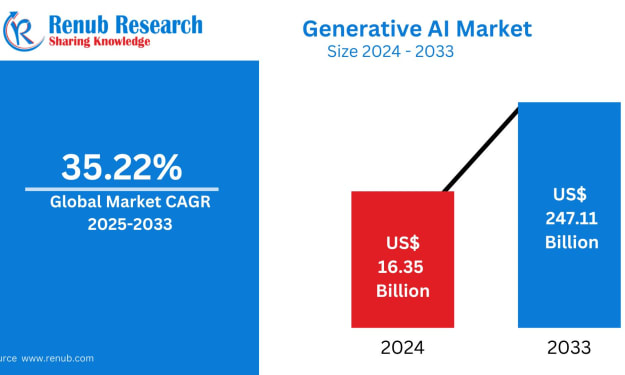
Generative AI Market Overview The Generative AI Market is expected to reach US$ 247.11 billion by 2033, expanding rapidly from US$ 16.35 billion in 2024, at a remarkable CAGR of 35.22% from 2025 to 2033. This explosive growth reflects a fundamental shift in how businesses, governments, and consumers interact with technology. No longer limited to analyzing data or predicting outcomes, generative AI systems now create—producing original text, images, videos, music, software code, and even scientific hypotheses.
By Renub Researchabout 10 hours ago in 01
How to Choose the Best Mobile Application Development Company in 2026
Choosing the right mobile application development company is no longer just a technical decision—it’s a business-critical one. In 2026, mobile apps sit at the intersection of customer experience, brand credibility, and long-term growth. The wrong partner doesn’t just slow development; it can limit scalability, security, and discoverability across modern search and AI-driven platforms.
By alan michael5 days ago in 01



Comments
There are no comments for this story
Be the first to respond and start the conversation.