
Mastering the Alphabet Soup Keyword Research Technique
Generate Long-Tail Keywords That Drive Traffic Using This Proven Method


Disclaimer: This article was generated using AI.
Introduction
Ever feel like your competitors are always one step ahead with keywords?
If you’re looking for a simple, scalable way to uncover search terms that your rivals aren’t targeting, it’s time to try the Alphabet Soup Method. This keyword research strategy pulls real-time autocomplete suggestions directly from Google to reveal long-tail keyword opportunities—perfect for blogs, affiliate sites, or local businesses.
In this guide, you’ll learn:
- What the Alphabet Soup Method is and how it works
- How to use it to uncover high-intent keyword phrases
- Which tools make the process faster and more effective
Let’s get into it.
What Is the Alphabet Soup Keyword Method?
The Alphabet Soup Method is an intuitive SEO technique that uses Google’s autocomplete predictions to find keywords that real people are actively searching.
Here’s how it works:
You type a base keyword into Google’s search bar, then add a letter of the alphabet. For example:
- Type “running a” → see “running apps,” “running after eating”
- Type “running b” → find “running benefits,” “running barefoot”
- Repeat from A to Z
Google’s suggestions are generated based on actual user behavior, which makes this one of the most authentic ways to discover what your audience is searching for—without needing any expensive tools.
Why This Method Works So Well for SEO
The Alphabet Soup Method has gained traction because of a few major advantages:
- No cost required – It’s completely free to use
- User intent revealed – You’re uncovering what people actually type
- Long-tail keyword discovery – Find specific queries with lower competition
- Great for FAQs and niche content – Pick up questions and pain points
- Content gap finder – Spot topics other sites haven’t covered
For small sites or content marketers on a budget, this is a must-have strategy.
Why Long-Tail Keywords Are Your SEO Secret Weapon
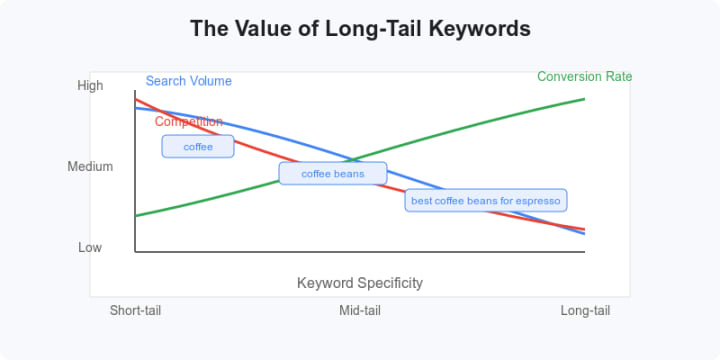
While single-word or high-volume terms may seem appealing, they’re often competitive and vague. Long-tail keywords—specific, multi-word phrases—are the opposite.
They tend to:
- Have less competition
- Be more targeted
- Convert at a higher rate
And guess what? The Alphabet Soup Method is one of the most effective ways to uncover them. You’ll find hundreds of unique phrases that traditional keyword tools might miss.
How to Use the Alphabet Soup Method (Step-by-Step Guide)
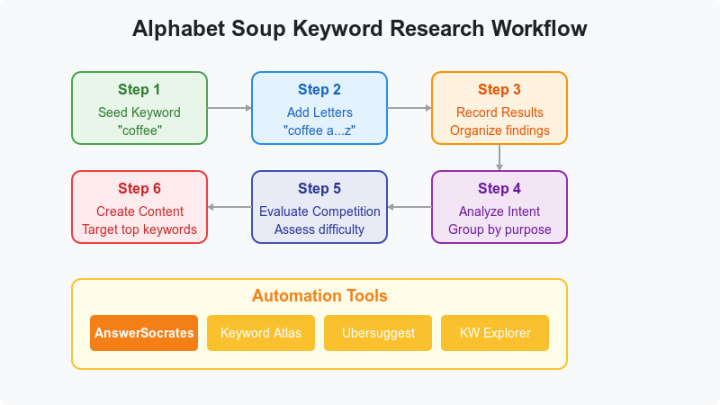
1. Pick a Seed Keyword
Choose a general term related to your business or niche. This becomes your anchor to explore related queries.
2. Add Alphabet Characters
Enter your seed keyword into Google’s search bar followed by:
- A letter (a–z)
- A number (0–9)
- A symbol (e.g., “$” or “%”)
- Prepositions (e.g., “with,” “for,” “near”)
Each variation will generate a new list of Google autocomplete suggestions.
3. Capture the Suggestions
Copy down the most relevant phrases that align with your content goals. These are all potential keywords worth targeting.
4. Organize by Intent
Sort the phrases into categories:
- Informational: how-to guides, explanations
- Commercial: “best of,” “top,” “reviews”
- Transactional: “buy,” “cheap,” “discount”
- Navigational: branded or product-based queries
5. Analyze Competition
To validate keywords, look for:
- How many pages appear in Google’s results
- What types of sites are ranking (are they strong authority domains?)
- Additional insights from tools like Ahrefs, Ubersuggest, or SEMrush
Why Manual Alphabet Soup Can Be a Grind
Doing this process manually is totally doable—but not ideal if you’re short on time. Here's what makes it tough:
⌛ Takes forever to do by hand, especially across multiple keywords
😵💫 Easy to overlook options due to repetition or fatigue
📉 No traffic data included—requires extra tools to analyze volume or difficulty
📋 Hard to stay organized if you’re collecting hundreds of terms
That’s why many SEOs use automation tools to streamline the Alphabet Soup Method without losing effectiveness.
Tools That Supercharge Alphabet Soup Keyword Research
To get more done in less time, here are the best tools that automate the Alphabet Soup process and add helpful insights.
🔍 Answer Socrates: Top Pick for Autocomplete Research
AnswerSocrates.com takes the Alphabet Soup idea and runs with it. It automates the process and provides:
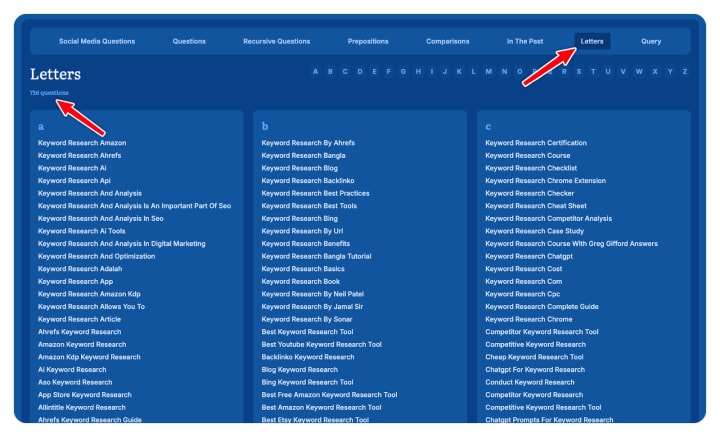
- Hundreds of autocomplete keyword ideas instantly
- “People Also Ask” question scraping
- Clustering of related terms for topic planning
- Recursion (digging deeper into found phrases)
- A free plan that works well for most users
Other Tools Worth Exploring
Keyword Atlas – Focuses on permutations using the alphabet method
Ubersuggest – Pulls Google suggestions and provides traffic estimates
Allintitle.co – Helpful for evaluating competition levels
Keywords Everywhere – Browser add-on for easy keyword exports
Expert Techniques: Going Beyond the Basics
Once you’re comfortable with the method, take things up a notch with these advanced strategies.
1. Recursive Research
After finding a keyword like “trail running shoes,” plug that into the Alphabet Soup process again. This can surface even more specific search queries like:
- “trail running shoes for wide feet”
- “trail running shoes under $100”
You’ll unlock keyword layers that few others go deep enough to find.
2. Competitor Content Gap Mining
Use the Alphabet Soup Method to:
- Find keywords in your niche
- Compare results with your competitors' blog posts or product pages
- Identify valuable terms they haven’t optimized for
Then, target those gaps with content tailored to that exact search intent.
3. Create Keyword Clusters
Organize related phrases into topic clusters for better on-page SEO. For example:
- Pillar Page: “Ultimate Guide to Coffee”
- Cluster Posts: “best coffee beans for espresso,” “coffee brewing tips,” “coffee vs. tea for energy”
- Internally link them to improve site structure and authority
The Ideal Workflow for Alphabet Soup SEO
To make the most of this method, follow this optimized process:
- Choose 3–5 broad keywords
- Use automation (like Answer Socrates) to generate ideas
- Export and group results by topic or intent
- Use tools like Ahrefs for competition and traffic data
- Plan content targeting these keywords
- Create in-depth, optimized content
- Track performance and adjust as needed
Real-Life Results from Using the Alphabet Soup Method
Many SEO professionals credit their traffic gains to this method. One niche blog owner grew from 400 to over 20,000 organic visitors a month in under a year—just by targeting overlooked long-tail phrases discovered through Alphabet Soup keyword research.
The secret? Hyper-targeted content aligned with exactly what people were searching for—but that bigger sites ignored.
Final Take: Why Alphabet Soup Still Works in 2024
Even as AI changes how people search, Google Autocomplete remains a rich source of SEO insights. The Alphabet Soup Method is still one of the best ways to discover long-tail keywords, content gaps, and fresh topic ideas that drive meaningful traffic.
When you combine this strategy with tools that save time and add depth, it becomes a repeatable, scalable system for keyword research and content planning.
It’s free, effective, and surprisingly powerful. If you haven’t used Alphabet Soup yet—now’s the time.
FAQ: Alphabet Soup SEO Method
Q: How frequently should I use this technique?
A: Monthly or quarterly is ideal, especially for staying on top of trends or seasonal keywords.
Q: Can it work for all types of content?
A: Yes. Whether you're blogging, creating videos, or writing product descriptions—if people search for it, you can apply this method.
Q: How do I know which terms are worth targeting?
A: Evaluate them based on search intent, relevance to your audience, and low-to-moderate competition.
Q: Is it still useful with Google's new AI-driven search updates?
A: More than ever. Google's focus on user intent means long-tail keywords are even more valuable.
Q: Can I use it outside of Google?
A: Absolutely—try it on YouTube, Bing, Amazon, TikTok, or even Pinterest. Any site with autocomplete works.
About the Creator
James Oliver
I help entrepreneurs build profitable online businesses. Sharing proven strategies and insights as I grow my own affiliate marketing business to $1M per year.
Keep reading
More stories from James Oliver and writers in 01 and other communities.
The Most Popular Types of Steel in Industry
Steel remains the backbone of modern industry. From towering skyscrapers to precision surgical instruments, this versatile alloy shapes our world in countless ways. But not all steel is created equal. Different compositions and treatments yield materials with vastly different properties, each suited to specific industrial applications.
By Sommersangabout 9 hours ago in 01
Elon Musk called medical school "pointless," but Jeff Bezos wants Gen Z to finish college before starting their own companies — as AI threatens entry-level jobs
The job market is becoming volatile by the minute as generative AI becomes more prevalent and gains broad adoption across organizations worldwide. Last year, Salesforce CEO Marc Benioff revealed that the company is seriously debating hiring software engineers, citing "incredible productivity gains" from agentic AIs.
By Dena Falken Esq5 days ago in 01




Comments
There are no comments for this story
Be the first to respond and start the conversation.