
Machine Learning In eCommerce and Utilization of Advanced Applications
Implementation Of Machine Learning | Advanced eCommerce Applications


With the eCommerce business model available for business since the last four decades, sooner or later, technology was able to find a way to improve upon its services. The answer came in the form of machine learning, a branch of artificial intelligence that drastically allows businesses to improve their performance through experiences shared and recorded over time.
With the ability to recognize and analyze patterns, machine learning opened a whole new avenue for businesses that went beyond simple analytics.
According to a recent study published by Omnisend, worldwide eCommerce sales are projected to grow and reach $4.88 trillion, and 80% of all customer interactions are estimated to be managed by AI.
There is not even the slightest bit of confusion for even a layman to see the clear cut correlation that is happening right in front of us, where the application of machine learning is eventually going to become a norm of businesses online.
In light of this information, let's take a quick look at some of the ways through which machine learning is impacting eCommerce operations.
1. Improved Customer Support
One of the best examples of machine learning and their applications for eCommerce ventures is improving customer services and support. Chatbots are quickly becoming popular, and they are indefinitely aided to perform well due to their machine learning mechanics built inside of them.

Chatbots record interactions and offer relevant responses to users' search queries based on their interactions and data fed into their systems and databases. This allows them to provide responses suited to each user quickly.
Machine learning allows Chatbots to mimic and stimulate interactions with a customer, and there is a huge room for them to improve their accuracy and relevancy further.
2. Improving Search Rankings
In a private study performed by Search VIU, machine learning was applied to predict rankings considering possible changes through on-page optimization. The model implemented was fed keyword data along with on-page optimization factors. The experiment proved to be a success.
It allowed the businesses to quickly analyze thousands of potential keywords that can help them reach desirable rankings with only a few on-page optimizations. However, this is simply just one example.
There are thousands more where machine learning can study users' patterns and search queries along with actual purchases and compare them with user preferences. The idea over here is that you have gotten hold of a system that simply adores being fed data in large quantities. Hence the possibilities of generating reports based on results are only going to be bigger and better.
3. Managing Demand & Supply
When it comes to supply chain, inventory management, and warehousing, machine learning software seems like it was actually designed to deliver exciting new opportunities. As one of the most enticing frontiers in enterprise technology, machine learning is way better than those rigid, traditional, and outdated demand management systems.
With the ability to process large datasets, a Gartner survey in 2018 identified machine learning as a priority for businesses. This drastically helps in reducing the time and effort that goes into demand planners for various organizations.
A fine example of this can be found in the machine learning algorithms of IBM's Watson platform, which was able to determine damaged assets well before time and was capable of tracking down corrective options to repair them as well.
4. Product Recommendations (Cross-Sell/Up-Sell)
If you really want your eCommerce business to thrive, you have to sell more than what the user initially intends to purchase. Cross-selling and up-selling techniques have existed for quite some time now, and it seems machine learning is quickly acquiring skills to do the same.
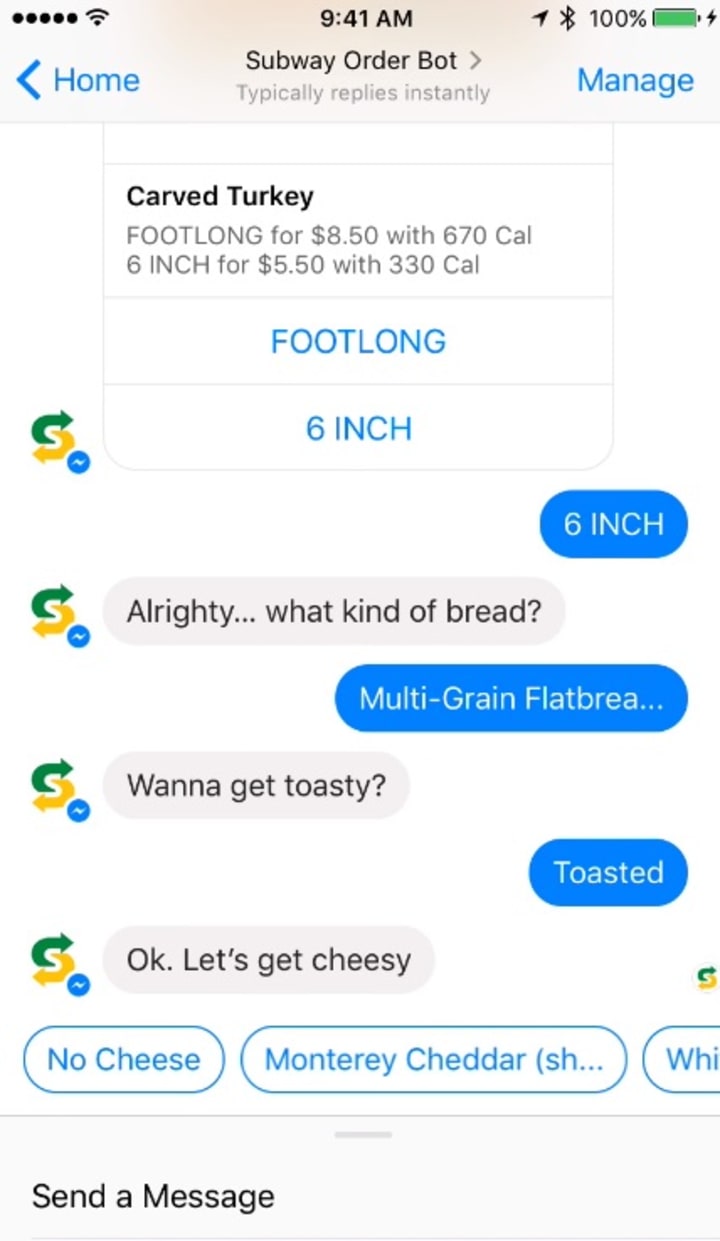
Machine learning software can be provided with datasets that correlate items and products that are not only similar in a category or defined purpose but also related to each other in some way or another.
Hence, your software could easily provide customers online with product recommendations and suggestions that are relevant not only for the user but also to assist you in earning a bigger share when it comes to profit margins. Third-party online food servicing bots will often suggest user side dishes, extras, and toppings go with their main order.
5. Rate Optimization
Prices are a huge factor when it comes to businesses existing in highly competitive markets. They can also play a vital role for customers going through a thrifty session in their lives and trying their level best to limit their spending under their designated budget.
As such, machine learning can be introduced to offer viable management suggestions as to how much they can play with their prices before a business actually starts to suffer from either too low a price or too high a price for an item.
The software can be fed with data regarding the prices of rival companies, and this can help your machine learning software to analyze and compare rates. This comparative analysis could actually help you understand the price leverages you or competitors are experiencing, whether knowingly or unknowingly.
6. Safeguard Against Fraud
Machine learning is also associated with cybersecurity, and this may come as a surprise to some. However, it is pretty obvious that computing power and the ability to learn patterns make it an ideal choice.
Machine learning hence has been heavily deployed by various organizations for several reasons. Apart from the ability to prevent similar attacks from happening, the ability to learn and adapt to changing behavior empowers organizations to take action in real-time.
A prominent example is that Darktrace, which in part relies on machine learning to drive its cybersecurity products. As such, the French financial services and insurance company AXA IT heavily depends on Darktrace to deal with online security threats.
7. Targeting & Personalization
Lastly, it is quite obvious that with tons of records and information being stored in databases, customer interactions with brands and businesses can be fed to machine learning software. This will allow it to analyze engagements and past communications to offer more relevant information through a chatbot.

A good example in recent times is that of National Geographic's chatbot that was introduced to promote their new show, Genius. The chatbot took the persona of Albert Einstein and followed conversations to provide intuitive replies about the show and other interesting tidbits.
Conclusion
The world around us is quickly shifting with a sea of limitless information being transmitted through the airwaves, and with the help of the World Wide Web, the inclusion of machine learning couldn't be more appropriate.
For eCommerce businesses, it would soon become necessary to deploy machine learning in the future; otherwise, they might find themselves losing the edge they had over competitors. For more questions about the topic, please feel free to mention it in the comment section below.
Author Bio
Samantha Kaylee is currently working as a Assistant Editor at Crowd Writer, an excellent platform to ask a professional to write my essay UK. She has been in the digital field for almost a decade. Her expertise and analytical knowledge are great with love for producing compelling write-ups.
About the Creator
Samantha Kaylee
I am Samantha Kaylee, working as a Assistant Editor at Crowd Writer. My experience includes many published articles regarding Tech, travel and personal stories.During my free time, I like to indulge myself in creating wall art.
Keep reading
More stories from writers in 01 and other communities.
Is X (Twitter) Down Right Now? X.com Not Working as Users Report Global Outage
If you are asking “Is X not working?”, “Is Twitter down?”, or searching for Twitter down detector right now, you are not alone. Thousands of users across the world frequently report issues with X (formerly Twitter), especially when the platform suddenly stops loading, tweets don’t refresh, or login fails. Whenever this happens, searches like “is x.com down”, “twitter status”, and “twitter not working” start trending on Google and X itself.
By Waqar Khana day ago in 01
Wild Card Weekend Recap: What Happens Now?
I think I figured out why I love Wild Card Weekend so much. It's because it's the first playoff anything of the calendar year. The NFL season starts in the fall, and once upon a time, the champion was crowned either on or slightly before New Year's. The evolution of the NFL schedule has resulted in the playoffs starting just into the New Year, and currently, the final week of the season falls on the first weekend of the New Year, with Wild Card Weekend coming a week after that. So yes, chronologically, the NFL's Wild Card Weekend serves as the first playoff anything of the calendar year.
By Clyde E. Dawkins5 days ago in Unbalanced




Comments
There are no comments for this story
Be the first to respond and start the conversation.