
"Laugh Lines and Lies"
"A Comedy of Secrets and Sorrows"

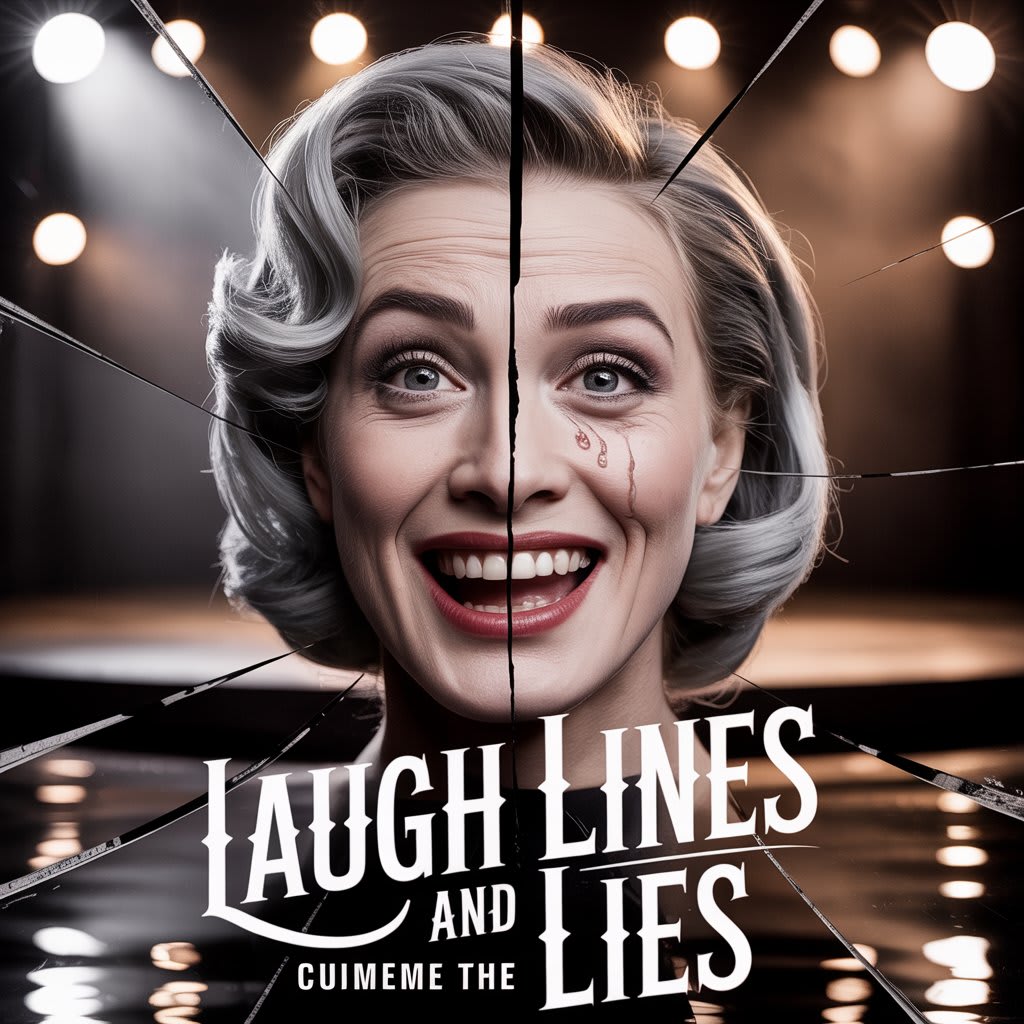
Miranda Lorne had made a career out of being charming. She had the kind of laugh that filled a room and the quick wit to match, earning her a cult following as a late-night comedy writer turned podcast host. Her face—framed with perfectly styled graying curls and deep laugh lines—was a familiar comfort to fans who tuned in weekly for "Mirth with Miranda."
But the thing about laughter is that it echoes louder when it’s covering something up.
At 52, Miranda was tired. Not just “I need a weekend off” tired, but the soul-heavy kind of fatigue that comes from too many years of smiling through disappointment. She had spent decades turning heartbreak into punchlines and betrayal into best-selling memoir chapters. But lately, the laughter felt hollow. Her latest podcast episodes had started feeling… off. The jokes came slower. The pauses, longer. The honesty, thinner.
The audience hadn’t noticed. Or maybe they had and didn’t care. Either way, Miranda couldn’t keep pretending everything was fine. Not when her own daughter wouldn’t return her calls. Not when her agent was gently pushing her to consider "something more upbeat." And definitely not when she found an anonymous envelope on her doorstep last Tuesday.
Inside: a single Polaroid. A blurry photo of her younger self—maybe 30, maybe 28—sitting on a barstool in a smoky lounge, her head tilted toward a man she hadn’t seen in decades. There was no note. Just the photo, curling slightly at the edges.
She stared at it for hours.
That man—Dylan Hayes—was the one name she never said on air. He was her big secret, the one story she never turned into comedy. She had buried that relationship deep under layers of one-liners and clever anecdotes. Back then, she thought love was a thing to be laughed about before it could laugh at you.
Miranda locked the Polaroid in her desk drawer. But it wouldn’t stay locked in her mind.
Friday came. She was due to record Episode 211: “Smiles, Scandals, and That One Time I Got a Tattoo I Can’t Show on TV.” Her producer, Lila, tapped her headphones and nodded from behind the glass.
Miranda leaned into the mic. “Welcome back, my beautiful, unfiltered, delightfully dysfunctional listeners. Today, we’re throwing away the script.”
Lila’s eyebrows shot up.
“I want to talk about laugh lines. Not just the ones on our faces—but the lines we use to keep people laughing so they don’t ask too many questions. Lines we cross. Lines we hide behind.”
She paused. She could hear her own breath.
“Let me tell you a story I’ve never told. It starts in a piano bar in Chicago. I was 28. I’d just finished my first stand-up set that didn’t bomb completely. That night, I met a man named Dylan.”
Lila mouthed, “Are you serious?”
Miranda continued.
“He was older, had that kind of quiet confidence that makes you think he knows something you don’t. We dated for two years. It was messy. Real. Beautiful. And it ended when I got scared and made a joke about him during a live show.”
She inhaled sharply.
“He never forgave me. And I never asked him to.”
The episode went viral.
Fans flooded her inbox with praise, confessions, and their own stories of regret. Miranda expected backlash for breaking from comedy, but instead, she got connection. Authenticity.
And then, a second envelope appeared.
This one had no photo. Just a note.
“You finally told the truth. Coffee?”
Below it: an address. It wasn’t signed, but she didn’t need a name.
Miranda stood on the sidewalk outside the little café on 9th and Lorne—a funny coincidence, the same name as hers, though she knew it was unrelated. Her fingers trembled as she clutched the third cappuccino of the morning.
He walked in ten minutes late.
He looked older, yes. Softer. But his eyes? Same. A shade of storm-gray that never quite settled.
“I heard your episode,” Dylan said as he sat down.
She studied his face, unsure of what came next. “So the photo…?”
“Not me,” he said. “But I guess the universe wanted us to talk.”
They sat in silence. No punchlines. No applause. Just two people, older now, wrinkled in the best and worst ways, trying to find the space between who they were and who they might still be.
Miranda didn’t turn the story into content. For once, she kept something just for herself.
But she did change the tagline of her podcast.
Instead of “Laughter is the best medicine,” it now read:
“Because sometimes, what we don’t say is the truest part of the story.”
And she smiled—not the kind she’d practiced for cameras, but a small, honest one. The kind that reaches the eyes and settles into laugh lines made not from lies, but from living.
Is this conversation helpf
About the Creator
Keep reading
More stories from younas khan and writers in 01 and other communities.
"The Lion and the Lamb"
Long ago, in a vast and sun-soaked savanna, a mighty lion ruled over the land. His name was Rohar, and his roar echoed across the plains like thunder. He was feared by all, for he was strong, swift, and merciless in his hunts. Animals whispered his name in the shadows, praying never to cross his path.
By younas khan9 months ago in 01
United States Cryptocurrency Market Size and Forecast 2025–2033
United States Cryptocurrency Market Outlook The United States Cryptocurrency Market is expected to reach US$ 4.51 billion by 2033, rising from US$ 1.75 billion in 2024, at a Compound Annual Growth Rate (CAGR) of 11.11% from 2025 to 2033, according to Renub Research. This steady expansion reflects the growing integration of digital assets into the financial ecosystem, driven by rising institutional participation, advancements in blockchain infrastructure, and increasing consumer acceptance of decentralized financial systems.
By Aaina Oberoi7 days ago in 01
Cock Warming Explained With Examples & How Is It Done?
You might have heard about the recently growing popularity of the cock warming kink. But what is it and how do you incorporate it into your sexual life? Is it related to the BDSM kink or is it something new? This guide will answer all these questions and much more.
By Intelligent Creator6 days ago in 01


Comments (1)
Good