
Importance of caste polities in UP
The upcoming elections in UP will make the pictures more clear that is caste still play an important role in UP or its changed now


Caste plays a very important role in the state of UP as compared to the rest of the states
As upholds the most no. of seats in the parliament it is very important for any national party to have a hold on the voters of this state, and to get the sense of the politics of up it’s very important to know what’s actually happening. The entire politics is based on the caste and religious basis in the state. These caste politics only led to the rising of BSP and now BJP is taking advantage of the caste politics but this time it’s not dividing indeed that they are trying to gain the trust that they will take everyone and grow. it’s true that Caste and religion still form the bedrock of people’s political understanding in Uttar Pradesh.
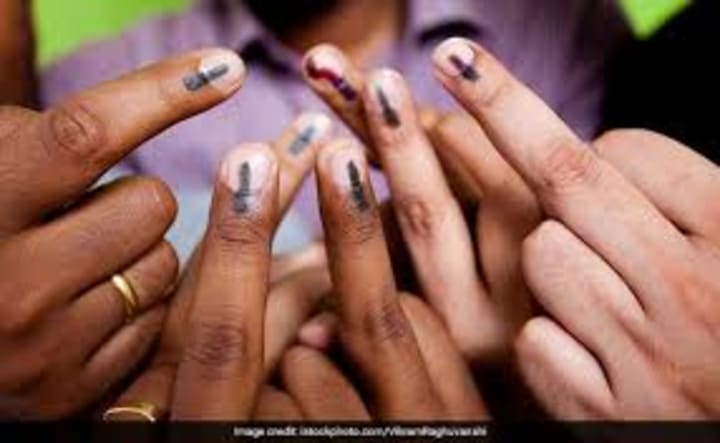
History of caste politics :
The dividing factor in UP is very uneven. It has been a very long time since anyone party dominated the state, it’s always a collation government. As the seats in UP get divided between the party on the basis of caste the result also gets divided and then it results in colation the country.
If we go back to history we can easily see the divisions. The political history of the Hindi heartland can be divided into two parts. It started in the year 1989 when the large national parties and upper-caste lost their sway over UP and Bihar.
“Vote humara, Raj tumhara, Nahii chalegaa Nahii chalegaa “ This slogan was given by the founder of BSP Kanshi Ram. This slogan by him made its way and divide the vote in UP on basis of Caste. After this, the national parties started losing control over the state.
There were two sides to this whole incident this lead to the coming of a collation government and led to instability for a long period of time but it also liberated the state from control of the upper caste.
The introduction of the Mandal commission and Ram Mandir movement gave a new definition to Indian politics.”In order to win Hindi heartland either you had to use caste and divide what religion united or use religion to re-stitch what caste divided “Sekhar Gupta
Voter composition in UP on the basis of caste :
If we observe the composition of voters in UP we can easily figure out that there is more percentage of OBC voters in the states. There is 19% of upper caste, 41% OBCs which consists of 9% of Yadavs, 12% of Non-Yadav OBCs, and 20 % of lower OBCs which includes 70% lower castes,21% of SC which includes 13% Jatwa and 8% other SC and 19% are the Muslim voters.
If we round off this composition in easy terms according to Professor Ashutosh Varshney’s 20-20-20-40 formula to explain the vote composition in UP, where Muslims accounted for 20 percent, Dalits 20 percent, upper castes 20 percent, and Other Backward Castes 40 percent of the votes. The 20-20-20-40 division is a good starting point for political analysis. The backward is the main focus of the leaders and how to gain their votes.

Past elections :
The state of UP is accounting for 80 seats of Lok Sabha. To gain a full majority in the parliament it’s very important to sweep UP. Anything above 50 seats in the state increases the chance of the party or coalition to gain the majority in Lok Sabha.[
If we look back to the previous Lok Sabha elections. BJP led NDA swept in both the 2014 and 2019 elections.
State election in UP announced an unexpected win of BJP and a huge loss for Mahagathbandhan. It’s very important for the party to gain the support of its core supporters.
The core supporter of BJP is the upper caste and the non-Yadav OBCs, BSP’s core supporter is the SC, and SP is supported by the Yadavs and Muslims.
If we see the analysis we can easily find out what really happened.
In this election, BJP won 62%of upper caste votes while the Mahagathbandhan got 18%and BSP got 10%. BJP succeeded in getting the upper caste vote but if we talk about the Muslim votes BJP fails very badly here and was able to secure only 2% votes while the Mahagathbandhn got 70% and BSP secured 16% of the Muslim votes.
OBCs played a vital role and were the key factor in this election.
BJP had a vote share that went into the high 40s in UP. The party got scheduled caste-non-Jatav votes, which accounted for 60 % of the vote share in 2017 About 58% of the OBC vote went to BJP, and Mahagathbandhan and BSP got 18% and 11% respectively The shocking change that took place in this election was the 17% gain in the Dalit voters of BJP which it didn’t have previously.
Let see why BJP won the elections The primary objective of the BJP in Uttar Pradesh had been to create a majority of voters in each constituency by bringing together its traditional upper caste voters, the non-Yadav backward classes, and the non-Jatav Dalits. With these goals in mind, the Sangh Parivar mobilized the backward classes through policies of social engineering, actively politicized caste identities through communal mobilization, often gave recognition to each caste’s Sanskritized historiographies, and, ultimately, attracted support through the tools of representation and leadership.
The aiding and promoting those caste groups that are willing to disturb the collective identity of the Dalits and the OBCs helped a lot to reach such a height for BJP
The SP-BSP-Congress alliance is looking impressive on paper but BJP on the ground is effectively executing its own brand of caste-communal politics, against which the opposition is yet to devise any comprehensive strategy.
About the Creator
Keep reading
More stories from Shruti Gupta and writers in 01 and other communities.
Rumble effect of the pandemic in the world of music
For most of the artists, pandemic came as a nightmare and pulled back most of the opportunities. From a life full of glamour interactions, shows, and tours in a blink of an eye, It completely moved towards a room filled with gadgets and musical instruments. All of us want a vacation from work but not in the way we got. Almost everyone got affected by the pandemic especially the music industry
By Shruti Gupta 4 years ago in Beat
How to Choose a Web Design Agency for Long-Term Product Growth
If you are looking at a site like a catalog of past work and thinking about hiring a web design agency for B2B and product teams, you are probably already past the phase where “making it look good” is the main problem.
By Valeriia Shulgaa day ago in 01
Handbags and the Ongoing Discussion Around Replica Designer Bags
Handbags are among the most enduring accessories in human history. Originally created for practical storage, they gradually evolved into objects that combine utility, craftsmanship, and visual identity. Historical records show that handbags have been used across cultures to carry personal items, currency, and tools, adapting their form as materials and lifestyles changed. Today, handbags sit at the intersection of fashion, economics, and personal expression.
By charliesamuel4 days ago in 01




Comments
There are no comments for this story
Be the first to respond and start the conversation.