
How VIN Decoders & Automotive Market Data Feeds Empower Transparency in Vehicle Purchases
Stories about car theft, odometer fraud, and hidden vehicle damage are often reported in the news, leaving many consumers wary of purchasing used cars. The fear of unknowingly buying a stolen vehicle or one with a concealed accident history can make the car-buying process feel risky and uncertain.
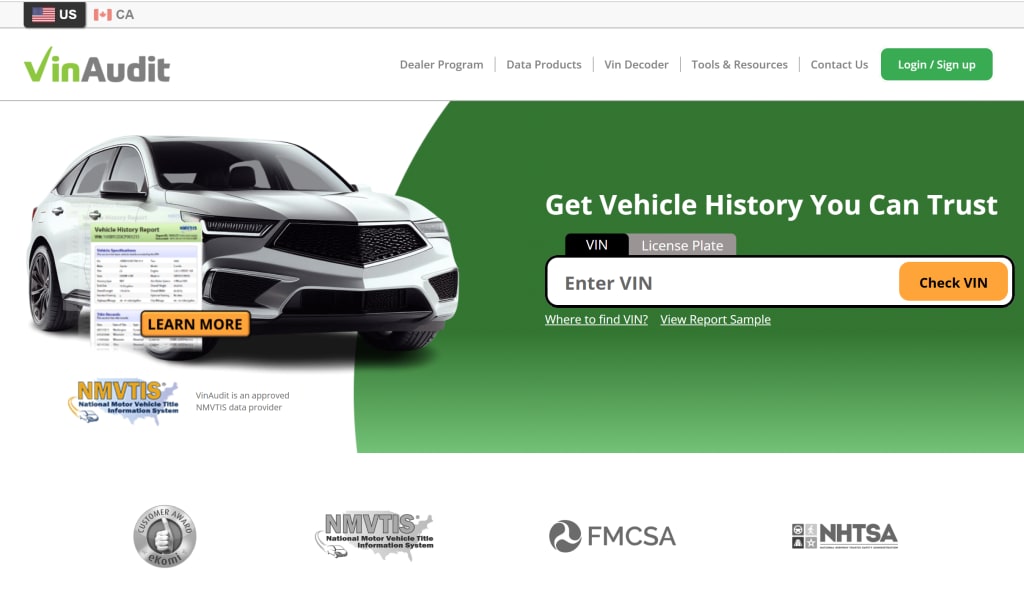
Tools like VIN decoders and automotive market data feeds have become indispensable to address these concerns and foster trust. These technologies not only empower buyers with detailed insights into a vehicle’s history and market value but also help sellers establish credibility by offering transparency and accuracy in every transaction.
Car Buying Made Smarter: How Shoppers Research Their Next Car
Car buyers today rely on a mix of digital tools and in-person experiences to make informed decisions. From online research and price comparisons to test drives at dealerships, these methods help buyers find the right vehicle while ensuring transparency and value.
- Online Research: Most buyers start online, spending 59% of their car-buying research time on websites comparing models, prices, and features.
- Automotive Research Websites: Platforms like Kelley Blue Book provide trusted reviews, price comparisons, and vehicle specifications.
- Visiting Dealerships: After online research, buyers visit dealerships to test-drive vehicles and confirm their choices in person.
- Using Multiple Devices: Many buyers use more than one device for research, averaging 1.69 devices during the process.
Buyers rely on diverse sources to research vehicles, from online platforms to dealership visits. This highlights the need for tools like VIN decoders and vehicle market data feeds, which consolidate insights from multiple sources and provide a deep understanding of the auto industry.
VIN Decoders and Vehicle Market Data: Simplifying Transparency in Car Buying
Understanding VIN Decoders and How Buyers Use Them
A VIN decoder is a tool that translates a vehicle’s unique 17-character Vehicle Identification Number (VIN) into critical vehicle details. This code, much like a vehicle’s fingerprint, contains information about the manufacturer, year, model, engine type, and more. By inputting the VIN into a decoder, buyers can uncover essential details that might not be apparent from a seller’s description, helping them avoid the hidden risks of buying a used car.
Tools like a free VIN decoder make it easy for consumers to access basic vehicle details such as the manufacturer, model year, and engine type. If there is an optional upgrade to get a vehicle history report, users can also uncover detailed vehicle histories, including accident records and salvage status, providing added assurance during the car-buying process.
Exploring Vehicle Market Data Feeds and Their Applications
Car market data feeds provide real-time updates on inventory, pricing trends, and market demand, giving both buyers and industry professionals a comprehensive view of the vehicle market. Automotive market data for professionals in the car industry is aggregate information from thousands of dealerships and private sellers, delivering insights into market conditions and helping users make smarter decisions.
For instance, a dealership looking to remain competitive might use VinAudit’s automotive market data feed to track real-time demand for electric vehicles like the Tesla Model 3 or Chevrolet Bolt within their region. By analyzing trends in pricing, inventory availability, and regional preferences, the dealership can adjust its sales strategy, ensuring they stock high-demand models at optimal price points.
Practical Scenarios for Using VIN Decoders and Automotive Market Data Feeds
The following scenarios highlight how these tools are used in real-world situations. These cases demonstrate the practical value of leveraging data to ensure data-driven decisions and foster trust in the vehicle marketplace.
VIN Decoders
- Confirming Manufacturer and Year: A buyer in Boston looks at a 2016 Nissan Altima listed for $15,000. A basic VIN decoder verifies the vehicle was indeed manufactured in 2016 by Nissan, ensuring the seller’s listing is accurate.
- Checking Engine Specifications: In Detroit, a buyer interested in a 2018 Ford Mustang wants a V8 engine model. A VIN decoder confirms the vehicle is equipped with the advertised engine, preventing a costly misrepresentation.
- Ensuring Proper Trim Level: A shopper in Denver is considering a 2020 Honda Civic advertised as the "EX" trim. Using a basic VIN decoder, they confirm it’s the lower "LX" trim, prompting renegotiation.
- Uncovering Accident History: A buyer in San Diego runs the VIN of a 2017 Toyota RAV4 using the VinAudit VIN Decoder with the history option. They discovered it had a major rear-end collision in 2019, information the seller had omitted.
- Checking Theft and Salvage Records: In Miami, a buyer considering a 2019 Chevrolet Silverado uses the VinAudit VIN Decoder and learns the vehicle was previously reported stolen but later recovered, ensuring they avoid potential legal issues.
- Uncovering Salvage Titles: A New York buyer runs a VIN on a 2017 Honda Accord priced at $19,000. The report uncovers a salvage title due to flood damage during Hurricane Ida, information not mentioned by the seller.
Automotive Data Feeds
- Pricing Optimization: A dealership in Houston adjusts the price of a 2022 Honda CR-V from $32,000 to $30,500 aftermarket data shows an increase in inventory for similar models within 50 miles.
- Inventory Management: A dealer in Atlanta notices that 2021 Ford Escape models are moving slower than anticipated. Based on market data, they offer a $1,500 discount to increase sales and free up space for more popular SUVs.
- Market Trend Analysis: A fleet company in San Francisco uses data feeds to identify rising demand for electric vehicles like the Tesla Model 3 and Chevrolet Bolt. They allocate 20% of their upcoming purchases to EVs to match market trends.
- Regional Demand Insights: A dealership in Phoenix tracks market data to see that compact sedans like the Toyota Corolla are highly sought after in the area, prompting them to increase their inventory of these models by 25%.
- Competitor Benchmarking: A dealership in Seattle compares its pricing for a 2020 Subaru Outback ($27,000) to similar listings within a 100-mile radius. The data shows competitors listing the same model for $25,500, prompting an immediate price adjustment.
The Combined Power and Future of VIN Decoding and Market Data Feeds
Making VIN decoders and vehicle market data feeds available to both consumers and industry professionals benefits the entire automotive ecosystem. These tools empower buyers with transparency—providing vehicle histories, pricing trends, and market insights—so they can purchase safely and with confidence.
For businesses, these tools build trust by enabling accurate vehicle listings and competitive pricing strategies. Dealerships can authenticate vehicle details, optimize inventory, and align offerings with consumer demand. This shared access to reliable data reduces fraud, smoothens transactions, and strengthens buyer-seller relationships.
By equipping all stakeholders with these tools, the auto industry creates a system driven by trust, transparency, and efficiency. This shared foundation benefits consumers, businesses, and the marketplace as a whole, ensuring a fairer and more reliable automotive ecosystem.
Conclusion
Transparency is no longer a luxury—it’s a necessity in today’s automotive market. These data solutions empower buyers and sellers alike by offering clarity, accuracy, and trust. Buyers gain confidence through verified vehicle histories and fair pricing, while sellers enhance their credibility and competitiveness.
In an industry where trust is paramount, these tools represent the future of automotive transparency. By leveraging them, the auto industry can foster better relationships, streamline transactions, and ensure a fair marketplace.
Whether you’re a buyer looking for vehicle details or a business seeking competitive market insights, VinAudit offers reliable VIN decoding solutions and market data products to meet your needs. Visit VinAudit.com to explore their data solutions.
About the Creator
Keep reading
More stories from writers in 01 and other communities.
How to Implement Zoho CRM Plus Without Losing Data Accuracy?
I wasn’t afraid of migration. I was afraid of numbers lying quietly. When I approved our move to Zoho CRM Plus, the decision looked obvious on paper. We needed one system. One source of truth. One place where sales, support, and marketing finally aligned.
By Jane Smithabout 20 hours ago in 01


Comments
There are no comments for this story
Be the first to respond and start the conversation.