
How to Validate Your Game App Idea Before Development?
Prove your game idea works before investing in development
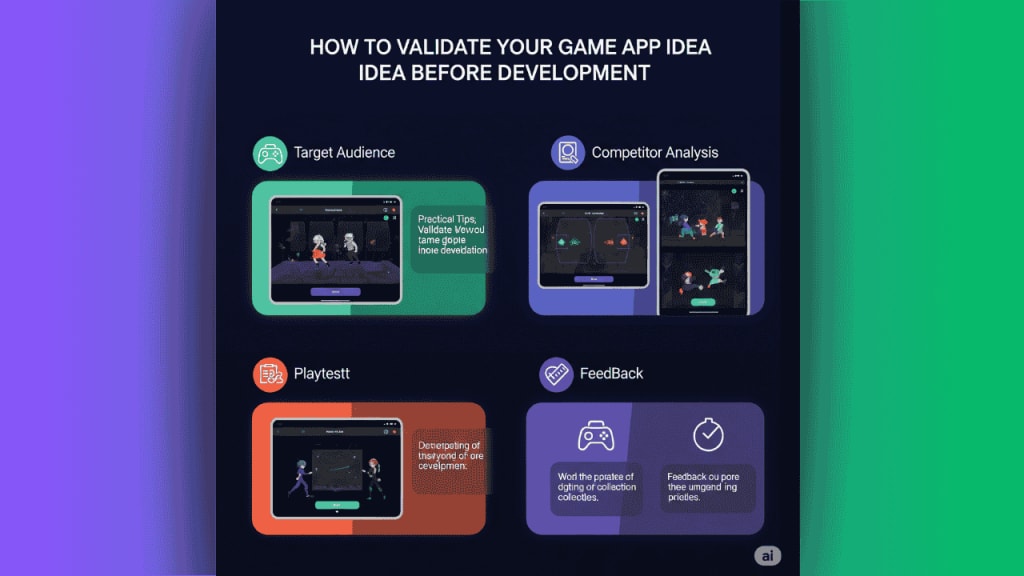
Most failed game startups don’t die in development—they die before development even starts. Why? Because they built something no one wanted to play. Validating your game idea is the most essential step that too many founders either rush or skip.
In today’s fiercely competitive mobile and casual gaming market, there’s little room for guesswork. Whether you're imagining a hyper-casual tapper, a mid-core RPG, or a real-money game like Rummy, you need to know whether your concept has legs. A validated idea can save months of wasted development time and thousands of dollars in production costs.
The good news? You don’t need to build a fully functional version to validate it. You just need to know how to test interest, engagement, and potential traction early.
Define the Core of Your Game Idea
Before you do any research or testing, you need clarity. What exactly are you building? A solid game concept has a clear, unique core mechanic. Ask yourself:
What is the one thing that makes my game fun?
Is it skill-based (like chess), chance-based (like slots), or a hybrid (like Rummy)?
Who is the game for?
Define whether your game will be single-player, multiplayer, synchronous, asynchronous, casual, hardcore, free-to-play, or monetized via real-money competition. The more specific you are at this stage, the easier it becomes to validate.
Research the Market Landscape
Now that you have a concept, it’s time to explore the world it will enter. The app stores are flooded with games. What makes your concept worth noticing?
Look at charts on SensorTower, App Annie, and the Play Store. See what genres dominate. Note which mechanics repeat. Research:
- Games similar to yours
- Recent success stories in your genre
- Trends in monetization (e.g., ad-heavy vs. in-app purchase)
If you're planning something similar to a Ludo or Rummy-style game, look at how these titles rank, what their reviews say, and where they advertise. There’s no shame in entering a crowded space—as long as you know what makes your version different.
Identify and Understand Your Audience
Many founders build games for themselves. But you’re not the target user. Validation requires understanding who you’re building for, and how they currently behave.
Create a user persona:
- Age group
- Gaming habits
- Device preferences
- Monetization tolerance (e.g., ad watchers vs. spenders)
Use tools like Google Trends, Reddit forums, Discord servers, or mobile gaming Facebook groups. Don’t just read what users say—look at what they complain about in existing games. These are your opportunity gaps.
Evaluate Monetization Potential Early
Let’s not pretend money doesn’t matter. Even indie developers want their games to earn. So assess early: How will this game make money?
Options include:
- Ads (interstitials, rewarded videos)
- In-app purchases (cosmetics, unlocks, time savers)
- Real-money gaming (entry fee competitions)
Games like Rummy prove that skill-based formats can generate serious revenue through competition-based models. Players are often willing to invest real cash for the chance to win real rewards—especially if the game is based on known rules and has proven legitimacy.
If your game has a new mechanic, think about how users might spend. Don’t tack on monetization later. Validate if it fits from day one.
Competitive Benchmarking
You’re not alone in the arena. Knowing who your competitors are—and how they operate—is vital to shaping your positioning.
Steps to benchmark:
- Download similar apps
- Play them extensively
- Read user reviews
Look at changelogs to see how the app evolved
Do a SWOT analysis:
Strengths: What makes them addictive?
Weaknesses: What frustrates users?
Opportunities: What gap are they missing?
Threats: What would stop users from switching to your game?
If your idea overlaps with something like Teen Patti, Ludo, or Rummy, understand why these games work—not just from a player view, but from a business standpoint.
Create a Lightweight Prototype or MVP
Validation doesn’t mean full development. In fact, it's better to avoid a heavy build. Instead, create a clickable prototype or playable demo that includes only your game’s core loop.
You can:
- Use Figma or Adobe XD for UI mockups
- Use tools like Buildbox or GDevelop for no-code demos
- Skip polish: no need for sound effects or rich graphics
Your goal isn’t to impress. It’s to learn whether users grasp and enjoy the mechanic quickly.
Get Honest Feedback (Not From Friends)
Friends lie. Not intentionally—but they’ll cushion criticism. To truly validate, you need input from strangers.
Try:
- Posting your prototype in relevant subreddits
- Using platforms like PlaytestCloud or BetaFamily
- Running test ads and directing traffic to your demo
Ask targeted questions:
- What confused you?
- Would you play again?
- What felt boring or too hard?
Iterate fast based on this feedback. Don’t fall in love with your original idea—fall in love with what users are willing to play.
Validate Market Demand with Pre-launch Strategies
Still not sure if your idea has demand? You don’t need to guess. Use lightweight marketing tests.
Steps:
- Build a one-page landing site for your game
- Include a trailer or mockup
- Collect emails or pre-registrations
Then:
- Run Facebook or Google Ads to it
- A/B test creative headlines and thumbnails
- Track conversions, bounce rate, and user behavior
If 1000 people see your ad and only 3 sign up, you’ve got a signal. Either the concept or messaging needs work.
You can also run polls on social channels or do organic content campaigns (e.g., a dev diary) to see what garners the most traction.
Learn From Pre-Validated Game Ideas
You don’t need to reinvent everything. Sometimes, success comes from remixing what already works.
Game formats like Rummy already show market validation and user traction. These games tap into:
- Familiarity (people already know how to play)
- Competition (real skill = real stakes)
- Community (multiplayer and leaderboard systems)
If your idea involves cards, real-time multiplayer, or strategic play, you may benefit from aligning with these proven mechanics while adding your own twist.
Case in point: many Indian gaming startups started with validated real-money card games before branching into fantasy or casual gaming. This route helped them build an audience, revenue stream, and investor confidence.
When to Pivot or Move Forward
After all this testing, you’ll have real data. Now comes the tough decision.
Move forward if:
- Testers play your prototype and request more
- Ads drive cost-effective signups
- Users understand your core loop quickly
Pivot if:
- Feedback points to confusion or disinterest
- Your concept overlaps too closely with dominant competitors
- Monetization doesn’t match player intent
Failure at validation is not failure—it’s redirection. Some of the best games today were born from pivots.
Conclusion
Validating your game app idea before development is more than just smart—it’s necessary. In a space where thousands of games are released every month, the ones that win are those built on real feedback, market understanding, and user demand.
Use research, lightweight testing, and honest feedback to determine whether your idea is worth building. Don’t just trust your instincts—trust the data.
Games like Rummy didn’t succeed by accident. They found a way to deliver fun, familiarity, and competition in a validated format. Whether you're trying to build the next casual hit or a high-stakes skill game, the roadmap remains the same: validate before you code.
If your idea passes the test, you won’t just be building a game. You’ll be building something players actually want—and that’s where the real journey begins.
About the Creator
How Far Can RS232 Run and How to Extend It Safely?
If you’ve ever tried to connect RS-232 devices over a long distance and encountered data errors, intermittent communication, or unexplained signal noise, you’re not alone. One of the most frequently asked questions in industrial communication is: “What is the maximum distance RS-232 can reliably support?”
By ethernet-network2 days ago in 01
Jeff Bezos' head-turning then-and-now photos from high schooler to Amazon billionaire
The businessman and entrepreneur has undergone a huge transformation over the years Looking at Jeff Bezos today, with his $252 billion fortune and life of luxury, it's difficult to imagine him as a regular child, let alone as a short-order cook at McDonald's.
By Dena Falken Esq5 days ago in 01




Comments (1)
Validating game ideas is crucial. I've seen projects fail due to skipping this step. Define the core, research the market, and save time and money.