
How to Unify Public and Private Cloud Systems into Hybrid
Do away with IT inefficiencies by merging private and public clouds that shackle productivity.


As people’s work and personal lives have moved from wired to wireless states over the last decade and a half, the technology that enables this flexibility – cloud computing – has evolved too. Today, nearly every business worth its salt uses the cloud in one form or another. In the enterprise, the pace of cloud adoption is even faster.
The 2021 State of the Cloud Report found that a whopping 92% enterprises use a combination multi-cloud systems, including multiple public clouds and hybrid clouds consisting of both private and public clouds.
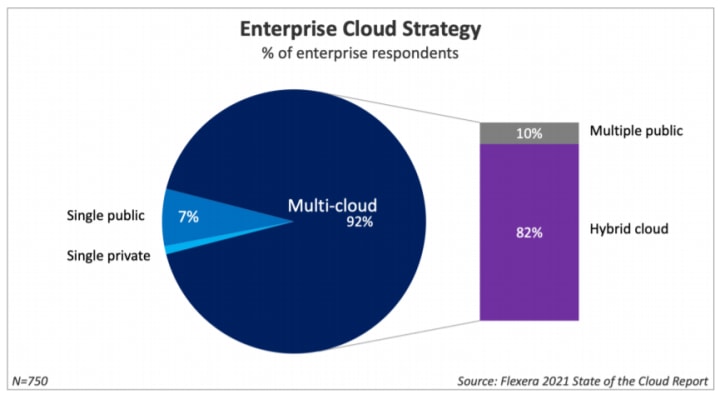
On the surface, this seems great, but in the real world, these multifarious public and private clouds that live within the same organization are often blind to each other. They operate in their own silos and the data, applications and resources of one cloud ecosystem are unable to be leveraged on a different cloud platform.
One way to prevent this waste of resources is by moving all functions from this scattered bunch of cloud platforms onto a single cloud, whether public or private. However, this is often too expensive, cumbersome or just impractical, since not all cloud platforms have the specialized capabilities demanded by different cloud-based applications.
The alternative in such a scenario is to unify all cloud platforms so that there is easy communication across different applications, without disturbing the integrity of each individual platform.
Sounds utopian, but the big question is, how? How can a company make sense of the multitude of cloud platforms on which it operates, so that business objectives are met, while not compromising on key aspects like security, flexibility and costs?
Enter the hybrid cloud.
The hybrid cloud, as the name suggests, enables public and private clouds to work together without affecting the integrity of each other. The quick scalability of public clouds meets the higher security of private clouds to offer users the best of both worlds.
IBM’s Institute of Business Value predicted that 98% of organizations will opt for hybrid cloud systems by the end of this year to reap the benefits of scale and integration. However, just 38% will actually have the tools and knowhow to pull off such an integration!
Is your organization prepared for such large-scale integrations? Is there a reliable methodology for cloud migration? Here are four steps you can take:
1. Take stock of all your on-premise and cloud workloads
Different applications are hosted on specific cloud platforms based on their requirements for speed, storage, security, costs, service requirements, governance issues and more. By taking stock of what workloads are hosted on which cloud, IT administrators prepare the ground work for the task ahead and ensure that nothing slips through the cracks.
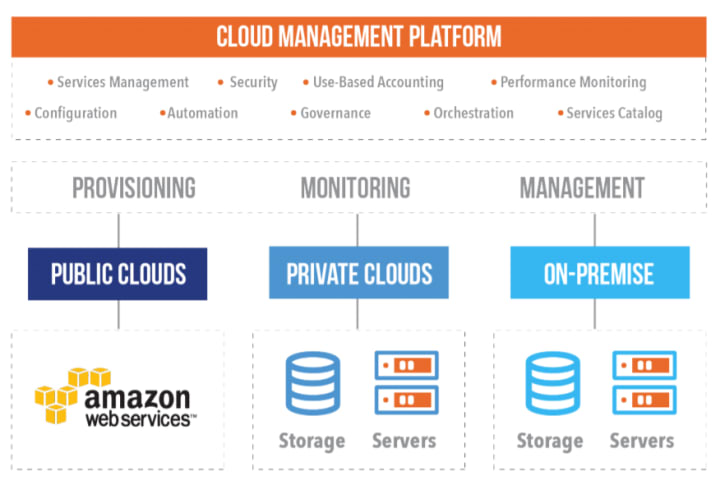
Formulate and implement a cloud management strategy to integrate cloud-based applications with on-premise legacy infrastructure. Firstly, understand the connectivity requirements for each cloud platform to ensure that each cloud can function to its optimum capacity. Using network virtualization to achieve this goal is a good idea.
Next, make sure there’s a “single pane of glass” administrative console that offers a clear view of all applications and data across all the integrated cloud platforms. Such an interface allows the various services and applications across different clouds to communicate with each other.
2. Understand security and privacy issues in the hybrid cloud
Given the vast differences in security options on public and private clouds, it is imperative to spell out and implement rigorously the security requirements of each cloud component as if it were acting in isolation. Set up strict access controls for the different areas of the hybrid cloud. A single sign-on with a unified identity management system helps keep things simple.
The hybrid cloud offers movement across different cloud environments. However, the security requirements for different applications vary widely. When moving an application between cloud platforms, ensure that the security levels of the destination cloud match or exceed the home cloud.
Set up visibility and controls across the entire cloud network, if it doesn’t already come with the hybrid cloud tool. Don’t hesitate to create custom controls using APIs and on premise service options.
3. Define governance parameters for the newly integrated cloud
Now that the various cloud services have been integrated via a single tool, it is important to ensure that the individual functionality of each cloud remains undisturbed, even as it plays nice with all the other private and public cloud platforms on the network.
Ensure governance and compliance requirements of each individual cloud are enforced on the hybrid cloud as well. Training users in maintaining compliance requirements and constantly monitoring for any gaps are pre-requisites in the initial stages.
This is where the business and administrative aspects of the integration come into play.
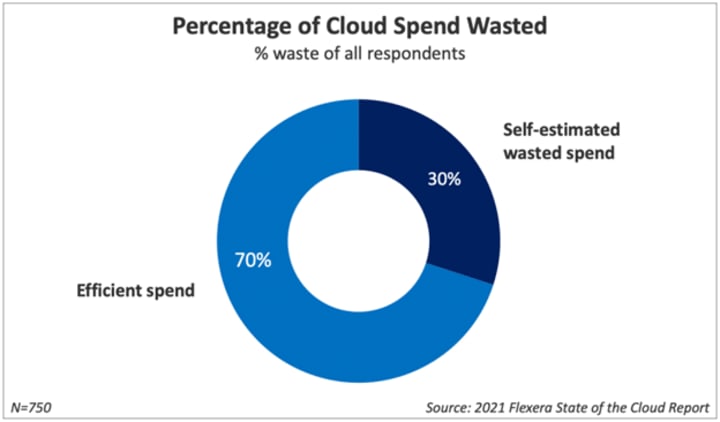
Follow cloud cost optimization best practices to avoid overspending on software or infrastructure resources in the cloud. Data from Flexera shows that users often don’t notice overspending on hybrid cloud platforms. Cloud users underestimate the amount of wasted cloud spend pegging wasted resources at 30%, while the real figure actual stands at 35%.
4. Set up a backup and disaster recovery plan
So many users trust the cloud as their ultimate data warehouse that the thought of something ever happening to the cloud and wiping out all of the data doesn’t cross their minds.
Avoid this rookie mistake by setting up regular, scheduled data backups and archiving of older data across all cloud platforms. Check for built-in data backup and recovery options for each cloud service and activate them for across the hybrid cloud network.
Also choose the physical location of your backup servers carefully to avoid any legal conflict regarding geographical restrictions on data storage and backups.
Where to, next?
While it may be tempting to savor the benefits of a hybrid cloud strategy, it is more important that there’s buy-in from top management to make the process go as smoothly as possible. CIOs and CTOs need to be constantly focusing on reducing costs and complexities to realize the financial, operational, and competitive business benefits of cloud integration in the long run. Here’s to loads of silver linings in all your clouds!
About the Creator
Tracy Vides
Tracy Vides is a content strategist who helps small businesses and startups crack their digital marketing and PR efforts. She is also a prolific blogger -- her articles appear regularly on Business2Community, She Owns It and Prowly Mag.
Keep reading
More stories from writers in 01 and other communities.
🔋 Hydrogen Fuel: Powering the Future of Clean Energy
As the world searches for cleaner, more sustainable energy sources, hydrogen fuel has emerged as one of the most exciting contenders ⚡. Often described as the fuel of the future, hydrogen promises zero emissions at the point of use, high energy efficiency, and versatility across multiple industries. But what exactly is hydrogen fuel, how does it work, and can it truly replace fossil fuels? Let’s explore 🚀.
By Toader Adelin3 days ago in 01
House Cleaning Scopes That Keep Results Consistent
A clean home feels simple until you try to keep it that way during a busy month. Work deadlines, school schedules, pets, and visitors stack up. Dust returns faster than expected. Bathrooms show water spots. Kitchen grease builds around the stove. Many homeowners hire cleaning help, then feel unsure about what to request and how to judge quality.
By Jared Benning6 days ago in 01
A Dart at Dusk
Seconds ago, the sullen sun set on the two of us… my exuberant furry companion and me. A fresh breeze embraces us, delivering welcome relief from the day’s oppressive heat. His typical stumbling and staggering along — apace with a sloth — has turned into trip-trapping, high-stepping, almost skipping along.
By Angie the Archivist 📚🪶5 days ago in Petlife


Comments