
How to Set and Achieve Financial Goals: A Step-by-Step Guide
This blog explains how to set and achieve financial goals

But planning towards securing that future by setting and achieving your financial goals is not easy, whether you are planning for retirement, saving up for a major purchase, or building a safety net. Real financial success takes discipline and structure-both aspects that require the proper tools and steps to follow. This guide will take you through a step-by-step process of how to help you set clear financial goals and, more importantly, achieve them.
Manage your own finances or try a career in finance-the bottom line is that financial planning can be a real game-changer. An investment banking course can help you with the management and growth of wealth- something applied equally well to both achieving your personal and professional goals.
Step 1: Understand Your Current Financial Situation
Understand what is going on in your financial life before you start setting any financial goals. And know where you stand to have a starting point from which to build your financial plan.
1.1. Record Your Income and Expenses
Start to track everything that constitutes income and expenses, and from there, it will show you an actual situation of the cash flow, where you can cut back on unnecessary spending. You can make this easier with the help of budgeting applications or even spreadsheets.
1.2 Analysis of Debt
Create a list of all the outstanding debts, credit cards, loans, and mortgages. It now becomes important to know what you owe and at what interest rate for each of the debts. Pay off debts with high interest first in order to save more of your income for savings and investing.
1.3. Savings Evaluation
How much have you saved so far? That includes money for emergency funds, retirement accounts, and other short- and long-term savings goals. Knowing this will help determine how much more you need to achieve financial security.
Step 2: Set Clear, SMART Financial Goals
Financial goals should not be just general wishes. They must be SMART: Specific, Measurable, Achievable, Relevant, and Time-bound. You will then have a clear roadmap to follow.
2.1. Specific
Be clear about what you want to accomplish. Instead of saying, "I want to save money," specify the amount or for what purpose, like "I want to save $10,000 for an investment banking course."
2.2. Measurable
Make it measurable to track progress toward your goal. For example, if you need to repay $5,000 of debt, break it down into manageable monthly repayments.
2.3. Achievable
Stretch for something that is currently achievable within your current financial status. For example, if you earn $50,000 per year, it is impossible to save $40,000 in one year, but saving $5,000 or $10,000 may be achievable.
2.4. Relevant
Your goals should align with your long-term financial plans. If you want to retire early, saving aggressively and using your investments wisely would be relevant to that objective.
2.5. Time-bound
Setting a deadline to work towards. For instance, "I want to save $5,000 in the next 12 months" gives you a clear time frame to work toward.
Step 3: Construct a Financial Plan
Once you set your goals, the next step is making a plan for achieving such goals. A financial plan can be described as a roadmap that outlines the steps that will be undertaken to execute your goals.
3.1. Budgeting
It contradicts the foundation of your personal financial plan: your budget. It guides you to direct your income toward funds that will probably be channeled into your essentials, debt paying, savings, and investments. Your budget must correlate with your financial goals. If you want to save for retirement, then you must demonstrate a fraction of your income going into retirement accounts or investments.
3.2 Emergency Fund
Before aggressively pursuing other savings objectives, you should have an established emergency fund. This should be sized to cover 3-6 months of living expenses so that you will have a cushion in case of job loss, medical conditions, or other problems which may be unexpected.
3.3. Repayment of Debt
High-interest debt will most likely need some form of debt repayment to be part of your financial plan, and paying it off will free up cash flow for you to save and invest better.
3.4 Automate Savings and Investments
Automation of savings and investments can be of great help in remaining on track. Set up automatic transfers into savings accounts or your retirement funds, so that money is moving from the checking account towards goals without spending enticement.
Probably, investing ranks among the most potent forces that can build your wealth and get you closer to more complicated long-term financial goals. However, you must just pick the right investment strategy that is appropriate for your goals, time horizon, and risk tolerance.
4.1. Determine Your Risk Tolerance
Determine how much risk you can absorb before investing. High-risk investments-investments like equities-tend to pay higher yields, but they can swing wildly. At the low-end of the spectrum, bonds tend to generate smaller yields but are usually steadier.
4.2 Diversify Your Portfolio
Diversification among other asset classes, including stocks, bonds, and real estate, might offer possible means for risk reduction. A poor return on one is very likely to go hand-in-hand with a good return on others.
4.3. Seek out professionals
If you are unsure of how to invest, it is best to get professional help. An investment financial advisor can take you through the process of creating a tailored investment plan for your needs. A finance person will find valuable the investment banking course because of its ability to equip technical knowledge and practical wisdom in taking well-informed investment decisions and portfolio management properly.
Step 5: Track Your Progress and Make Adjustments End
As years pass, financial goals and life conditions change, so you should regularly review and maybe update your financial plan.
5.1. Monitor Your Progress
Note how well you are doing with saving, debt repayment, and investment growth, so you can find out if you are on track to fulfill your goals. If you discover you are falling behind schedule or your goals change, you can change before you fall even more behind schedule.
5.2. Reassess Your Goals Periodically
Changes in personal life such as marriage, house, or children may require adjusting your financial objectives. Adapt to changing situations and revise your targets.
5.3. Celebrate Your Successes
Repaying a substantial portion of the debt or reaching your target savings requires celebrations. Successes allow you to experience more motivation to remain with your financial program.
Step 6: Continuously Educate Yourself.
The only way to long-term success is financial literacy. One has to continuously educate oneself on personal finance, investments, and economic trends. Resources such as books, online courses, and podcasts have proved of help in deepening knowledge.
There is an investment banking course that one would take, teaching everything that has to do with financial markets, risk management, and investment. All such expertise improves both personal finance management and its bankability in the finance world.
Conclusion: Turning Financial Goals Into Reality
That involves deliberate planning, commitment, and continuous effort toward setting and attaining personal financial goals. From understanding your current financial condition to creating a financial plan, investing wisely, continuously monitoring the progress, and continuous education, you will be able to make your financial goals a reality.
Whether it is personal financial freedom or a career in finance, learning how to manage and grow wealth is critical. A course in investment banking can prove to be a potent step to ensure that you gain skilled and expert experience in decision making, not only with your finances but for affairs of a professional nature as well.
Appropriate attitude and strategy, in addition to the right techniques, will help you to attain the dream that you hold for your financial future, and put you on the right track to long-term success.
About the Creator
Fizza Jatniwala
Fizza Jatniwala, an MSC-IT postgraduate, serves as a dynamic Digital Marketing Executive at the prestigious Boston Institute of Analytics.
Keep reading
More stories from Fizza Jatniwala and writers in 01 and other communities.
Top Tools for Automating Security in a DevSecOps Environment
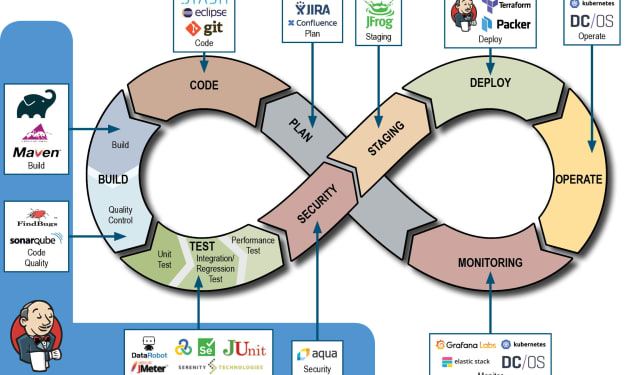
DevSecOps introduces into the developmental pipeline security and it can be carried out through the organizations embracing this new way of operation. DevSecOps is a term combining development and operations that ease the process of accelerating software delivery while including security in the lifecycle. This environment, while using automation, makes sure to discover and mitigate, in real-time vulnerabilities preventing costly breaches. For those who want to take their expertise up a notch in this always changing landscape, enrolling in a DevOps course in Mumbai can be a good step forward.
By Fizza Jatniwalaabout a year ago in 01
The Growing Demand for Custom Flexible Packaging Manufacturers in China
Flexible packaging has become one of the fastest-growing segments of the global packaging industry. Businesses across food, beverage, cosmetics, and pharmaceutical sectors are increasingly shifting away from rigid containers toward lighter and more adaptable packaging solutions. In many cases, companies rely on a custom flexible packaging manufacturer to create packaging solutions that match their product needs and branding goals. This transition is driven by efficiency, sustainability considerations, and the need for packaging that works well with modern production systems.
By charliesamuel2 days ago in 01


Comments
There are no comments for this story
Be the first to respond and start the conversation.