
How to Improve SEO Rankings Using Semantic Keywords in 2025
Boost Topical Relevance and Visibility with Smarter Keyword Usage


Disclaimer: This content was generated using AI.
Introduction
Ever wondered why some content ranks for dozens of related search terms while others barely move the needle? The answer often comes down to semantic keywords.
Unlike stuffing a page with exact matches, semantic SEO creates content that aligns with the intent and context behind user queries. It’s the secret to creating articles that search engines love—and real people trust.
In this updated guide, you’ll learn:
- What semantic keywords are and how they differ from outdated LSI terms
- Why they’re essential for SEO success in 2025
- How to uncover and apply them effectively in your content
Let’s get started.
What Are Semantic Keywords?
Semantic keywords are terms and phrases closely related in meaning to your main keyword. Instead of being just synonyms, they help define the context, associations, and intent of a given topic.
If your main keyword is “vegan protein sources,” semantic keywords could include:
- Plant-based protein
- Complete amino acids
- Lentils and legumes
- Nutritional yeast
- Vegan meal planning
These variations reflect real-world concepts that make your page more relevant and comprehensive in the eyes of Google’s algorithms.
Think of your primary keyword as the headline and semantic keywords as the supporting cast that fills in the story.
Semantic Keywords vs. LSI Keywords
It’s easy to confuse LSI (Latent Semantic Indexing) keywords with semantic keywords—but the two aren’t the same.
- LSI terms: Based on older methods that find words that often appear together
- Semantic terms: Focus on meaning, context, and intent
Google has publicly stated it doesn’t use LSI in modern search. Instead, search engines use machine learning and NLP (Natural Language Processing) to understand queries and content on a deeper level.
That means you need to write for context, not just co-occurrence.
Why Semantic Keywords Matter More Than Ever
Gone are the days when repeating the same keyword a dozen times worked. In 2025, semantic relevance is what separates shallow content from trustworthy resources.
Benefits of Semantic SEO:
- Better topical coverage
- Increased time on page and engagement
- Stronger alignment with user intent
- Improved resilience to algorithm updates
Search engines now evaluate the full experience of your content—semantic terms help you check more boxes.
Match Search Intent with Semantic Language
User intent falls into several categories:
- Informational: Seeking knowledge or how-tos
- Navigational: Trying to find a specific site or page
- Commercial: Comparing products or services
- Transactional: Ready to buy or sign up
By including related semantic terms, you ensure your page answers questions across those stages.
Example: A page targeting “digital nomad visa” might include terms like:
- Remote work eligibility
- Country-specific requirements
- Visa duration
- Tax implications
- Application timelines
Each one meets an aspect of user intent—and earns more relevance.
How Google Uses Semantics
Search engines now rely on AI-powered models to interpret content. These include:
- RankBrain: Learns from search behavior
- BERT: Processes sentence-level meaning
- MUM: Understands complex, multi-intent queries
What this means:
- Pages are judged on how well they answer implied questions
- Keyword repetition is less effective than topical depth
- Semantic clarity signals expertise
Tools to Find Semantic Keywords
Use these sources and tools to uncover semantically rich terms:
1. Google SERPs
- "People Also Ask"
- "Related Searches"
- Pulls questions and concepts users actually ask
- Clustering tools help build logical content maps
3. Ahrefs / SEMrush / Surfer
- “Also rank for” data
- TF-IDF keyword gap analysis
4. InLinks
- Maps internal topic relationships and entities
Don’t just list related terms—group them by meaning or user stage to guide your structure.
How to Add Semantic Keywords Effectively
1. Organize by Topic Clusters
Build a hub-and-spoke model:
- One central page (pillar)
- Multiple subpages for deeper semantic branches
Example: “Email marketing” as a pillar can link to:
- Cold email outreach
- Email automation tools
- A/B testing for subject lines
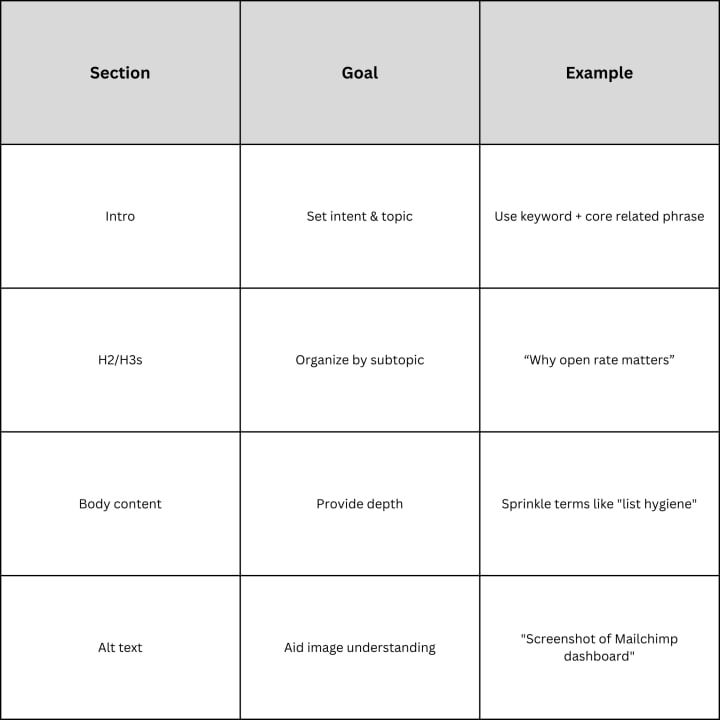
2. Structure Content with Semantics
3. Use Semantic Variants Naturally
Don’t over-optimize. Focus on clarity, not repetition. Aim for:
- Natural phrasing
- Conversational tone
- Context-rich explanations
Practical Example: Ranking for "Home Workout Plans"
Old method:
- Stuff “home workout plans” in every header
- List generic routines
Semantic SEO method:
Include terms like:
- Bodyweight exercises
- Resistance band training
- Weekly workout calendar
- Beginner vs advanced routines
- Injury prevention tips
The result? You show topical authority while ranking for more queries.
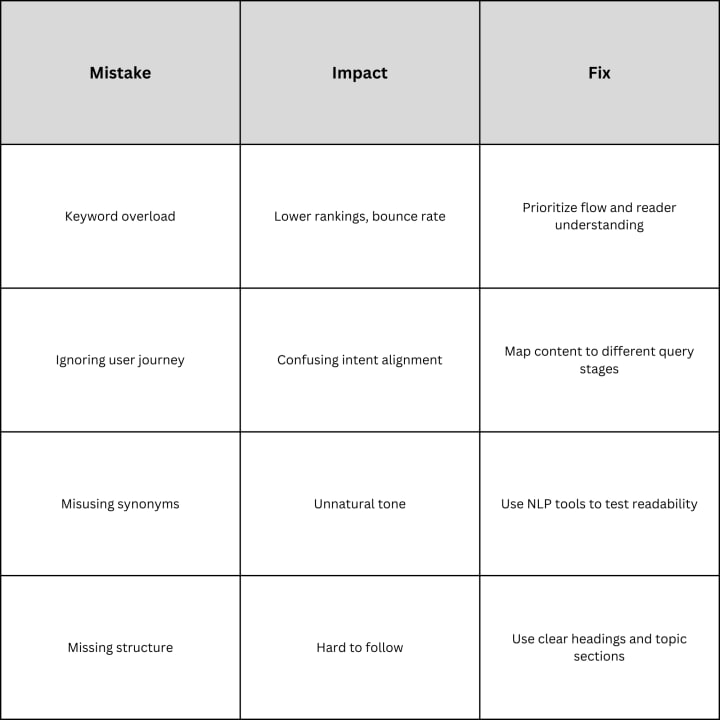
Mistakes to Avoid
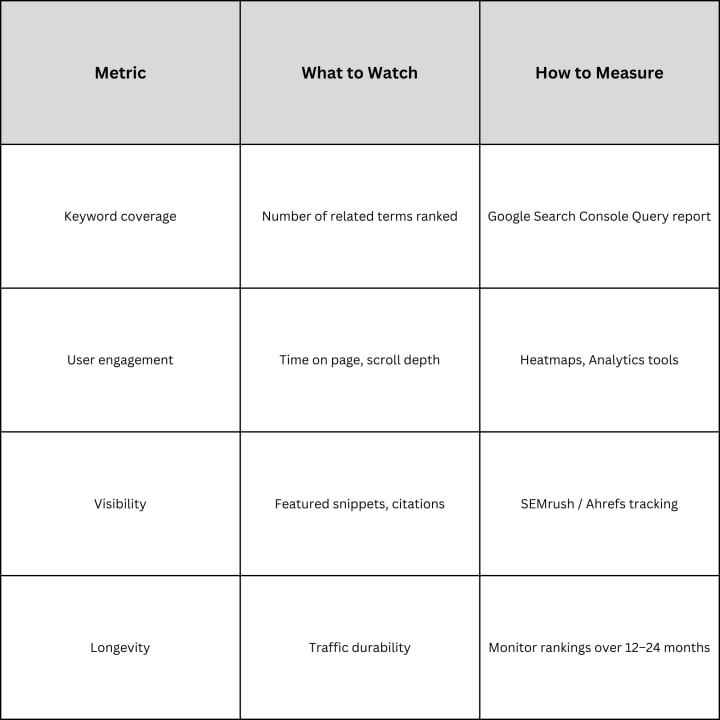
How to Track Semantic Success
Ready for the Future of Search?
To keep winning in SEO:
- Stay conversational—optimize for how users talk
- Use structured data to help machines understand
- Keep your content flexible for voice and AI search
- Update frequently to keep your semantic clusters fresh
Semantic SEO helps your content get found, understood, and trusted.
Final Takeaway
In 2025 and beyond, ranking isn’t about repeating phrases—it’s about mastering meaning.
When your content reflects the language of real people and addresses layered user intent, you:
- Build credibility with readers
- Align with Google’s evolving algorithms
- Future-proof your rankings
So next time you optimize a page, don’t just think "keyword." Think context, intent, and connection.
That’s how you win SEO in the age of semantics.
About the Creator
James Oliver
I help entrepreneurs build profitable online businesses. Sharing proven strategies and insights as I grow my own affiliate marketing business to $1M per year.
Keep reading
More stories from James Oliver and writers in 01 and other communities.
Australia Thermal Camera Market Size & Forecast 2025–2033
Australia Thermal Camera Market: A Clear View into a Hot Technology The Australia Thermal Camera Market is entering a decisive growth phase as infrared imaging becomes a cornerstone of modern safety, automation, and surveillance. According to Renub Research, the market size is expected to reach US$ 137.6 million by 2033, up from US$ 80.69 million in 2024, registering a compound annual growth rate (CAGR) of 6.11% between 2025 and 2033. This steady expansion reflects a powerful combination of technological advancement, rising security needs, and the growing role of thermal imaging across industrial, healthcare, and public safety domains.
By Renub Research5 days ago in 01
App Development Cost in Delaware: A Practical Guide
So, you want to build an app in the First State? Welcome to 2026, where every "idea guy" thinks they need an LLM wrapper. You're probably staring at a blank spreadsheet wondering if you should sell your car to fund this.
By Samantha Blake2 days ago in 01
Smart phones, Humans and Aliens.
WARNING. I will be tapping into one of your favorite creative tensions: The absurdity of humans worshipping their glowing rectangles as if they were tiny oracles. There’s something deliciously poetic about that contradiction, and it lends itself beautifully to an instructive proviso.
By Novel Allen5 days ago in Poets




Comments
There are no comments for this story
Be the first to respond and start the conversation.