
How to Create a Calming, Welcoming Therapy Space
Expert Tips for Designing Therapy Offices

The room where therapy happens plays a big role in how comfortable clients feel. When clients walk into a peaceful therapy room, they feel more ready to open up and work on their mental health.
This guide shares practical tips about creating therapy spaces that work well for everyone. We'll cover everything from colors to furniture, based on real research about what helps people feel calm and safe.
Why Therapy Space Design Matters
A well-designed therapy room does more than look nice. Research shows that the right space can:
- Help clients feel less anxious
- Make it easier to talk about difficult topics
- Create a sense of safety
- Help clients focus better
- Make therapy work better overall
Studies by environmental psychologists found that simple things like soft lighting and comfortable chairs can reduce stress levels by up to 15% during therapy sessions.
Choosing the Right Colors
The colors in a therapy room affect how people feel. Use colors proven to help people feel calm:
Best Colors for Therapy Rooms:
- Soft blue: Creates a peaceful feeling
- Light green: Helps with relaxation
- Warm beige: Makes rooms feel welcoming
- Gentle gray: Keeps the space professional
Colors to avoid:
- Bright red: Too energetic
- Dark colors: Can feel heavy
- Neon colors: Too distracting
- Pure white: Can feel too clinical
Lighting Your Therapy Room
Good lighting helps people feel comfortable and relaxed. Pay special attention to lighting because it affects how people feel during their sessions.
Natural Light
Natural light offers many benefits:
- Makes people feel more awake
- Helps reduce stress
- Creates a connection to the outside world
- Makes rooms feel bigger and more open
For example, coworking therapy office spaces like Ethera, feature large windows with adjustable blinds.
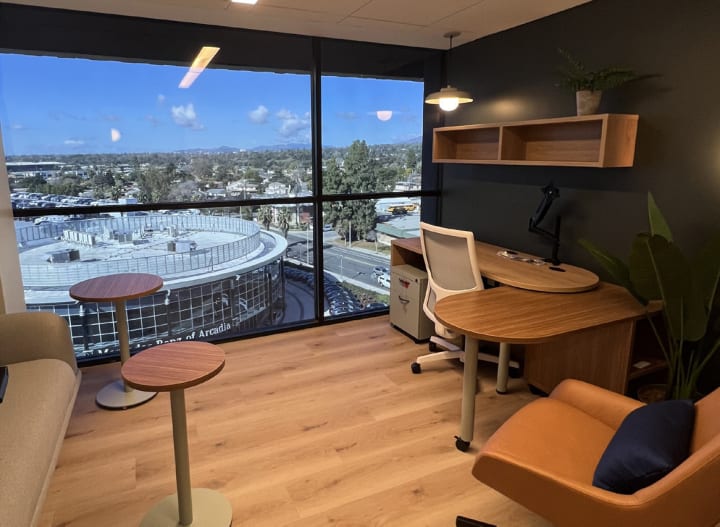
This lets therapists control the amount of natural light based on:
- Time of day
- Weather conditions
- Client preferences
- Privacy needs
Artificial Lighting
When natural light isn't enough, the right artificial lighting matters. Our therapy rooms include:
- Soft overhead lights that don't cause glare
- Wall sconces for gentle background light
- Desk lamps for note-taking
- Dimmer switches for light control
Avoid:
- Harsh fluorescent lights
- Very bright bulbs
- Lights that flicker
- Deep shadows
Furniture Layout for Safety and Comfort
Choosing the Right Furniture
Therapy rooms should include:
- Comfortable chairs with good back support
- Small tables for water or tissues
- Storage spaces for therapist materials
- Sturdy furniture that doesn't make noise
Furniture choices to focus on:
- Comfort for long sessions
- Easy cleaning between clients
- Professional appearance
- Durability for daily use
Room Layout
The way furniture sits in the room matters for therapy. Our spaces follow these rules:
Seating Setup:
- Chairs face each other at a comfortable angle
- Both therapist and client can see the door
- Everyone has enough personal space
- Easy paths to enter and exit
Privacy Features:
- Sound-proof walls
- Doors that close securely
- Windows with privacy blinds
- Space between therapy rooms
Storage and Organization
Clean, organized rooms help people focus better. An ideal therapy room has:
- Hidden storage for supplies
- Clean desk surfaces
- No visible cords or equipment
- Space to keep personal items
Natural Elements for a Peaceful Space
Adding elements from nature helps create calm in therapy rooms. Research shows that natural elements can lower stress levels by up to 20% during therapy sessions.
Plants and Natural Decor
Some spaces include natural decor and plants:
- Low-maintenance indoor plants
- Natural wood elements
- Stone features
- Pictures of peaceful nature scenes
Benefits of Plants in Therapy Rooms:
- Clean the air
- Add life to the space
- Create a peaceful feeling
- Connect people to nature
Our Plant Choices:
- Snake plants
- Peace lilies
- Bamboo palms
- Air plants
Natural Materials
We use natural materials throughout our therapy spaces:
- Wood furniture
- Cotton or wool fabrics
- Stone accent pieces
- Natural fiber rugs
Adding Personal Touches
Artwork and Decorations
Include carefully chosen artwork that:
- Shows peaceful scenes
- Uses soft colors
- Avoids busy patterns
- Creates talking points when needed
Wall Art Guidelines:
- Simple landscapes
- Abstract designs in calm colors
- Black and white photography
- Nature themes
Sound and Scent
Creating the right atmosphere includes:
Sound Management:
- Sound machines outside rooms
- Good sound barriers between spaces
- Optional calm background music
- Quiet air conditioning systems
Fresh Air and Scent:
- Good air circulation
- Air purifiers in each room
- Unscented spaces
- Open windows when weather permits
Keeping Spaces Clean and Organized
Daily Organization
- Daily cleaning service
- Fresh tissues and water
- Organized supply storage
- Clear surfaces
Professional Maintenance
- Regular deep cleaning
- Quick fixes for any damage
- Fresh paint when needed
- Updated furniture and decor
About the Creator
Designer Handbags for Women: Understanding Style and Function
Handbags are everyday items that quietly shape how people move through the world. While often associated with fashion, their purpose extends far beyond appearance or trend. They support daily routines, carry personal essentials, and adapt to the practical demands of modern life.
By charliesamuel7 days ago in 01
Understanding Handbags: History, Purpose, and the Rise of Replica Hermes Bags
Handbags have long been more than simple accessories. Across cultures and generations, they have served both practical and symbolic purposes, reflecting lifestyle needs, social change, craftsmanship, and evolving fashion values. From utility pouches to statement pieces, handbags mirror how society adapts to mobility, work, and personal expression.
By charliesamuel3 days ago in 01
Standing While Falling
Quotation from Friedrich Nietzsche "He who wrestles long with monsters should beware lest he himself become a monster. And if you gaze long into an abyss, the abyss also gazes into you. Man is not destroyed by suffering, but by the meaning he makes of it."
By LUCCIAN LAYTH8 days ago in Critique




Comments
There are no comments for this story
Be the first to respond and start the conversation.