
How to Build a Secure PHP Web Application: Essential Tips
PHP

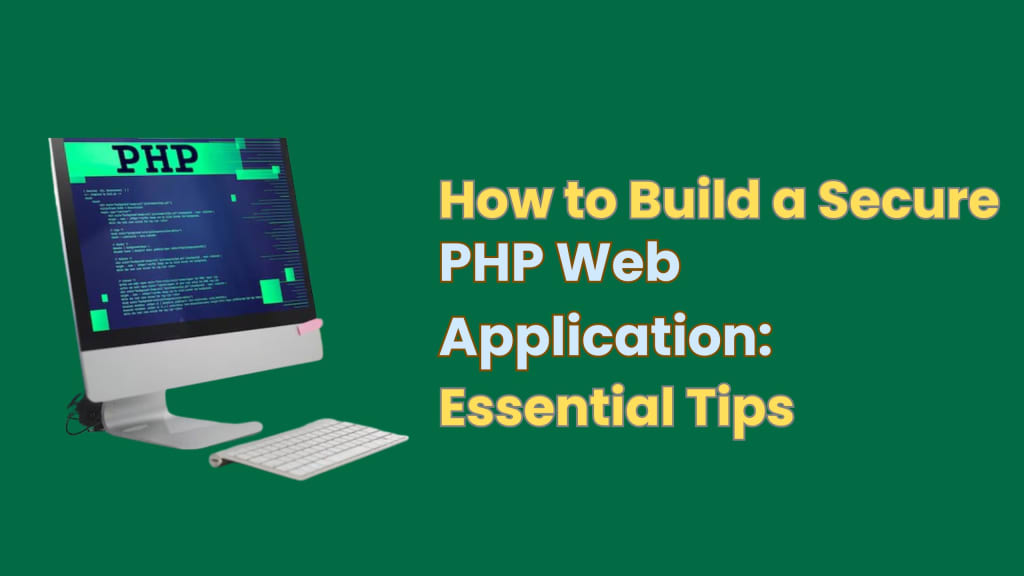
PHP (Hypertext Preprocessor) is one of the most popular server-side scripting languages in web development. It powers a significant portion of the web, including major content management systems (CMSs) like WordPress, Joomla, and Drupal. Despite its widespread use, PHP web applications are often targeted by hackers due to security vulnerabilities. Therefore, building secure PHP web applications is paramount.
In this blog, we'll discuss essential tips and best practices that can help developers create robust, secure PHP applications, ensuring the safety of user data and mitigating common threats like SQL injection, XSS (cross-site scripting), and CSRF (cross-site request forgery).
We will also discuss the importance of using the right PHP frameworks, CMS platforms, and integrating PHP API development into your project to enhance security and scalability.
Understanding PHP Web Application Security
Before diving into the security tips, it's important to understand why securing PHP applications is crucial. PHP web applications are often exposed to various attacks, including but not limited to:
- SQL Injection: Attackers exploit vulnerabilities in SQL queries to manipulate the database.
- Cross-Site Scripting (XSS): Malicious scripts are injected into webpages, affecting users who visit the page.
- Cross-Site Request Forgery (CSRF): A malicious website causes a user’s browser to perform actions on a different website where the user is authenticated.
- File Inclusion Attacks: Attackers exploit poorly validated file paths to include remote files, leading to arbitrary code execution.
- Session Hijacking: If session tokens are not handled securely, attackers can hijack valid user sessions.
These are just a few of the most common attacks, and it is essential to safeguard against them while developing PHP applications.
Best Practices for Securing PHP Web Applications
Here are some essential tips for securing PHP web applications. By following these practices, you can mitigate security risks and ensure the integrity of your application.
1. Always Use Prepared Statements and Parameterized Queries
One of the most common vulnerabilities in PHP applications is SQL injection. Attackers often exploit poorly written SQL queries by injecting malicious code into input fields. This can allow them to manipulate the database, potentially leading to data breaches.
To mitigate this risk, always use prepared statements and parameterized queries when interacting with the database. Most modern PHP database libraries, such as PDO (PHP Data Objects) and MySQLi, support prepared statements. These methods ensure that user input is treated as data, not executable code, preventing SQL injection attacks.
2. Validate and Sanitize User Input
User input is a common attack vector for most PHP web application vulnerabilities. To protect your application from malicious input, you should:
Validate input to ensure it meets the expected format (e.g., email, phone number, etc.).
Sanitize input to remove harmful characters (such as HTML tags or special characters) that may allow attackers to inject malicious code.
Sanitizing and validating input will significantly reduce the risk of XSS and other input-related vulnerabilities.
3. Use HTTPS (SSL/TLS)
Encrypting data transmitted between the user's browser and your server is critical to prevent man-in-the-middle (MITM) attacks. Always use HTTPS (SSL/TLS) for all connections, especially those that involve sensitive user data, such as login credentials and payment information.
To enable HTTPS, you need to install an SSL certificate on your server and redirect all HTTP traffic to HTTPS. This ensures that all communication is encrypted, adding an extra layer of protection to your PHP web application.
4. Implement CSRF Protection
Cross-Site Request Forgery (CSRF) is a type of attack that tricks authenticated users into submitting a request they didn't intend to make. CSRF attacks are particularly dangerous for applications that rely on user authentication, such as online banking or e-commerce sites.
To prevent CSRF, use CSRF tokens for form submissions. These tokens are unique values generated by the server and added to forms. When the form is submitted, the server verifies that the token is valid before processing the request. This helps protect your application from malicious requests and ensures that actions are only performed by legitimate users.
5. Limit File Uploads and Validate File Types
Allowing users to upload files to your server can introduce security risks if not handled properly. Attackers can upload malicious files, such as PHP scripts, which can execute arbitrary code on your server.
To secure file uploads, you should:
- Restrict the types of files users can upload by validating file extensions and MIME types.
- Limit the size of uploaded files to prevent Denial of Service (DoS) attacks.
- Store uploaded files outside of the web root to prevent direct access.
By following these steps, you can mitigate the risk of file upload vulnerabilities.
6. Enable Error Logging and Disable Error Display
Displaying errors to end-users can reveal sensitive information about your application, such as database credentials, file paths, and other internal details. To avoid this, always disable error display in production environments and log errors to a secure location.
This ensures that sensitive information is not exposed to potential attackers while still allowing you to monitor and address any issues in your application.
7. Use Strong Authentication Mechanisms
A weak authentication system can leave your application vulnerable to attacks such as brute-force attacks or session hijacking. Implement strong authentication methods such as:
- Password Hashing: Use modern hashing algorithms like bcrypt or Argon2 to store passwords securely.
- Multi-Factor Authentication (MFA): Add an extra layer of security by requiring users to authenticate via a second factor (e.g., SMS code, authenticator app).
- Rate Limiting: Protect login forms from brute-force attacks by limiting the number of login attempts in a given time period.
These practices help secure your user authentication process, preventing unauthorized access.
8. Utilize the Right PHP Frameworks and Libraries
The right PHP framework can make a significant difference in the security of your application. Many modern PHP frameworks, such as Laravel, Symfony, and CodeIgniter, have built-in security features like input validation, CSRF protection, and SQL injection prevention. They also provide tools to streamline authentication and authorization, making it easier to build secure applications.
By using these frameworks, developers can leverage these built-in features and avoid reinventing the wheel, thus improving the overall security of the application.
9. Keep Your Software Up to Date
PHP and its libraries are constantly being updated to fix security vulnerabilities. Regularly update PHP, your web server (e.g., Apache, Nginx), and any third-party libraries you use.
Using a dependency manager like composer (PHP's dependency manager) can help you easily manage and update your project dependencies.
10. Consider PHP CMS Development for Streamlined Security
If you're using a content management system (CMS) like WordPress, Joomla, or Drupal, consider leveraging their security features. These platforms provide out-of-the-box security features like user role management, access control, and plugin security updates.
However, always ensure your CMS and its plugins/themes are updated to avoid known security vulnerabilities. Additionally, using PHP CMS development best practices can further enhance security, such as customizing your CMS’s configuration to limit unnecessary functionalities and ensure that only essential plugins are enabled.
11. PHP API Development for Secure Integration
As more PHP applications rely on APIs for communication with third-party services or other systems, securing your PHP API becomes crucial. Follow these practices when developing PHP APIs:
- Use HTTPS for secure communication.
- Implement proper authentication mechanisms like OAuth.
- Limit API access with rate limiting and API keys.
- Validate and sanitize all incoming API data.
By securing your APIs, you ensure that external systems can interact with your application in a safe and controlled manner.
Conclusion
Building a secure PHP web application requires careful consideration and the implementation of security best practices. By following the tips outlined in this blog — from using prepared statements and validating user input to employing the right PHP development frameworks and APIs — you can protect your application from common vulnerabilities.
Remember, security is an ongoing process, not a one-time task. Regularly update your PHP application, stay informed about emerging threats, and work with a trusted PHP development company to ensure that your web application remains secure over time. If you're looking to work with experienced developers, the best PHP development services will help guide you in building a secure and scalable solution tailored to your needs.
Security is a vital component of any web application, and building it into the foundation of your PHP development process will save you time, money, and potential headaches down the road.
About the Creator
Bella Swan
Hi, I’m Swan Bella, a marketing manager with five years of IT experience. At Octal IT Solution, a best android app development company.
Keep reading
More stories from Bella Swan and writers in 01 and other communities.
The Benefits of Using React in Your MERN Stack Projects
Web development has undergone significant transformation in recent years, with modern technologies revolutionizing how developers create dynamic and interactive applications. One of the most popular and powerful technologies today is the MERN Stack (MongoDB, Express.js, React, Node.js), which has gained massive adoption for building scalable, efficient, and maintainable web applications.
By Bella Swan11 months ago in 01
How, Too
Many people wonder how, too. You are not alone, and I am an expert. I will teach you how, too! First, you need to remit a small application fee and fill out an application describing the nature of your financial situation and how often payments will be made, as this will have great bearing on how well I teach you how, too.
By Harper Lewis6 days ago in Fiction



Comments
There are no comments for this story
Be the first to respond and start the conversation.