
How to Build a Custom Social Trading Platform
Learn the ropes of social trading platform development so you can create a solution that's both easy to use and navigate.


You’re aiming to build a platform where users can share trades, follow standout traders, and potentially replicate strategies in real time—but as soon as you begin designing the social component, it suddenly feels underwhelming.
Here’s the thing: traders aren’t typical social media users. They’re cautious, pressed for time, and have zero patience for empty buzz. That said, they do value meaningful interaction—just not the kind that feels like a time sink. What they truly seek is actionable insight and genuine collaboration, not just another comment thread tacked onto a price chart.
In this article, I’ll guide you through building a social trading platform the right way. You’ll discover what genuinely resonates with traders versus what falls flat, explore essential features, get step-by-step implementation advice, review suitable tech stacks, and more—all the hands-on, practical knowledge that could spare you months of costly missteps.
What Is a Social Trading Platform?
It’s a dynamic, interactive environment where traders discuss their moves, publicly share their positions, and—in some cases—even allow others to automatically replicate those trades as they happen. Think of it as a hybrid of Twitter, an exclusive Slack channel, and a live trading workstation all rolled into one.
You get to see the reasoning behind someone’s decision to go long on NVDA, track how their portfolio performs over weeks or months, and assess whether their past results are genuinely reliable. Users post detailed explanations for their trades, argue about macroeconomic shifts, share annotated screenshots—and yes, occasionally drop a subtle brag about nailing that flawless short.
How It Differs from Traditional Trading Platforms
A social trading platform isn’t a brokerage. While it may connect to brokers like Alpaca, Interactive Brokers, or Binance, its true offering isn’t execution—it’s context.
Conventional platforms focus on action: advanced charting tools, order types, and risk management features. They’re built for traders who already have a strategy. Social platforms, by contrast, acknowledge that many users are still learning. They address uncertainty by surfacing knowledge—making it transparent, easy to share, and even actionable through copying.
The real power lies in moments like this: Sarah in Berlin shares a well-reasoned, backtested trade idea on EUR/CHF, and you can observe how her position unfolds in real time. Or a complete beginner silently shadows an experienced options trader for weeks, learning the ropes before placing their first trade. It’s like having training wheels—but built from real market data and human expertise.

Essential Social Features for Trading Applications
Dynamic Feed & Trade Idea Sharing
The heartbeat of any social trading platform is a vibrant, interactive feed. Traders should be able to share actionable insights—like “Bullish on $XOM heading into earnings—here’s my reasoning”—and invite constructive feedback (“Have you factored in the current crack spread?”). Posts should support rich media: annotated charts, short screen recordings of trade entries, or even voice notes that quickly convey a trading thesis.
Unlike social networks built for aesthetics, this platform thrives on utility. High-quality posts include concrete details: entry and exit levels, position sizing, time frames, and follow-up updates days later. Enhance usability by enabling users to tag tradable assets ($SPY, BTC/USD, etc.)—so others can instantly pull up relevant charts with a single tap.
Verified Trader Profiles & Performance Transparency
Users won’t follow just anyone posting flashy profit screenshots. Trust must be earned through verifiable data. With user permission, integrate real brokerage performance to power verified profiles. Highlight achievements like “Top 10% in Options Accuracy” or “Steady 5% Monthly Gains,” but also display transparent, standardized metrics: win rate, maximum drawdown, average trade duration, and more. Consider implementing a ranking system that surfaces consistent, reliable traders—not just those with lucky streaks.
Integrated Real-Time Market Data
Outdated information erodes trust instantly. If someone declares “$NVDA is breaking out!” but links to a chart from days ago, the message loses all credibility. Embed live—or near-real-time—market data directly into the user experience:
- Interactive charts within posts
- Mini price tickers that auto-update beneath every symbol mention
- One-click dashboards showing a trader’s current open positions alongside their analysis
The aim is contextual continuity: if a user is reading an argument for going long on gold, they should see the live XAU/USD price right there—no tab-switching required.
Focused Community Spaces
Not every trader wants to broadcast to the entire platform. Offer dedicated spaces like private groups, topic-specific channels, or forum-style boards. These allow niche communities—say, crypto swing traders or dividend investors—to collaborate without getting lost in the noise. Add value through moderated discussions, expert AMAs, or weekly deep dives to give users compelling reasons to return regularly—not just when they have a trade to share, but when they’re looking to learn or reflect.
Shared Watchlists, Signals & Alerts
Empower users to publish and distribute actionable intelligence. Examples include curated watchlists (“My Top 5 Biotech Opportunities This Week”) or conditional signals (“Short $EURUSD if it breaches 1.0850”), which followers can opt to receive as real-time alerts.
During development, consider features like collaborative model portfolios—where a group can co-manage or benchmark a simulated account—or personalized notifications such as “Alert me when Trader X opens a new position in energy stocks.” These utilities boost engagement and transform passive visitors into habitual users.
Seamless Web & Mobile Experience
Traders often monitor markets on mobile but dive into analysis on desktop. If your app feels like two disconnected platforms, you’ll frustrate users and lose retention. Strive for consistency in navigation and core features across devices.
For example, a user should be able to draft a trade idea on their phone during pre-market hours and later respond to comments from their laptop—without losing data or functionality. Charts, profile views, alert configurations, and annotation tools should work reliably everywhere.
Perfect visual parity isn’t mandatory, but the experience must feel cohesive. Nothing undermines trust faster than spending time crafting a detailed trade note on mobile, only to find key elements missing or broken when viewed on desktop.
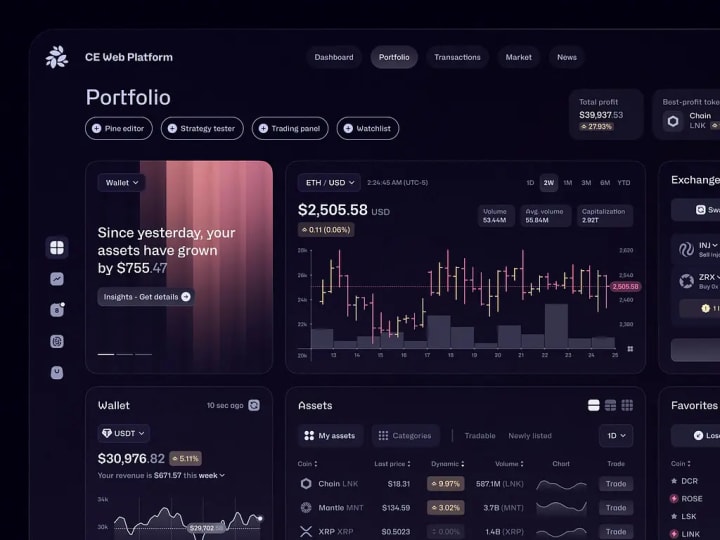
How to Build a Social Platform for Traders
Step 1: Product Discovery & Strategic Positioning
It’s easy to skip this phase—many assume they already understand what traders want. But assumptions can be costly. I’ve seen teams waste months building a “TikTok for traders,” only to discover their actual users despise TikTok’s format.
Start by clarifying key questions:
- Who’s your core audience? Beginners? Part-time quants? Swing traders?
- What’s the platform’s voice? Is the platform's voice clinical and data-centric, or edgy and meme-infused?
- How strict is your moderation policy? Will you ban unsubstantiated “1000x moonshot” claims or allow them with disclaimers?
- How sophisticated are your features? Full P&L sync with brokerages, or simple posts with screenshot attachments?
Establish cultural norms early. Your first 500 users will shape your community’s DNA—so choose them deliberately. They’ll set the tone for the next 50,000.
Step 2: Architecture & Technical Foundation
Social feeds seem straightforward—until you scale. At 10,000 concurrent users, an under-engineered system crumbles fast.
Key infrastructure needs:
- A scalable feed system: Use fan-out-on-write for followers, backed by caching (Redis) and a robust database (PostgreSQL with materialized views). ActivityPub is likely over-engineering; simpler solutions often suffice.
- Cost-efficient media storage: Optimize for annotated charts, screen recordings, and PDFs without blowing your cloud budget. Consider compression, CDNs, or tiered storage.
- Real-time interaction: Power comments, likes, and alerts via WebSockets or reliable third-party services like Pusher or Ably.
From day one, prioritize data integrity. On social trading platforms, poor-quality input can be mistaken for truth—so design systems that discourage misinformation and reward accuracy.
Step 3: UI/UX – Blending Social & Analytical Experiences
Most platforms fail here—swinging too far toward either sterile finance terminals or frivolous social apps.
The sweet spot? Hybrid interfaces. Imagine a post showing a trade thesis alongside an embedded, interactive chart. Or comment threads that let users highlight and quote specific chart zones—think “Figma meets TradingView.”
Enable seamless mode-switching: social discovery when learning, analytical depth when executing. And never treat the chart as decorative. If it’s laggy, unresponsive, or inaccurate, serious traders will leave immediately.
Step 4: Development & Feature Rollout
With design locked in, move to implementation—starting with essentials:
- Core feed & posting: Begin with text, symbol tagging, and basic media.
- Moderation toolkit: Auto-flag phrases like “DM for signals” or “1000x gem,” plus user reporting.
- Smart notifications: Push/email alerts for replies, new follows, and trade signals.
- Messaging: Only add private DMs if you have strong anti-spam controls; otherwise, keep conversations public.
Design your feed algorithm to promote quality, not just virality. Boost posts from verified performers, reward deep engagement (e.g., thoughtful replies over likes), and personalize based on assets users follow. Avoid extremes—pure chronological feeds bury insights, while pure engagement models reward outrage.
Step 5: Market Data & Broker Integration
Reliable data is non-negotiable. Source price feeds from providers like Polygon, Twelve Data, Alpaca, or Binance. For brokerage syncing, consider Interactive Brokers or Tradier.
But normalize symbology early: “AAPL” might appear as “AAPL.US” or “NASDAQ:AAPL” across feeds. Build a symbol resolution layer so your frontend stays consistent.
Use performant charting libraries (e.g., TradingView’s Lightweight Charts or D3), but cache aggressively. Don’t call data APIs on every scroll—preload or batch requests to maintain speed.
Step 6: Testing & Content Moderation
Social trading platforms attract bad actors—scammers, pump-and-dump promoters, and fake gurus.
Protect your ecosystem with:
- Automated filters for scam language (“guaranteed returns,” “private signal group”)
- Human moderation queues for new users or high-visibility posts
- Compliance safeguards: mandatory risk disclaimers and regulatory warnings
- Fraud detection: monitor for abnormal follower surges or doctored P&L screenshots
- Run red-team drills: try to post fake “insider info” or run a counterfeit signal service. If your system doesn’t catch it, fix the gaps before going live.
Step 7: Launch, Growth & Ongoing Evolution
No matter how polished your platform is, start small. Launch invite-only with vetted, active traders.
Then layer in:
- Smart onboarding: help users quickly find relevant traders or strategies.
- Meaningful recognition: not just cosmetic badges, but status tied to real performance or contribution
- Early-adopter incentives: free premium access, or revenue share from followers who copy trades
- Active feedback channels: in-app surveys, dedicated Discord groups, or regular user interviews
- Plan for long-term support: in-app help centers, evolving community guidelines, and transparent team AMAs. Your platform won’t be perfect at launch—but if you build it with real traders, not just for them, it will evolve into something genuinely valuable.

Key Challenges in Developing Social Trading Platforms
Content Moderation & Regulatory Compliance
Building a platform where traders interact means you’re not just hosting opinions—you’re facilitating financial discourse, which brings serious legal and ethical responsibilities.
- User-generated risk: A single post like “$XYZ will 10x tomorrow—buy now!”—backed by a doctored chart—or claims of “guaranteed returns” can expose you to regulatory scrutiny. Even if you’re not giving advice yourself, regulators (such as the SEC or FCA) may view your platform as enabling misconduct.
- Misleading success stories: Well-meaning users might boast, “I made 50% in a week!” without disclosing they used 20x leverage and nearly liquidated their account. Without proper context, your platform can devolve into a gambling den masquerading as a discussion forum.
- Scam proliferation: Bad actors thrive in social trading spaces—posing as “gurus” selling fake signals, orchestrating pump-and-dump schemes, or hiding phishing links behind tools labeled “portfolio analyzers.” Once real money is involved, users rightly expect your platform to shield them.
- Mitigation requires proactive safeguards: auto-detecting red-flag phrases (“DM for signals,” “100x gem”), verifying trader profiles with actual brokerage performance data, and—critically—consulting legal counsel before launch. Even without broker status, you’re operating in a regulated gray zone where oversight is intensifying.
Demands of Real-Time Performance
Traders have zero tolerance for delays. A three-second lag in displaying a breakout alert or a frozen chart during a market spike isn’t just annoying—it erodes confidence in your entire data pipeline.
Critical technical pressure points include:
- High concurrency: At market open, thousands of users post, comment, and refresh simultaneously. Your WebSocket infrastructure must scale gracefully without crashing.
- Instantaneous feed updates: Followers expect to see new trade ideas the moment they’re published—not after a background job processes them. This demands efficient fan-out architectures, intelligent caching, and rigorous avoidance of inefficient database queries (like N+1).
- Scalable market data delivery: Embedding live prices or real-time P&L in every post can trigger cascading API calls. You’ll need data aggregation layers, smart rate limiting, and resilient fallback mechanisms for when third-party data feeds falter.
Earning and Maintaining User Trust & Security
Traders won’t engage deeply unless they trust your platform—especially when it displays their portfolio, connects to their brokerage, or stores proprietary trading strategies.
Foundational security measures are non-negotiable:
- Robust authentication: Implement OAuth 2.0, support multi-factor authentication (MFA), and enforce secure session management to prevent token leaks.
- Identity and performance verification: Go beyond email confirmation. Use services like Plaid to verify brokerage-linked accounts and validate performance claims—especially for high-profile users.
- Stringent data protection: Apply end-to-end encryption for private messages, comply with GDPR/CCPA, and enforce strict internal access controls. Treat synced portfolio data with the same care as financial institutions treat bank records—because, in practice, that’s what it is.
Above all, remember: trust is built slowly and shattered instantly. A single data breach, one fraudulent “verified” influencer, or an unexplained discrepancy in displayed P&L can trigger mass user exodus. In social trading, credibility isn’t just valuable—it’s existential.

Key Takeaways Recap
A platform for sharing trading ideas offers a powerful strategic advantage for fintech firms, brokers, and businesses aiming to increase user engagement, foster trust, and differentiate themselves in a competitive market. Modern traders no longer want to operate in isolation—they crave context, community, and reliable insights. When you deliver these effectively, they’re more likely to stay active and pay for your service.
However, creating such a platform is far from simple. Success hinges on seamlessly blending social interaction with real-time market data, robust content moderation, and infrastructure that can scale under pressure. Neglect any of these elements, and you risk poor user retention, regulatory complications, or system failures precisely when reliability matters most—during high-volatility market events.
The smart approach is to start small and focused:
- Clarify your niche: Pinpoint your target audience and establish the community’s tone and culture.
- Launch a lean MVP: Begin with core features—social feed, verified profiles, basic analytics—and prioritize a responsive web experience.
- Evolve through feedback: Gradually add broker integrations, mobile support, and monetization features as you confirm real user demand.
- Embed trust from day one: Use identity verification, performance transparency, and intelligent moderation to build credibility.
Get it right, and you’ll cultivate a thriving, self-sustaining ecosystem where traders actively learn from one another, exchange valuable insights, and grow together.
About the Creator
Shakuro
We are a web and mobile design and development agency. Making websites and apps, creating brand identities, and launching startups.
What I Learned About Pest Control After Living in Detroit
Living in Detroit for several years has taught me that pest problems are not just a seasonal inconvenience — they’re often a long-term reality. From mice seeking warmth during winter to insects becoming active in the summer, pests tend to find their way into homes regardless of how careful you are.
By Jamal Moorea day ago in 01
What Businesses Often Expect vs What Digital Marketing Services Deliver
By 2026, most businesses no longer misunderstand what digital marketing is. The misunderstanding sits elsewhere. It sits in how results are produced, where money actually goes, and why timelines stretch far beyond initial promises.
By Jane Smith5 days ago in 01
'20/20'
"Do It Again" the track that would ultimately open the Beach Boys final album on Capitol Records which was released on February 10th 1969 had originally been released as a single in August of 1968. The track was the first of many post-Pet Sounds era throwbacks to the early Beach Boys sound which would become continually more cliched and eventually lead the Beach Boys to the level of self-parody they would eventually succumb to in the 1980s while their closest contemporaries The Beatles nearing the end of their run in 1969 would go on to be viewed as the most influential band of all time. However, the song itself is not bad on its surface, and it opens with a futuristic sounding (for 1969) drumbeat captured by then-Beach Boys engineer Stephen Desper using tape delays on the drums performed by Dennis Wilson and John Guerin. The song has been re-recorded numerous times over the years on various Beach Boys-related projects most notably the 2011 re-recording at Capitol studios featuring the five surviving Beach Boys at the time backed instrumentally by various members of both the Brian Wilson Band and Mike Loves touring "Beach Boys" to promote the then upcoming Beach Boys 50th Anniversary reunion tour in 2012. The hammering and power drill sound at the end of the song was an excerpt from a track called "Workshop" that was to be a part of the uncompleted "SMiLE" album.
By Sean Callaghan6 days ago in Beat


Comments
There are no comments for this story
Be the first to respond and start the conversation.