
How to Become a Successful Podcaster with Minimum Investment in 10 Steps
A step-by-step introduction to podcasting for absolute beginners

Purpose of the Article
I am inspired to write this piece based on feedback and inquiries from subscribers of my new publication, Illumination Videos, and Podcasts.
As a media specialist, my subscribers want to learn about podcasting from my experience. Most subscribers are beginners; therefore, my goal is to satisfy their needs and help them with a jump-start.
I introduced this new publication in a recent story titled Invitation to Write for ILLUMINATION Videos and Podcasts Publication.
My goal is to bring video creators and podcasters to one place and create a collaborative atmosphere. I will invite reputable YouTubers and podcasters soon.
Let me briefly introduce what a podcast is to absolute beginners.
What is a podcast?
A podcast is a digitally created audio document. Listeners can listen directly from the podcasting service platforms, or they might download them in MP3 format to their devices such as smartphones, tablets, or computers.
These devices can have apps called podcast players. Most of them are free on the Internet or in app stores of various media organizations.
Podcasts became so popular as they offer a convenient learning method for busy people. They are more accessible than written content for consumption, especially for commuters and frequent flyers.
Podcasters can talk about anything they want. Some of them tell stories, some share news, some conduct interviews with reputable people, and some educate their audience using their expertise.
In this post, I’d like to provide high-level guidance to absolute beginners to jumpstart.
1 — Define the purpose of your podcast.
Before you start recording, defining your podcast purpose and the topic is essential.
You may ask three essential questions.
1 — What do I want my podcast to be about?
2 — Who is my target audience?
3 — What kind of content can I produce?
You also need to understand what makes good content for podcasts. For example, storytelling, sharing stats on important events, and conveying ideas and guidance from experts.
You might check out other podcasts to learn what makes them successful.
You might find out how often they publish, how they engage with their audience, and where they share their content.
2 — Expand your knowledge and skills.
As you work on your podcast, you must keep learning about the technology involved in podcasting.
You need to learn about how to create a successful podcast and how to market yourself effectively within your budget.
However, the most important point is to improve the knowledge and skills that you want to transfer to your audience. This investment will make you a successful podcaster in the long run.
3 — Create a high-level plan for your podcast.
Planning is vital for creating a successful podcasting business. The more you plan, the better your chance of staying on track and being motivated to complete your podcast.
Planning helps you stay organized and efficient, which helps make sure that everything goes smoothly when it comes time for recording or editing.
Planning also gives you an opportunity to think about what kind of content would be most beneficial for listeners (e.g., if someone has never listened before).
4 — Understand your audience.
Your first step is to define your target audience. This means knowing who you’re trying to reach and what they want, as well as being aware of the competition in your space.
If you’re just starting out, this may not seem like a big deal, but once you start building an audience and getting more serious about podcasting and monetizing your show, there are many things that go into creating content that can help grow your brand.
It’s important for podcasters (and any new business owner) to know what their customers want so they can create content around those needs or interests.
The best way I’ve found to determine this information is by talking directly with people who regularly listen on social media platforms like Facebook groups or forums related to podcasting topics such as “How do I record my voice?” Or “What kind of microphone should I use?”
5— Purchase necessary tools and software.
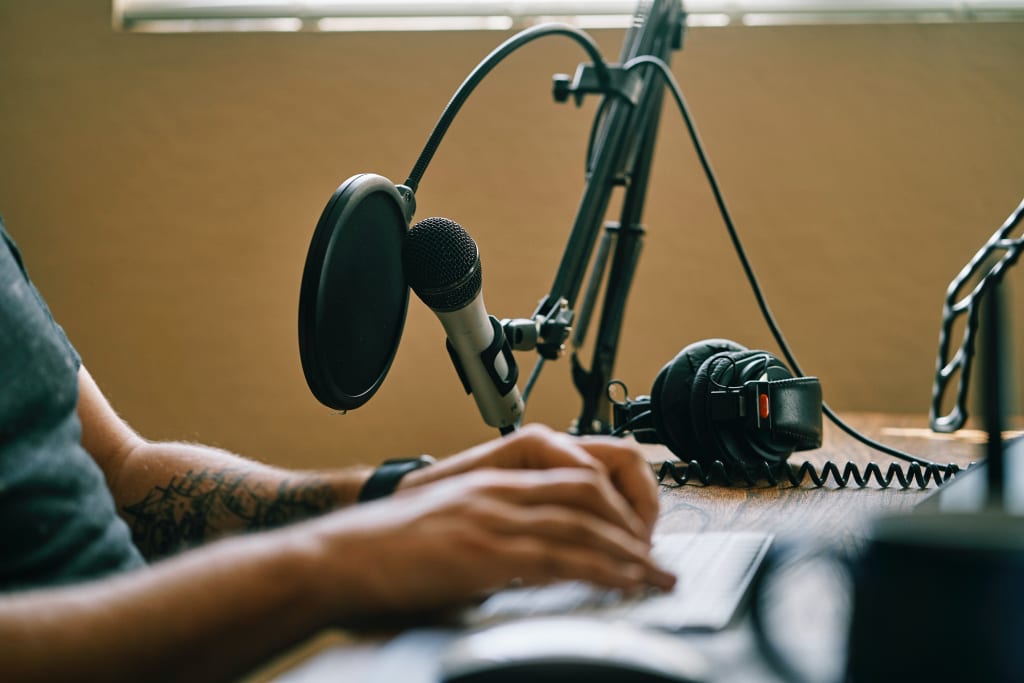
Before you can record and edit your podcast, you need to buy the right equipment. There are three critical ones.
1 — Microphone
A good microphone can pick up your voice from across the room. You’ll want one that has a flat response, so it doesn’t pick up background noise or feedback when playing back what you’ve recorded.
Based on my experience, I would recommend microphones from the company Blue. But if you’re on a budget, you can get a decent microphone from your local stores like Kmart, Target, or Walmart.
2 — Headphones
Purchase headphones with adjustable volume control so that if someone else is listening in on your show during production, they won’t drown out what was just said by accident.
It’s also helpful if these headphones can remove external noises like traffic outside or other people talking nearby.
These are more than just regular earbuds. They’re specifically designed for audio production work rather than just general listening pleasure.
3 — Editing Software
When you record your podcasts, you need to remove unnecessary bits from your presentation so that your podcasts sound professional. There are many free editing tools that you can download and try. I use a subscription service which costs me around $20 per month.
For Mac users, I would recommend iMovie since it’s free and very easy to use. For Windows users, I would recommend Lightworks or Shotcut.
For advanced podcasters, there are more tools that I will cover in another article. This post is for absolute beginners.
6— Determine the length and frequency of your podcasts.
If you want to become a successful podcaster, you must understand the fundamentals of content, length, and frequency for podcasts.
Content is what makes or breaks a podcast. The more relevant your content is to your audience, the better chance you have of building an engaged following and attracting advertisers who will want their products featured on your podcast.
The length of a podcast should be between 10 and 30 minutes long (or even shorter if there are specific topics that need less time).
Longer episodes can be great if they’re well-researched. However, they tend not to attract new listeners as frequently as shorter ones do because people don’t want their attention divided up into chunks over long periods of time. So try to keep your episodes as short as possible.
Frequency might seem less important than duration or topic selection, but it plays a vital role in helping build a loyal audience base by providing regular content updates on topics such as the latest news stories and events happening in your geography.
7- Self-edit or get your content edited by professionals.
Once you record your podcast on your phone or PC, you need to edit it. However, editing is not just cutting out the boring parts. You also need to make your podcast sound better, more entertaining, and more engaging for your listeners.
For example, if you have recorded a segment of your show in the studio and then edited it together at home, you may want to go back over the entire show and improve the quality of your audio levels by using headphones or earbuds while listening through different speakers.
This editing process will ensure that all sounds are balanced so listeners don’t have any difficulty hearing what they’re supposed to hear when they listen on their own devices.
For beginners with a tight budget, self-editing is a good option. However, if you want to reach out to a broader audience and monetize your podcasts, you might consider leveraging the services of professionals.
For example, you can find podcast editors on Fiverr or Upwork at reasonable prices. You need to find podcast editors and negotiate the price. If you become a regular customer of theirs, they might give you a discount and serve you better.
8 — Choose a hosting platform for your podcast.
Choose the right hosting service for your podcast. For example, look for a hosting service that provides data storage, bandwidth, and other features.
Make sure the hosting service has a good reputation. A good reputation will help you get more listeners and make more money, as well as reduce stress when things go wrong at the last minute.
Look for a hosting service that has good customer service in case anything should go wrong with your website or podcaster software.
9 — Create a website and blog posts to promote your podcast.
Once you’ve got your podcast media kit, it’s time to start promoting. You can use social platforms like Facebook, Twitter, and Instagram to get the word out about your show and build up a following.
If you don’t know how to create a website for your podcast or if you’d prefer an alternative route that doesn’t involve building one from scratch, there are plenty of free website builders available online that will help you create content-rich websites with minimal effort on your part.
For example, I recently created a simple website on WordPress for my gaming publication which cost me around $10 a month. Here’s the link to my new website to give you an idea. When I started, WordPress gave me a $20 voucher as a new customer.
10 — Establish a brand for your podcast.
Last but not least, your brand matters in the long-term success of your podcasting business.
If you’re going to invest significant time and energy into creating a podcast, it’s crucial that you do so with a brand in mind. A brand is the identity of your podcast and can help distinguish it from others in its category.
Your brand can also help increase listenership by establishing trust and credibility with potential advertisers or sponsors who might be interested in working with you for their products or services.
The key elements of creating an effective branding strategy are consistency across all aspects of content creation, promotion efforts, and advertising materials.
Consistency will help build trust between listeners who already know what they’re getting from listening each week while simultaneously attracting new listeners who may not be familiar yet but see something unique about this particular show.
Conclusions and Takeaways
You can become a podcaster with low investment and high return if you follow these proven steps.
You don’t have to spend thousands of dollars or hire expensive equipment to start your own podcast. For example, you can begin your basic setup with around a few hundred dollars in essential hardware and software.
Most recording platforms, such as Audacity, are free. Some are inexpensive. Web hosting is cheap, and social media advertising is affordable. Some people generate traffic with Google or Facebook ads under $50 per month.
Once you have created an account on one of the platforms mentioned, all that is left is producing content for your show.
You may consider these steps before your first attempt. The more preparation work you perform ahead of time, the less stress you might face later when things go wrong or when something unexpected happens.
I hope this short post helps you understand what is required to make a podcast and get you a jumpstart. I wish you good luck in your podcasting business. Please reach out to me when you create your platform and first podcast so that I can help you promote it on my socials.
With that being said, thank you for reading my post, and have a good one.
The original version of this story was published on another platform.
About the Author
I write articles in my field covering gaming, filmmaking, media, technology, and design. You can subscribe to my account to get notifications when I post on Medium and Vocal Media. I support Illumination Integrated Publications as an editor and moderate the Slack Workspace, where you can share your Vocal Stories with thousands of members free of charge. I own and manage two publications, one for gaming and one for YouTube. You may join via my referral link if you are new to Medium. You can also join Vocal Media to share your inspiring stories. I look forward to reading your posts on both platform.
About the Creator
Inspiring YouTuber and Gamer
I specialise in Media, Design, and Filmmaking. I support Illumination Integrated Publications on Medium as an editor and YouTube coordinator. https://www.youtube.com/watch?v=F9DhuGQYbpI& I also own two publications for Gaming and Podcasts.
Keep reading
More stories from Inspiring YouTuber and Gamer and writers in 01 and other communities.
Disney’s Newest Movie Strange World Is Reported to Lose $100+ Million
Disney movies have been a stable part of almost every kid's childhood since almost all of their movies tell a great story in a magical way. Some of my favorite Disney movies include Frozen, Tangled, and Wreck-It Ralph.
By Inspiring YouTuber and Gamer3 years ago in 01
Trump, Starlink, and the Battle for Connectivity in Iran
In what has become one of the most volatile periods in recent Iranian history, the convergence of international politics and cutting-edge technology has taken center stage. As mass protests continue to shake cities across Iran and authorities enforce one of the most severe internet blackouts in decades, former U.S. President Donald Trump has publicly linked his response to the crisis with the role of satellite internet — specifically Elon Musk’s Starlink — as a potential lifeline for Iranian citizens.
By Muhammad Islam khan swati2 days ago in 01



Comments
There are no comments for this story
Be the first to respond and start the conversation.