
Trump, Starlink, and the Battle for Connectivity in Iran
How Satellite Internet, Political Statements, and Nationwide Protests Are Shaping a Nation Cut Off From the World


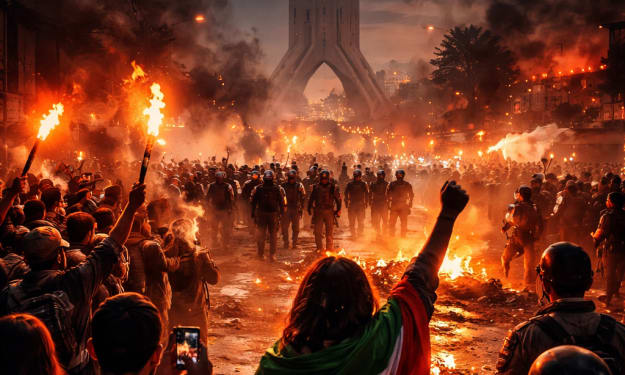
In what has become one of the most volatile periods in recent Iranian history, the convergence of international politics and cutting-edge technology has taken center stage. As mass protests continue to shake cities across Iran and authorities enforce one of the most severe internet blackouts in decades, former U.S. President Donald Trump has publicly linked his response to the crisis with the role of satellite internet — specifically Elon Musk’s Starlink — as a potential lifeline for Iranian citizens.
Trump’s Post and the Starlink Promise
In a high-profile statement on social media, Donald Trump said he would speak with Tesla and SpaceX CEO Elon Musk about sending Starlink satellite internet service to those in Iran amid the government’s communications shutdown.
Trump’s comments underscore a dramatic moment: a former U.S. president seeking to leverage private technology — normally neutral commercial infrastructure — as a channel to circumvent state-controlled information restrictions. He framed this discussion around restoring internet access for Iranians, whose connectivity has been nearly erased by government action.
This unusual intersection of politics and tech highlights how satellite broadband — once merely a consumer product — is now being viewed as a geopolitical tool with deep implications for freedom of information. International media outlets have also noted a warming of Trump’s public stance toward Musk amid these developments.
The Internet Blackout: A Nation Cut Off
Since early January, the Iranian government has implemented an extensive internet shutdown in response to months of protest and social unrest. This blackout has been described by monitoring groups as one of the most severe restrictions Iran has ever imposed, effectively isolating the country from global digital communication.
Official and independent reports indicate that:
Mobile data, fixed broadband, and social platforms are largely inaccessible to the public.
Connectivity to the outside world has dropped to a fraction of normal levels — around 1 % of typical internet traffic.
Communication restrictions extend to international calling and messaging, though some allowances have been made for outbound calls.
This blackout is a cornerstone of the regime’s efforts to suppress the spread of protest footage and to disrupt coordination among demonstrators.
Starlink’s Role on the Ground
In the midst of this digital blackout, Starlink — SpaceX’s satellite internet service — has emerged as a controversial but vital alternative channel for connectivity.
Availability and Free Access:
Despite Starlink being illegal in Iran and not officially licensed, activists report that Starlink service is being accessed by some Iranians during the shutdown. There are claims that SpaceX has temporarily waived subscription fees for users in the country, allowing satellites to act as an emergency channel for information transmission.
Government Countermeasures:
Iran’s authorities have responded aggressively to this challenge, deploying military-grade jamming equipment and GPS interference to degrade Starlink signals. According to internet researchers, this interference initially disrupted around 30 % of Starlink traffic and quickly rose to over 80 % in many areas, making service sporadic or unusable in high-jammed zones.
These efforts represent a new frontier in information control — where state actors now target satellite infrastructure, not just terrestrial networks, in an attempt to prevent access to uncensored news and communication.
Users at Risk:
Owning or operating a Starlink terminal in Iran carries serious legal and security risks. Authorities have criminalized the devices, with penalties ranging from prison sentences to allegations of espionage in extreme cases.
Why Starlink Matters in This Moment
With most conventional communication channels cut off, Starlink has become one of the few remaining pipes to the outside world. Activists and digital rights experts say:
Satellite internet helps transmit video and photo evidence of protests that would otherwise never emerge.
It also allows limited communication between Iranians and international media or family abroad.
Despite government jamming, localized connectivity persists where signals are less disrupted.
This imperfect access has turned Starlink into a digital battleground: for some, a tool of resilience and resistance; for authorities, a threat to their narrative control.
The Human Cost and the Broader Conflict
While the struggle over connectivity unfolds, the protests themselves have been met with violent crackdowns by Iranian security forces. Reports from multiple sources suggest thousands have been killed or arrested in recent weeks, making this one of the bloodiest periods of unrest in Iran since the late 1970s.
The administration’s stance and Trump’s public remarks have also contributed to rising geopolitical tensions — with Tehran warning against foreign interference and the United States signaling potential consequences if executions continue.
Looking Ahead: Connectivity, Resistance, and Policy
The clash over internet access in Iran illustrates how modern protests cannot be fully understood without considering the role of digital infrastructure:
Satellite internet has shifted from novelty to critical resource.
Political leaders are using technology debates to support foreign policy objectives.
Authoritarian regimes are developing sophisticated tools to suppress connectivity, including satellite jamming.
As Iran’s internal crisis evolves, the battle for communication channels like Starlink will likely remain a central — and highly contested — front in the struggle for information and voice.
In Summary
What began as a domestic uprising over economic and political grievances has become a global story of communications control, international politics, and technological resistance. With figures like Donald Trump advocating for satellite connectivity, and companies like SpaceX at the heart of a geopolitical middle, the conflict over internet access in Iran underscores a new reality: digital infrastructure is now a frontline of contemporary civil struggles.
About the Creator
Keep reading
More stories from Muhammad Islam khan swati and writers in 01 and other communities.
The Night Situation in Iran: Under Blackout and Unrest
Over the past weeks, Iran has plunged into widespread unrest that continues deep into the night, with nightly demonstrations, heavy government crackdowns, and a near-total information blackout that obscures what is happening on the ground. What began in late December 2025 as discontent over economic hardship has evolved into one of the most intense waves of dissent in recent Iranian history, with dramatic nightly developments shaping both domestic life and international concern.
By Muhammad Islam khan swati2 months ago in 01
The Stories We Tell With Flags: From Cycling Roads to Soccer Stadiums
Flags have existed for centuries, yet they still appear in some of the most ordinary moments of modern life. A small piece of fabric moving in the wind can communicate identity, caution, celebration, or belonging. While many people associate flags with nations or ceremonies, they also show up in places that feel far more personal—like a bicycle ride through a neighborhood or a crowded soccer match on a weekend evening.
By charliesamuel5 days ago in 01
Wedding Photography in Brisbane: An Informational Overview
Wedding photography is a specialized genre of photography focused on documenting one of the most significant personal events in many people’s lives. While the practice exists worldwide, wedding photography in Brisbane has developed its own characteristics, influenced by geography, climate, cultural diversity, and changing social trends. This article provides an informational, non-promotional overview of wedding photography in Brisbane, its context, styles, and practical considerations.
By charliesamuel4 days ago in 01
The Forsyth House Fire
Since 1851, Forsyth House has stood on the corner of Union Street and Gordon Street in the heart of Glasgow. Its iconic, or was... because on Sunday 8th of March, 2026, a fire broke out in a small, seemingly un-named shop in the building and tore all that history down. As I write, the rubble is still unsettled and the street is still blocked off. Central Station is quiet on the upper level, and around 30 small businesses have quite literally gone up in smoke.
By S. A. Crawford3 days ago in The Swamp


Comments
There are no comments for this story
Be the first to respond and start the conversation.