
How to become a good Front-end developer?
Front-end developer


How to Become a Good Front-End Developer?
Becoming a good front-end developer is a journey of continuous learning and practice. Front-end development is the art of creating visually appealing, interactive, and functional websites and applications. Whether you are just starting or looking to enhance your skills, here’s a roadmap to help you on your journey.
1. Master the Basics
Every front-end developer must have a solid understanding of the three foundational technologies: HTML, CSS, and JavaScript. These are the core building blocks of web development.
- HTML (HyperText Markup Language) is used to create the structure of web pages. Learning HTML5 is essential, as it offers modern features that enhance the structure and accessibility of web content.
- CSS (Cascading Style Sheets) is responsible for the design and layout. Learn CSS3, including Flexbox and CSS Grid, to build responsive and adaptive layouts.
- JavaScript is the scripting language that brings interactivity to your websites. Focus on understanding DOM manipulation, event handling, and ES6+ features like arrow functions, classes, and modules.
2. Responsive Design
In today’s mobile-first world, having a responsive design is a must. Learn how to make your websites look great on all devices, from smartphones to desktops. Use media queries to adapt the layout based on the device’s screen size, and test your design in different browsers to ensure cross-browser compatibility.
3. Get Comfortable with Frameworks and Libraries
Once you have mastered the basics, it’s time to dive into front-end frameworks and libraries that can speed up development. Some popular ones include:
- React.js : A powerful JavaScript library for building user interfaces, especially single-page applications.
- Vue.js : A progressive JavaScript framework that is easy to learn and offers a flexible approach to building user interfaces.
- Bootstrap : A CSS framework that provides a collection of pre-designed components for faster UI development.
Learning these tools can help you build more complex and dynamic applications with greater efficiency.
4. Version Control with Git
Version control is essential for tracking changes in your code and collaborating with other developers. Git is the most widely used version control system. Learn how to use Git for creating branches, committing changes, and collaborating through platforms like GitHub and GitLab.
5. Problem-Solving and Algorithmic Thinking
A good front-end developer needs to be a problem-solver. Understanding the logic behind the functionality you want to implement is crucial. Practice coding challenges on platforms like LeetCode, CodeSignal, and HackerRank to improve your problem-solving skills. As you get better, you will be able to write cleaner, more efficient code.
6. Focus on User Experience (UX)
A good front-end developer focuses not only on how the application looks but also on how it works. Understanding the principles of User Experience (UX) will help you create intuitive, user-friendly interfaces. Learn about accessibility (making websites usable for all users), navigation, and performance optimization.
7. Continuous Learning and Staying Updated
The front-end development landscape is always evolving with new tools, techniques, and frameworks emerging regularly. Stay updated by following blogs, attending developer meetups, and participating in online communities such as Stack Overflow, Reddit’s web development community, and forums. Subscribe to newsletters, follow industry leaders on Twitter, and read relevant books to improve your knowledge.
8. Build Real-World Projects
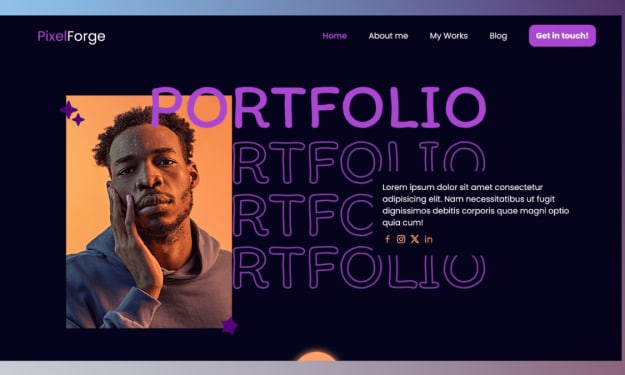
One of the best ways to solidify your learning is to build real-world projects. Start with small personal projects like a portfolio website, then move on to more complex applications. As you build, focus on implementing everything you’ve learned, from layout design to interactivity. Building a portfolio of work will not only help you learn faster, but it will also demonstrate your skills to potential employers or clients.
Conclusion
Becoming a good front-end developer is not an overnight achievement—it takes time, practice, and persistence. Focus on mastering the fundamentals, build real-world projects, and keep refining your skills. With dedication and the right mindset, you can build impressive websites and become an expert in front-end development.
About the Creator
Dwebweave
Hi, I’m DwebWeave, a web developer passionate about creating responsive templates and sharing coding tips. Check out my articles for free source codes, design inspiration, and practical guides to boost your web development skills!
No, Jeff Bezos didn't predict the future of the home PC would see it being swept away into the cloud
If there's one thing that the tech industry really loves to do, it's speculate on the future, especially if someone of note in the sector has made some newsworthy remark. Of late, there seems to be quite a bit of talk about the future of the home PC and that it might end up going the way of the dodo, all because of something Jeff Bezos said.
By Dena Falken Esqa day ago in 01
Why Your 2025 Presentations Fail: The “Quiet Luxury” Hack Powered by PopAi & Morandi Aesthetics
Description Are you still pulling all-nighters fixing alignment and color palettes? The era of "ugly productivity" is over. As we approach the end of 2025, we analyzed why most corporate decks get ignored and uncovered a workflow shift top creatives are already using. This article explains how PopAi’s Morandi Color Scheme Minimalist Magazine slides transform complex data into refined visual narratives—and why this approach is becoming essential for modern presentations.
By charliesamuel7 days ago in 01



Comments
There are no comments for this story
Be the first to respond and start the conversation.