
How Exceptional UI/UX Design Can Transform SEO Performance
Today, when websites and brands fight for attention, gaining visibility online is no longer enough—businesses must also deliver experiences that retain attention and drive meaningful engagement. One of the most impactful ways to achieve this is by integrating UI/UX design with SEO strategy. This intersection of form and function creates a user-centric digital environment that not only appeals visually but also satisfies the metrics search engines use to determine ranking relevance. The result? Higher visibility, lower bounce rates, and increased organic reach.

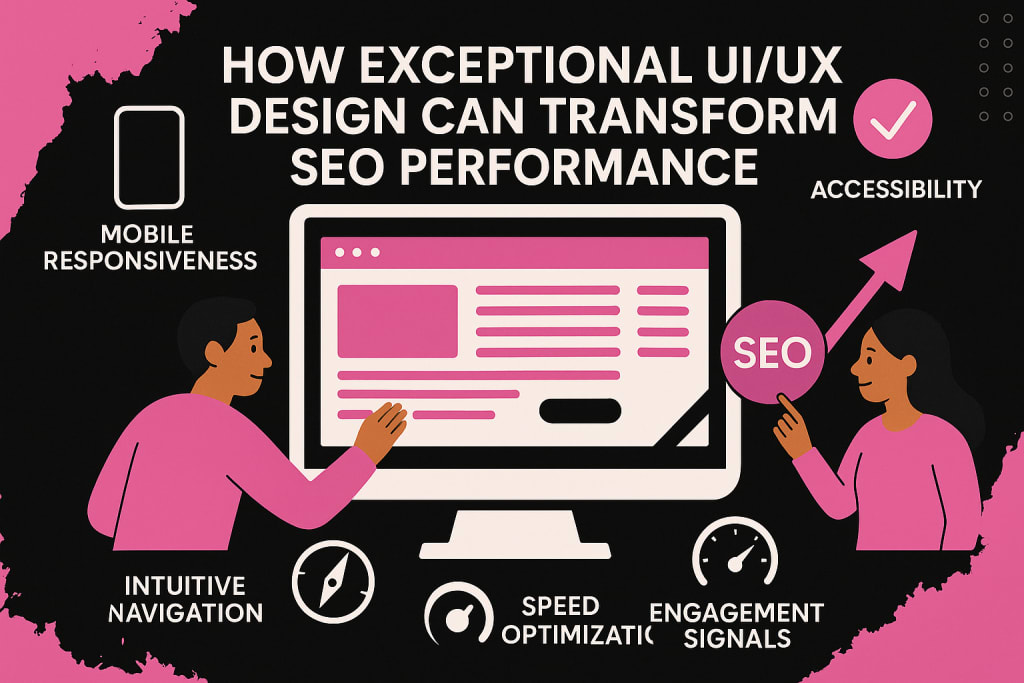
The Relationship between Design and SEO: Why It Matters
Search engines today reward websites that prioritize user experience.
This marks a shift from purely keyword-driven strategies to a broader focus on site performance, usability, and engagement.
Modern SEO is deeply connected to how users interact with your website—from the speed of loading to how easily they can find what they need.
Knowing the importance of web design is critical in offering visitors a supreme user experience.
Let’s now understand the key areas involving UX and SEO that you should know:
Key Areas Where UI/UX Impacts SEO
1. Mobile Responsiveness: The New Standard
With Google's mobile-first indexing and the majority of users browsing on smartphones, mobile responsiveness is foundational. A well-crafted responsive website improves SEO performance by reducing bounce rates and increasing usability.
Therefore, while discussing the design with your UI UX design service provider, pay attention to getting a layout designed that is well-versed for mobile devices.
This will help you offer your mobile visitors a smooth and navigation-friendly website and persuade them to stay and engage with your content.
2. Intuitive Navigation: Guiding the User Journey
Navigation plays a key role in shaping user journeys.
Clear structure improves discoverability and relevance. Here, aligning your website’s design with search intent is necessary to encourage engagement and retain visitors.
3. Speed Optimization: Reducing Load Times, Increasing Conversions
Every second counts. Enhancing site speed through image compression, code minification, and CDNs can improve user satisfaction and SEO.
Additionally, quick page loading will convince visitors to spend more time on your website, boost dwell time, and click-through rates.
4. Accessibility and Inclusivity: Expanding Your Audience
Designing accessible websites builds trust and loyalty while aligning with Google's guidelines.
Incorporating best practices like alt-text and semantic HTML is part of a scalable SEO strategy.
5. Engagement Signals: The Metrics Search Engines Love
Interactive design features boost engagement metrics like dwell time and CTR.
However, these metrics may not be considered as direct ranking factors, but are required to send positive signals to search engines.
If you're scaling and planning to maximize user-focused SEO efforts, you may consider outsourcing SEO to experienced SEO agencies for better results and bandwidth.
Crafting SEO-Driven UI/UX Strategies
Creating synergy between your UI/UX and SEO efforts isn’t just about ticking technical boxes—it’s about building websites that work for people and search engines alike.
Here’s how to do that with intention and impact:
1. Mobile-First Design :
Today’s user journey often starts on a smartphone. A mobile-first approach ensures your content, layout, and features are built to fit smaller screens first, then scaled up for larger devices.
This naturally improves loading speeds, keeps navigation clean, and ensures that Google’s mobile-first indexing sees your site at its best. It’s not just responsive—it’s intentional mobile design with SEO benefits baked in.
2. Streamlined Content Hierarchy
Search engines love clarity, and so do users. Structuring your content with clear headings, logical flow, and well-placed CTAs helps guide both humans and crawlers through your site.
A streamlined content hierarchy makes it easier for users to digest information and easier for Google to understand the relevance and importance of each section. Think: H1 to H3 tags used thoughtfully, with scannable, valuable content in between.
3. Optimized Media and Scripts
Heavy images, uncompressed videos, or bloated scripts can ruin both user experience and search rankings.
Optimizing your media—compressing files, using modern formats like WebP, lazy loading below-the-fold content, and trimming down unnecessary JavaScript or CSS can dramatically speed up your site. It’s all about delivering visual appeal without sacrificing performance.
4. Semantic and Accessible Code
Semantic HTML doesn’t just help screen readers—it gives search engines context about your content. Using proper tags (like <article>, <section>, <nav>, etc.) improves crawlability and accessibility.
Pair that with alt-text for images, readable font sizes, contrast-aware color choices, and keyboard navigation, and you’re creating an inclusive experience that meets both UX and SEO best practices.
5. Performance Audits Using SEO Tools
Regular site audits using tools like Google Lighthouse, GTmetrix, or Ahrefs can uncover hidden issues dragging your performance down.
These tools help identify broken links, slow-loading resources, missing metadata, or accessibility red flags. Treat audits not as a one-time task but as a recurring health check to keep your site fast, friendly, and fully optimized.
Want a comprehensive overview of SEO and its elements? Read this Ultimate SEO Guide covering the ABCs of SEO.
Conclusion
Great design doesn’t just look good—it performs. By weaving UI/UX principles into your SEO strategy, you create digital experiences that engage users and earn search engine trust.
It’s a dual investment in human attention and algorithmic favor, where the payoff is greater visibility, deeper engagement, and more conversions.
If you’re looking to enhance your SEO results and struggling to find an experienced agency, explore professional SEO services and watch your brand outgrow competitors on Google.
About the Creator
Siddharth Rajput
Analyst @MotionGility
Keep reading
More stories from writers in 01 and other communities.
Why Most Productivity Apps Fail to Improve Focus
Why Most Productivity Apps Fail to Improve Focus Productivity apps promise clarity. They offer systems, dashboards, timers, checklists, and endless customization. Yet despite their abundance, distraction remains the defining condition of modern work. This failure isn't accidental—it's a design problem rooted in many, though not all, productivity tools.
By LUCCIAN LAYTH2 days ago in 01
Mobile App Development Seattle: Best Practices for Startups
It usually happens during the first real sprint review. The app exists now. Screens load. Buttons respond. Yet something feels fragile. A small change breaks another flow. Performance dips when more users log in than expected. A founder leans back and realizes the uncomfortable truth.
By Mike Pichai2 days ago in 01
My New Book is Finally Here
My poetry collection Beautiful and Brutal Things is done. It's actually done and finally published over 270 pages. Over a year of my life went into this book. More than a year, really. Long days at my computer, sometimes seven days a week because I couldn't stop even when I probably should have. Then two months of editing that felt harder than the writing itself. But it's finished, and I'm still standing, and the book is real.
By Tim Carmichael5 days ago in BookClub




Comments
There are no comments for this story
Be the first to respond and start the conversation.