
How AI Tool's will Help You in Your Business
Artificial Intelligence (AI) has become a game-changer in various industries, revolutionizing the way businesses operate and improving their efficiency.

Artificial Intelligence (AI) has become a game-changer in various industries, revolutionizing the way businesses operate and improving their efficiency. AI tools offer tremendous opportunities to streamline operations, enhance decision-making, and drive growth. In this blog post, we will explore the top eight AI tools and how they can benefit different industries, including delivery, healthcare, and real estate.
Top 8 AI Tools, How They Will Help You in Your Business
- Chatbots: Chatbots are AI-powered virtual assistants that can simulate human conversations. They can be integrated into websites, messaging platforms, and mobile apps to provide instant customer support and automate routine tasks. Chatbots enable businesses to provide 24/7 customer service, reduce response times, and improve overall customer experience. They can handle repetitive inquiries, process orders, and even recommend products or services based on user preferences.
- Natural Language Processing (NLP): NLP is a branch of AI that focuses on understanding and interpreting human language. It enables machines to comprehend and respond to human inputs, such as text or voice. NLP can be used for sentiment analysis, customer feedback analysis, language translation, and voice recognition. By leveraging NLP, businesses can gain valuable insights from customer feedback, automate language-related tasks, and enhance communication with customers.
- Predictive Analytics: Predictive analytics uses historical data and statistical algorithms to forecast future outcomes. AI-powered predictive analytics tools can analyze vast amounts of data to identify patterns, trends, and correlations. This helps businesses make data-driven decisions, optimize operations, and anticipate customer behavior. In industries like delivery, predictive analytics can improve route planning, reduce delivery times, and optimize inventory management.
- Computer Vision: Computer vision enables machines to understand and interpret visual information from images and videos. AI-powered computer vision tools can identify objects, recognize faces, analyze images for quality control, and extract relevant information. In the healthcare industry, computer vision can assist in medical imaging analysis, diagnosis, and disease detection. In real estate, it can automate property valuation, identify property features, and enable virtual property tours.
- Robotic Process Automation (RPA): RPA involves using software robots or "bots" to automate repetitive, rule-based tasks. Bots can mimic human actions and interact with different software applications to perform tasks such as data entry, data validation, and report generation. RPA eliminates manual errors, reduces processing time, and frees up employees to focus on higher-value activities. In delivery companies, RPA can automate order processing, shipment tracking, and invoice generation.
- Virtual Assistants: Virtual assistants, such as Amazon's Alexa or Google Assistant, are AI-powered applications that can perform tasks and provide information based on voice commands or text inputs. They can schedule appointments, answer questions, play music, control smart home devices, and much more. Virtual assistants enhance productivity, improve efficiency, and provide a personalized user experience. In healthcare, virtual assistants can provide patients with medical information, reminders, and medication alerts.
- Machine Learning: Machine Learning (ML) is a subset of AI that focuses on building algorithms that can learn from data and make predictions or decisions without being explicitly programmed. ML algorithms can analyze vast amounts of data to discover patterns, make predictions, and automate tasks. In the real estate industry, ML can help analyze property market trends, predict property prices, and recommend suitable properties to potential buyers.
- Data Analytics: AI-powered data analytics tools enable businesses to gain insights from vast amounts of structured and unstructured data. They can process and analyze data from multiple sources, uncover hidden patterns, and generate meaningful reports. Data analytics helps businesses make informed decisions, optimize processes, and identify new business opportunities. In the healthcare sector, data analytics can be used to analyze patient records, identify disease trends, and improve treatment outcomes.
Now let's take a look at how these AI tools can benefit specific industries:
Delivery Industry:
The delivery industry heavily relies on efficient logistics and timely operations. Implementing AI tools, particularly the best delivery management software, can significantly enhance performance and customer satisfaction. Here are the benefits of AI tools in the delivery industry:
a. Best Delivery Management Software: The best delivery management software, powered by AI, can optimize delivery routes, track shipments in real time, and automate various processes. It improves operational efficiency, reduces delivery times, and minimizes costs.
b. Predictive Analytics: AI-powered predictive analytics helps in demand forecasting, allowing delivery companies to optimize their resources, plan inventory, and schedule deliveries more accurately. This helps minimize delays and ensures timely service.
c. Chatbots: Incorporating AI-powered chatbots in delivery management software enables 24/7 customer support, order tracking, and query resolution. Customers can get real-time updates on their deliveries, request assistance, and receive personalized recommendations.
Healthcare Industry:
The healthcare industry is witnessing remarkable advancements through AI, with significant benefits in patient care, diagnosis, and research. Here's how AI tools, including the best delivery management software, can benefit the healthcare sector:
a. Delivery Management Software: In the context of healthcare, the best delivery management software streamlines the delivery of medical supplies, medications, and lab samples between healthcare facilities. It ensures timely and accurate deliveries, which are crucial for patient care.
b. Natural Language Processing (NLP): NLP assists in analyzing medical records, patient feedback, and research articles. It helps identify patterns, extract insights, and support clinical decision-making. NLP-powered chatbots can also provide patients with immediate answers to their healthcare queries.
c. Computer Vision: Computer vision enables AI systems to interpret medical images, such as X-rays and MRIs, with high accuracy. It aids in diagnosing diseases, detecting anomalies, and assisting healthcare professionals during complex procedures.
Real Estate Industry:
AI tools have transformed the real estate industry by automating processes, providing virtual property experiences, and facilitating data-driven decision-making. Here's how the best delivery management software and other AI tools benefit the real estate sector:
a. Delivery Management System: In the context of real estate, the best delivery management system streamlines the delivery of important documents, contracts, and keys between various stakeholders. It ensures secure and efficient communication, enhancing the overall real estate transaction process.
b. Machine Learning: ML algorithms can analyze vast amounts of real estate data, including property prices, market trends, and buyer preferences. This allows real estate professionals to make data-driven decisions, recommend suitable properties, and personalize their services.
c. Computer Vision: AI-powered computer vision technology facilitates virtual property tours, saving time and effort for both buyers and real estate agents. It enables potential buyers to view properties remotely, explore various features, and make informed decisions.
In The End:
AI tools offer immense potential to transform businesses across various industries. From chatbots and NLP to predictive analytics and computer vision, these tools enable businesses to automate tasks, improve decision-making, and enhance customer experiences. By harnessing the power of AI, businesses can stay ahead of the competition and unlock new opportunities for growth and success.
About the Creator
Keep reading
More stories from Rohit Malhotra and writers in 01 and other communities.
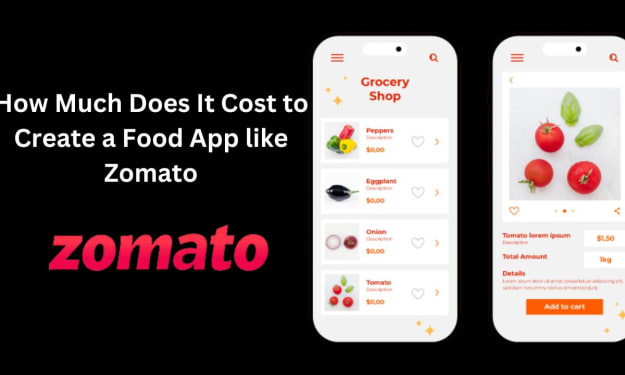
How Much Does It Cost to Create a Food App like Zomato
The meal delivery sector has seen a tremendous increase in popularity in recent years, owing to the convenience it provides to customers. Apps like Zomato have transformed the way we order food by offering a unified platform for users to browse eateries, make orders, and have meals delivered to their door. If you're thinking about getting into the food delivery business, you might be wondering how much it would cost to develop a comparable app. In this blog article, we will look at the aspects that determine the cost of creating a food app like Zomato and present you with an estimate to help you manage your budget wisely.
By Rohit Malhotra3 years ago in 01
How Mobile App Development Supports Charlotte’s Growing Businesses?
I didn’t always believe a mobile app was a growth tool. For a long time, I saw it as an add-on — something useful once a business was already large, already complex, already stretched. Growth, I thought, came from sales, partnerships, and operations. Technology just followed along.
By Mike Pichaiabout 15 hours ago in 01



Comments
There are no comments for this story
Be the first to respond and start the conversation.