
How AI Agents Are Transforming the Manufacturing Industry
This blog will cover the benefits of AI agents for manufacturing industry.

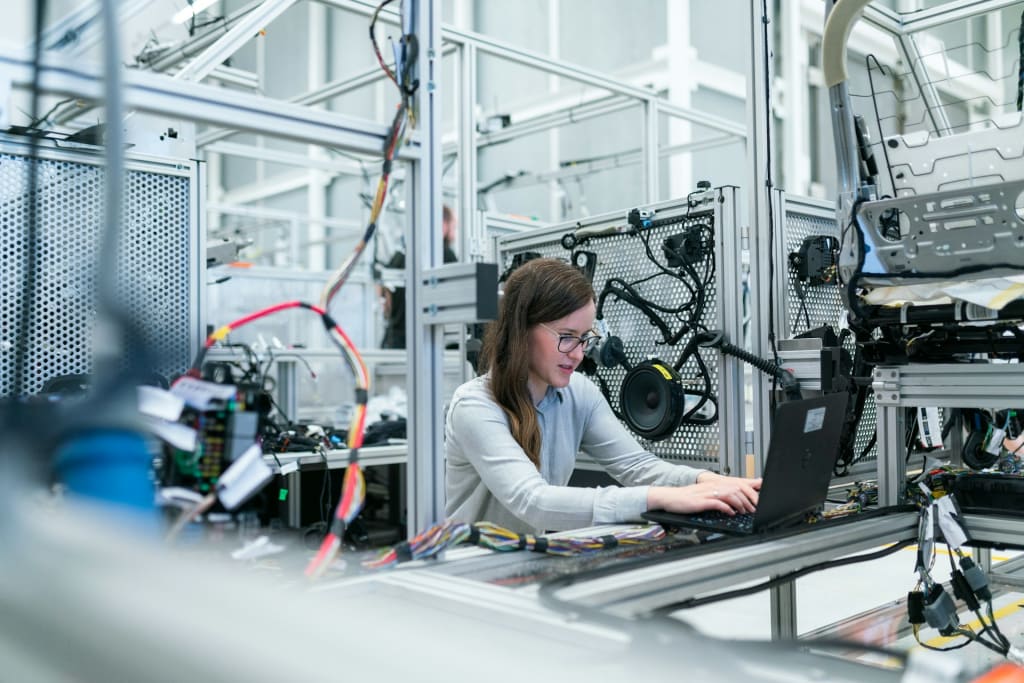
Running a business in the current market means finding newer ways to contend with rapid change. What I mean to say is the modern market is marked by intense competition. Then there are the evolving consumer demands as well. Case in point: the manufacturing industry faces rather unique pressures. Manufacturers must deliver high quality goods at competitive prices while also navigating complex supply chains. The continually changing market conditions also have a say here, of course. To keep pace with all this, manufacturing companies are actively embracing new technological innovations. While several technological solutions have found their way into the sector, AI agents have proven to be particularly useful. They have already made significant progress in manufacturing operations, resulting in increased productivity and better-quality control.
In this blog, I will discuss some of the key benefits of AI agents in the manufacturing sector. This will help you make much more informed decisions regarding the AI agent development company you hire for the project.
The Notable Role of AI Agents for Manufacturing
AI agents have a significant impact on this industry, and this is achieved in various ways. For starters, they help automate tasks, leading to increased efficiency and better decision making. They can also analyze vast amounts of data from sensors and machines to predict maintenance needs. This includes optimization of production schedules and quality control. AI agents can also help with other facets as well, such as inventory management and even collaborative robotics. All of it results in not only increased productivity but also lower costs.
AI Agents + Manufacturing Top Benefits You Stand to Gain
AI agents are transforming manufacturing by making processes more efficient, intelligent, and quick. From predictive maintenance to real-time quality control, the benefits are revolutionary. Automation powered by AI may reduce downtime, boost productivity, and save costs. In this article, we'll list the primary advantages you can enjoy. Let's look at the future of manufacturing and artificial intelligence.
- Innovation: AI agents can identify patterns and insights that human analysts may not notice. This is achieved by analyzing large datasets about factors such as production processes and market trends. This can result in the discovery of new and improved product designs as well as more efficient manufacturing techniques. AI agents can also simulate various scenarios and test hypotheses quickly and cost effectively. The result is a significantly shortened research and development cycle.
- Better supply chain management: They can leverage historical data and external factors such as weather. To what end? Well, to forecast demand more accurately. This enables manufacturers to optimize inventory levels, lowering storage costs as well as the risk of stockouts. AI agents can also monitor supplier performance and detect potential supply chain disruptions. Based on the agent's engineering capabilities, it could also suggest alternative sourcing options. The real-time visibility into the movement of goods and materials achieved via AI agents drive proactive decision making and more efficient logistics management.
- Personalized employee training: These agents can assess individual employees' skill levels and learning styles, then tailor training content. In fact, the delivery methods can also be adapted accordingly. AI powered training platforms can adapt to the employee's progress, providing additional assistance where necessary and speeding up learning in areas where the employee excels. This can result in more effective knowledge acquisition as well as eventually increased employee engagement. AI agents can also monitor employee performance and identify areas where additional training or upskilling would be beneficial.
- Predictive maintenance: AI agents can identify even the most subtle anomalies that may indicate an impending failure. For that, they continuously monitor data. from embedded sensors in machinery, such as temperature and pressure. AI agents can use ML algorithms to learn the normal operating patterns of equipment. And when any deviations that precede breakdowns are found, alerts can be sent out. Manufacturers can then schedule maintenance proactively, addressing potential issues before they cause costly downtime and production losses.
Final Words
There you have it, folks: some of the many ways in which AI agents stand to transform the manufacturing sector. So, if you are ready to get started, I recommend you begin with the search for an expert AI agent development company.
About the Creator
Ryan Williamson
Tech-savvy professional with 13+ years of experience in app development, leveraging technical knowledge to build strategic partnerships and promote innovative solutions. Passionate about engaging with technical communities, and more.
Keep reading
More stories from Ryan Williamson and writers in 01 and other communities.
Key Reasons Live Streaming Will Be Essential in 2025
The world agrees that companies now operate in an environment in which technology has a significant impact on nearly every customer interaction. Maintaining competitiveness in such a market then necessitates embracing new digital tools as well as changing consumer behaviors. We all know that mobile devices have solidified their position as the primary means by which most people access information and entertainment among other things online. As a result, developing and maintaining a strong mobile strategy is no longer optional. It is, in fact, a must have for most organizations seeking growth. Technology provides numerous interesting opportunities to significantly improve customer engagement. Take direct interaction channels, such as live streaming apps, for example: they are becoming increasingly important not only for marketing but also for gathering feedback and providing customer support. It is understandable to find oneself feeling dizzy at the thought of navigating this complex digital environment with all its careful strategic planning and whatnot. And if that has led you to decide against developing a software for media & entertainment industry, then I say wait.
By Ryan Williamson11 months ago in 01
Exploring Insemelo: The Future of AI Music Creation and Lyrics Generation
In the ever-evolving landscape of music technology, Insemelo stands out as a pioneering platform that harnesses the power of artificial intelligence to revolutionize how music is created. This article delves into the capabilities of Insemelo as an AI music creator and its innovative approach to generating lyrics for songs, showcasing how it empowers musicians and enthusiasts alike.
By Arslan Khan2 days ago in 01




Comments
There are no comments for this story
Be the first to respond and start the conversation.