
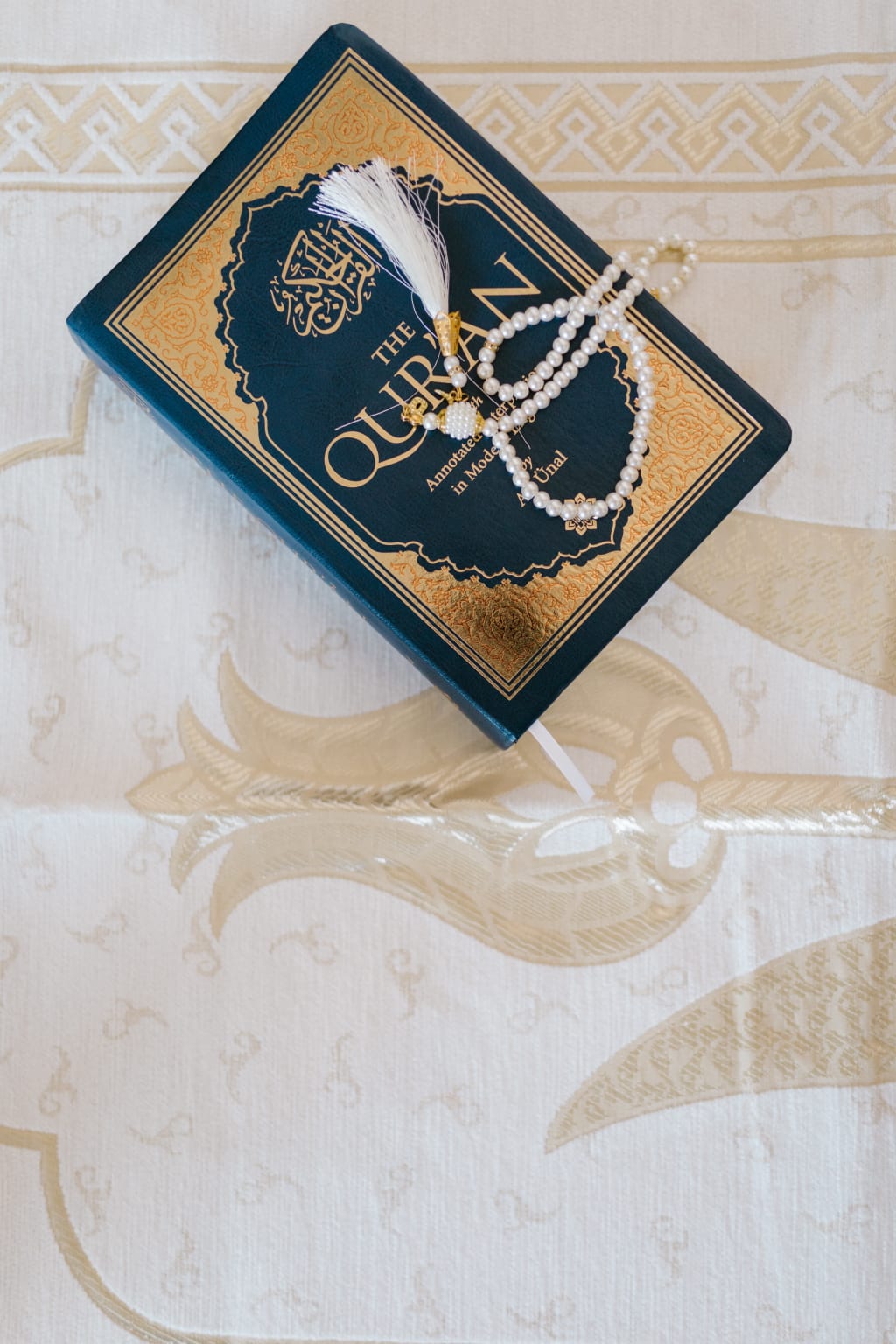
The Quran is the holy book of Islam and is considered the final revelation from Allah (God) to humanity. It was revealed to Prophet Muhammad over a period of 23 years and contains guidance for all aspects of human life. The Quran consists of 114 chapters, or surahs, and has approximately 6,236 verses, or ayat.
Some chapters (surahs) of the Quran in the order:
• Al-Fatihah (The Opening)
• Al-Baqarah (The Cow)
• Al-Imran (The Family of Imran)
• An-Nisa' (The Women)
• Al-Ma'idah (The Table Spread)
• Al-An'am (The Cattle)
• Al-A'raf (The Heights)
• Al-Anfal (The Spoils of War)
• At-Tawbah (The Repentance)
• Yunus (Jonah)
• Hud (Hud)
• Yusuf (Joseph)
• Ar-Ra'd (The Thunder)
• Ibrahim (Abraham)
• Al-Hijr (The Rocky Tract)
• An-Nahl (The Bees)
• Al-Isra' (The Night Journey)
• Al-Kahf (The Cave)
• Maryam (Mary)
• Ta-Ha (Ta-Ha)
• Al-Anbiya' (The Prophets)
• Al-Hajj (The Pilgrimage)
• Al-Mu'minun (The Believers)
• An-Nur (The Light)
• Al-Furqan (The Criterion)
• Ash-Shu'ara' (The Poets)
• An-Naml (The Ants)
• Al-Qasas (The Narration)
• Al-'Ankabut (The Spider)
• Ar-Rum (The Romans)
• Luqman (Luqman)
• As-Sajdah (The Prostration)
• Al-Ahzab (The Confederates)
• Saba' (Sheba)
• Fatir (The Originator)
• Ya-Sin (Ya-Sin)
• As-Saffat (Those Who Set The Ranks)
• Sad (Sad)
• Az-Zumar (The Troops)
• Ghafir (The Forgiver)
• Fussilat (Explained in Detail)
• Ash-Shura (The Consultation)
• Az-Zukhruf (The Gold Adornments)
• Ad-Dukhan (The Smoke)
• Al-Jathiyah (The Kneeling)
• Al-Ahqaf (The Sandhills)
• Muhammad (Muhammad)
• Al-Fath (The Victory)
• Al-Hujurat (The Private Apartments)
• Qaf (Qaf)
• Adh-Dhariyat (The Scatterers)
• At-Tur (The Mount)
• An-Najm (The Star)
• Al-Qamar (The Moon)
• Ar-Rahman (The Beneficent)
• Al-Waqi'ah (The Inevitable Event)
• Al-Hadid (The Iron)
• Al-Mujadilah (The Pleading Woman)
• Al-Hashr (The Exile)
• Al-Mumtahanah (The Tested Woman)
• As-Saff (The Ranks)
• Al-Jumu'ah (The Congregation)
• Al-Munafiqun (The Hypocrites)
• At-Taghabun (The Mutual Loss and Gain)
• At-Talaq (The Divorce)
• At-Tahrim (The Prohibition)
• Al-Mulk (The Dominion)
• Al-Qalam (The Pen)
• Al-Haqqah (The Reality)
The Quran is organized into chapters, which are arranged in order of length, with the longest surahs first and the shortest surahs last. Each surah is further divided into verses, which are numbered sequentially throughout the Quran. The language of the Quran is Arabic, and it is considered by Muslims to be the literal word of God.
The Quran is divided into two main parts: the Meccan and Medinan periods. The Meccan period refers to the time when Prophet Muhammad received his first revelations in the city of Mecca, while the Medinan period refers to the time when he migrated to the city of Medina and established the first Islamic community.
The Meccan surahs mainly focus on the oneness of God, the importance of faith and good deeds, and the Day of Judgment. They also contain stories of the prophets and their struggles to spread the message of God to their people. The Medinan surahs, on the other hand, deal with the establishment of the Islamic community and its laws and regulations. They also address social and political issues, such as the treatment of women, the distribution of wealth, and the importance of justice.
The Quran teaches that there is only one God, who is merciful, compassionate, and just. It emphasizes the importance of worshiping God alone and avoiding idolatry and polytheism. It also encourages Muslims to do good deeds, such as giving to charity, being kind to others, and seeking knowledge.
The Quran contains many moral teachings and ethical principles, including honesty, forgiveness, and compassion. It stresses the importance of respecting parents, neighbors, and the elderly, and prohibits actions such as lying, cheating, and backbiting.
The Quran also contains many verses about the importance of peace, justice, and tolerance. It teaches that all humans are equal in the eyes of God and that no one should be discriminated against based on race, ethnicity, or nationality. It also emphasizes the importance of peaceful coexistence with other religions and cultures.
In addition to its moral teachings, the Quran contains many verses about the signs of God's creation, such as the sun, moon, stars, and the earth. It encourages Muslims to reflect on these signs and to use their intellect to understand the purpose of their existence.
The Quran also contains many stories about the prophets and their struggles to spread the message of God to their people. These stories include the story of Adam and Eve, Noah and the flood, Abraham and his sacrifice, Moses and the Ten Commandments, and Jesus and his miracles.
Overall, the Quran is a book of guidance and wisdom that teaches Muslims how to live a fulfilling and meaningful life. It emphasizes the importance of faith, good deeds, and social responsibility, and provides a moral and ethical framework for all aspects of human life. It is a source of comfort and guidance for millions of Muslims around the world and continues to inspire and transform lives today.
About the Creator
Keep reading
More stories from Life of shan and writers in 01 and other communities.
AI based Bars
Ai based bars AI-based bars are a new trend in the hospitality industry that combines artificial intelligence technology with the bar experience. These bars use AI algorithms to create personalized recommendations for customers, track inventory, and automate the ordering process.
By Life of shan3 years ago in 01
Google Billionaire Larry Page Snaps Up 2 Miami Mansions for $173 Million
Billionaire and Google co-founder Larry Page has shelled out more than $173 million in recent weeks, snapping up a pair of luxury estates tucked deep within Miami's discreet Coconut Grove enclave. Page made the high-dollar moves as speculation intensified over his broader departure from California, where a proposed ballot measure targets billionaires with a sweeping one-time wealth tax.
By Dena Falken Esq3 days ago in 01




Comments (1)
Very nice