
Hillbilly Elegy
A Memoir of a Family and Culture in Crisis

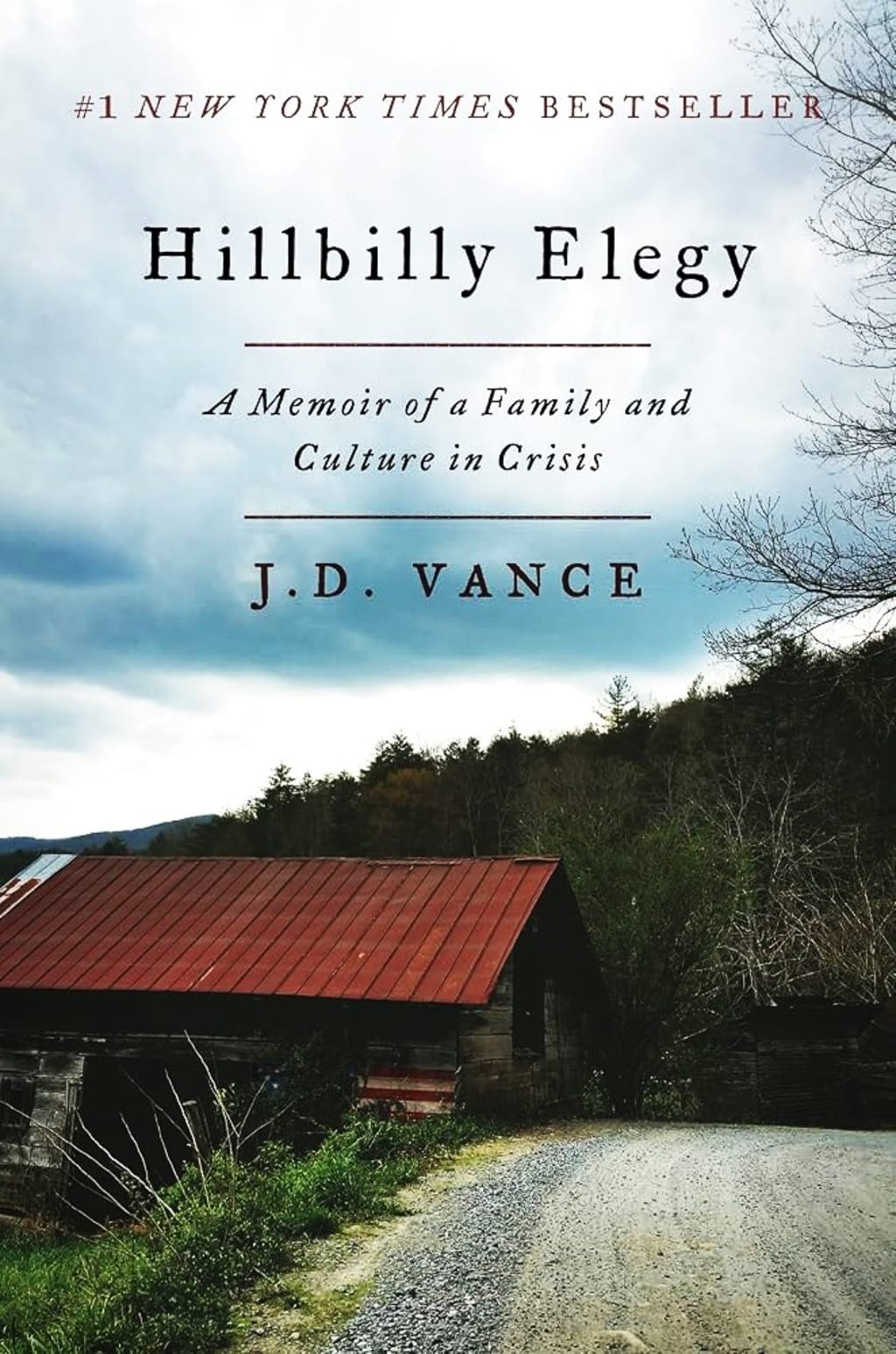
A Shrot Review
By J.D. Vance
J.D. Vance’s Hillbilly Elegy: A Memoir of a Family and Culture in Crisis offers an intimate glimpse into the struggles of America’s white working-class through a personal narrative that intertwines family history with cultural analysis. Published in 2016, the book quickly gained widespread attention, not only as a compelling memoir but also as a lens through which many attempted to understand the socio-political dynamics of contemporary America, particularly the factors contributing to Donald Trump’s rise to power. Through vivid storytelling and heartfelt reflection, Vance captures both the resilience and despair of a community grappling with poverty, addiction, and a crisis of identity. However, the book’s broader commentary on culture and personal responsibility has sparked significant debate, with some heralding it as essential reading and others critiquing its perceived oversimplifications.
Summary of the Book
Hillbilly Elegy is, first and foremost, Vance’s personal story. Born in Middletown, Ohio, to a family with deep roots in the Appalachian region of Kentucky, Vance grew up in an environment marked by instability and chaos. His mother battled drug addiction and cycled through a series of relationships, leaving Vance to find a semblance of stability in the home of his grandparents, Mamaw and Papaw. These two larger-than-life figures—especially the fiercely protective and unyieldingly candid Mamaw—played pivotal roles in shaping Vance’s character and aspirations.
Vance’s journey from this tumultuous upbringing to Yale Law School serves as the backbone of the memoir. Along the way, he reflects on the cultural and economic challenges faced by his community. He explores themes of generational poverty, the decline of industrial jobs, and the erosion of traditional family structures, painting a complex picture of the factors contributing to the struggles of the white working class.
Strengths of the Memoir
One of the most compelling aspects of Hillbilly Elegy is its raw honesty. Vance does not shy away from depicting the dysfunction and pain that marked his childhood. His narrative is unflinching, yet it is imbued with a sense of empathy for the individuals and communities he describes. Vance’s portrayal of his family is nuanced, capturing both their flaws and their strengths. For instance, Mamaw’s tough-love approach, while unconventional and sometimes jarring, emerges as a key influence in Vance’s eventual success.
Vance’s writing is straightforward and accessible, making his story relatable to a broad audience. He effectively conveys the emotional turmoil of growing up in a volatile environment, as well as the psychological toll of escaping it. His reflections on identity and belonging are particularly poignant; even as he achieves professional success, he grapples with feelings of alienation from both his working-class roots and the elite circles he navigates.
The memoir’s exploration of the concept of social mobility is also noteworthy. Vance highlights the barriers that individuals from disadvantaged backgrounds face, from limited access to education and mentorship to the weight of familial expectations and cultural norms. His account underscores the importance of both personal determination and external support in overcoming these challenges.
Cultural Commentary and Broader Implications
While Hillbilly Elegy is primarily a personal narrative, it also seeks to offer broader insights into the cultural and social dynamics of Appalachian and Rust Belt communities. Vance argues that a “culture of learned helplessness” perpetuates many of the problems facing these communities. He is critical of what he perceives as a tendency among some to blame external forces—such as globalization or government policies—while neglecting the role of personal responsibility and cultural attitudes.
Vance’s emphasis on individual agency resonates with readers who value self-reliance and hard work as pathways to success. His own story serves as a testament to the transformative power of education and perseverance. However, this focus has also been a point of contention, as many critics argue that it downplays the systemic and structural factors contributing to poverty and social decline.
Critiques and Controversies
One of the most significant critiques of Hillbilly Elegy is its perceived oversimplification of complex social issues. Vance’s focus on cultural attitudes and individual behavior, while compelling, risks overshadowing the broader economic and historical forces at play. The decline of manufacturing jobs, the impact of deindustrialization, and the failures of public policy are critical factors in the struggles of Appalachia and similar regions. Critics argue that by placing primary responsibility on individuals and communities, Vance’s analysis may inadvertently perpetuate harmful stereotypes and stigmatization.
Additionally, some readers have questioned the representativeness of Vance’s account. While his experiences are undeniably authentic, they cannot encompass the diversity of the Appalachian experience. Critics point out that the book leans heavily on narratives of dysfunction and despair, offering little attention to the resilience, creativity, and community strength that also define the region. This imbalance has led some to view Hillbilly Elegy as a partial and potentially misleading portrait of Appalachian life.
Vance’s political leanings have also sparked debate. Though he avoids overt partisanship in the memoir, his critiques of welfare and government assistance align with conservative ideologies, and the book has been embraced by some as a validation of these perspectives. This has made Hillbilly Elegy a lightning rod for discussions about class, culture, and politics, particularly in the polarized context of contemporary America.
Reception and Cultural Impact
Despite its controversies, Hillbilly Elegy has been undeniably influential. The book became a bestseller and was widely discussed in the media, particularly in the wake of the 2016 U.S. presidential election. It was frequently cited as a key to understanding the grievances and perspectives of Trump’s white working-class supporters, though Vance himself has expressed ambivalence about this interpretation.
The memoir’s success has also sparked broader conversations about the representation of poverty and class in American literature and media. By bringing attention to the struggles of a marginalized community, Hillbilly Elegy has contributed to a deeper public awareness of the challenges facing the white working class, even as it has highlighted the complexities and tensions inherent in discussing these issues.
Conclusion: A Complex and Polarizing Work
Hillbilly Elegy is a powerful and thought-provoking memoir that offers valuable insights into the personal and cultural dimensions of poverty and social mobility. Vance’s story is both inspiring and deeply human, shedding light on the challenges of growing up in a community marked by economic and social upheaval. His reflections on identity, resilience, and family dynamics resonate with readers from a wide range of backgrounds.
However, the book’s broader cultural commentary is less universally praised. While Vance’s emphasis on individual agency and cultural attitudes has struck a chord with many, it has also drawn criticism for its perceived lack of nuance and its insufficient engagement with systemic issues. As a result, Hillbilly Elegy is best understood as a starting point for discussions about class and culture, rather than a definitive or comprehensive analysis.
Ultimately, the memoir’s impact lies in its ability to spark dialogue and challenge assumptions. Whether readers agree or disagree with Vance’s perspectives, Hillbilly Elegy invites them to confront difficult questions about poverty, inequality, and the American Dream. For this reason, it remains an important and influential work, offering a window into a world that is both deeply troubled and profoundly resilient.
About the Creator
Can Arbitrage Bots Really Take Advantage of Price Gaps in Crypto?
Crypto markets often show small price differences for the same asset across different exchanges. These gaps can appear due to liquidity levels, regional demand, trading volume, or temporary delays in price updates. The idea behind a crypto arbitrage bot is simple: buy an asset where it is cheaper and sell it where it is more expensive. On paper, this looks like a low-risk opportunity. Understanding how arbitrage bots work in live markets helps separate realistic expectations from assumptions.
By smithtaylor4 days ago in 01


Comments
There are no comments for this story
Be the first to respond and start the conversation.