
Guru Gobind Singh Ji
Redefining Equality Since 1666
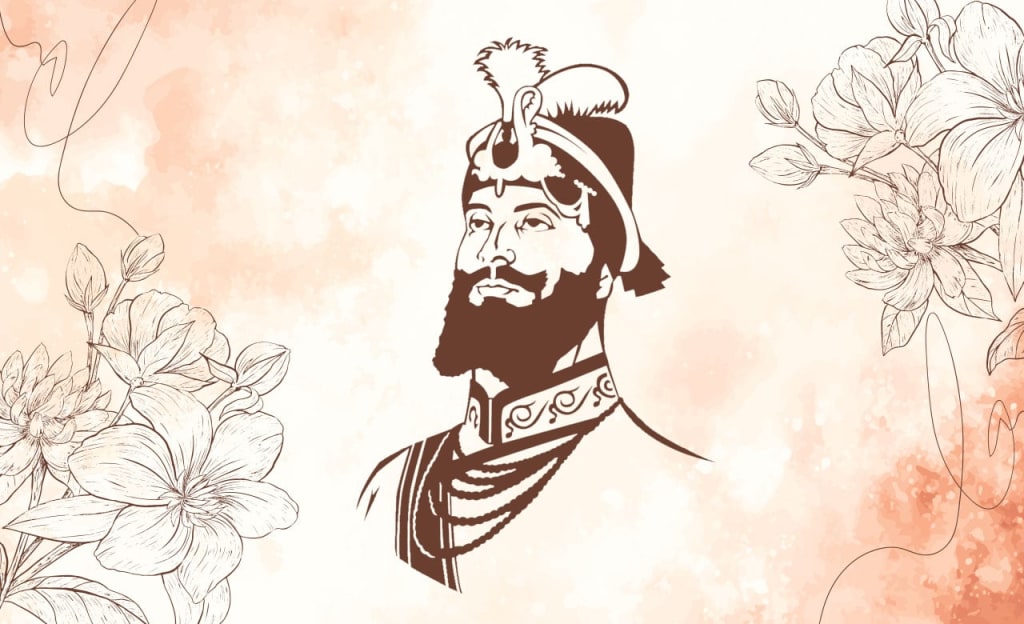
Guru Gobind Singh was the tenth Sikh Guru and the founder of Khalsa. He was a warrior, a spiritual Guru, a poet, and a philosopher, but above all these, he was a true equalist. He believed in equality and shunned discrimination based on caste, creed, or gender. In this blog, we narrate the story of Mai Bhago, who wanted to help the Guru when everyone else had deserted him.
Mai Bhago was born in the late 17th century and was trained in martial arts by her own father. She was also married to a warrior and wanted to participate in all the battles that he did. However, she wasn’t allowed. Until her husband came home one day and informed her how they had abandoned Guru Gobind Singh Ji in their fight against the Mughals because the odds were against them and they had been starving for days.
Mai Bhago was furious and got on the horse; she threw her bangles at her husband and asked him to take care of the household till she returns or to come with her to battle, ashamed, he joined her. She also went to the houses of the other 40 Sikhs who had abandoned the Guru and motivated them to come with her.
They finally reached near the forest where Guru Gobind Singh had taken refuge.
This is where it gets really interesting; the warriors set a trap for the Mughal army near a well. The Mughal army was fighting and tracing the Guru for days and was hence dying of thirst. They were headed for the well, unaware that it was dry. Mai Bhago and her team of warriors put their clothes on the nearby trees to create an illusion that there are more people near the well than it seems. When the Mughals fell for it and reached there, they fought the Mughals bravely and used their training to fight them fearlessly. Unfortunately, the odds were against the Sikhs and Mai Bhago was the only survivor of the battle.
The Mughals assumed that Guru Gobind Singh’s body was amongst those of the dead and didn’t look for it. Instead, they turned around and went looking for another source of water.
Mai Bhago had lost her husband in the fight and she became the personal bodyguard of Guru Gobind Singh. It was as unusual back then as it is now for someone to have a female bodyguard but that was the equality Guru Gobind Singh advocated.
Mai Bhago’s bravery and heroism created a turning point in the history of Sikhism and it set the bounds of equality of genders in India centuries ago.
The Khalsa, created in 1699, was a revolutionary concept that transcended social barriers and united people from various backgrounds under a common identity. By establishing the Khalsa, Guru Gobind Singh Ji abolished the prevalent caste system and declared that all members of the Khalsa were equal, regardless of their social status. This act of initiation, known as Amrit Sanchar, created a sense of unity and brotherhood among Sikhs, fostering a society where everyone was treated with respect and dignity.
Furthermore, Guru Gobind Singh Ji actively challenged gender inequality by promoting the empowerment of women. In a time when women's rights were severely restricted, he advocated for the equality of women in all aspects of life. Guru Gobind Singh Ji bestowed upon women the title of "Kaur," meaning princess, which erased the societal practice of using caste-based surnames that identified a woman as someone's property. This act symbolized the equality of women and recognized their individuality and sovereignty.
Guru Gobind Singh Ji's teachings and actions continue to inspire millions of people to this day. His unwavering commitment to social equality and justice serves as a timeless reminder of the importance of treating every individual with fairness and respect, regardless of their background. Through his teachings, Guru Gobind Singh Ji established a legacy that continues to shape Sikhism as a religion centered around principles of equality and social harmony.
About the Creator
Aditya Sharma111
Hi there! I am Aditya Sharma, a spiritual writer. As a writer, I have the privilege of delving into the realms of spirituality and exploring the profound aspects of the human experience.
Keep reading
More stories from Aditya Sharma111 and writers in 01 and other communities.
Crossroads
SPIRITUALITY Crossroads of Shreyas and Preyas Kathopanishad is one of the primary Upanishads (Sanskrit texts of ideas and teachings), believed to be constructed 2800 years ago in India, educating us about the existence of Atman (soul). It elaborates the concept of self-knowledge, which is the highest form of bliss.
By Aditya Sharma1113 years ago in 01
Global Security Market Size and Forecast 2025–2033: Protecting a Digitized World in an Era of Rising Threats
Global Security Market Overview The global security market is entering a decisive phase of expansion as governments, enterprises, and institutions confront an increasingly complex risk environment. According to Renub Research, the Security Market is expected to grow from US$ 142.66 billion in 2024 to US$ 264.71 billion by 2033, registering a strong CAGR of 7.11% from 2025 to 2033. This growth reflects the convergence of digital transformation, rising geopolitical tensions, urbanization, and escalating cyber and physical threats worldwide.
By Renub Researchabout 12 hours ago in 01




Comments
There are no comments for this story
Be the first to respond and start the conversation.