
Golden Chariot of the Achaemenids A Masterpiece of Ancient Persian Craftsmanship
Golden Chariot of the Achaemenids A Masterpiece of Ancient Persian Craftsmanship

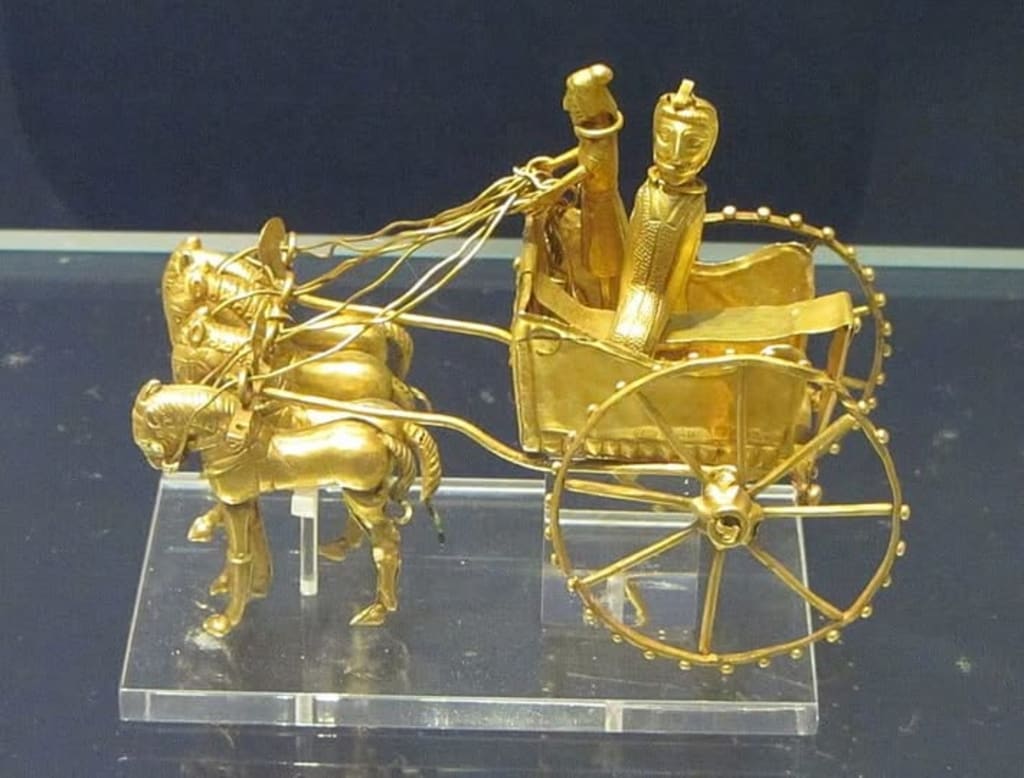
Golden Chariot of the Achaemenids: A Masterpiece of Ancient Persian Craftsmanship
The Achaemenid Empire, founded by Cyrus the Great in 550 BCE, was a beacon of cultural and artistic brilliance. Among its many treasures, the Golden Chariot stands as a testament to the empire's ingenuity and artistic excellence. This miniature golden chariot, currently housed in a prestigious London museum, is not just an artifact; it is a portal to an era of grandeur, innovation, and unparalleled craftsmanship.
A Glimpse into the Achaemenid Empire
The Achaemenid Empire, stretching from the Indus Valley in the east to the shores of the Mediterranean in the west, was one of history’s largest and most influential empires. Known for its architectural marvels, administrative innovations, and cultural inclusivity, the empire thrived under the rule of visionary leaders like Cyrus the Great, Darius I, and Xerxes I. The Golden Chariot embodies the essence of this golden age, offering a rare glimpse into the sophisticated lifestyle and advanced metallurgical techniques of the Achaemenid artisans.
The Golden Chariot: A Marvel of Miniature Artistry
The Golden Chariot, though small in size, exudes grandeur and opulence. Crafted entirely from gold, this artifact is a miniature replica of the grand chariots used in royal processions and ceremonial events. Measuring only a few inches in length, the chariot is a masterpiece of detailed workmanship. Its design features dynamic horses, meticulously sculpted to capture the essence of motion and vitality, and ceremonial figures, each adorned with intricate details that reflect the elaborate attire of the Achaemenid elite.
The wheels of the chariot are adorned with fine engravings, depicting motifs of lotus flowers and rosettes—symbols of prosperity and divine protection in Persian culture. The yoke and harnesses of the horses are decorated with delicate patterns, showcasing the artisans’ ability to merge functionality with aesthetics. The ceremonial figures, possibly representing royalty or divine beings, are depicted with a sense of dignity and grace, embodying the Achaemenid ideals of order and harmony.
The Role of Chariots in Achaemenid Society
Chariots held a significant place in Achaemenid society, symbolizing power, prestige, and divine favor. They were used in various contexts, from warfare to ceremonial processions and religious rituals. In battles, chariots served as symbols of military prowess and strategic advantage. In processions, they conveyed the grandeur of the royal court and the unity of the empire. The Golden Chariot, as a miniature representation, encapsulates these multifaceted roles, serving as both an artistic marvel and a historical document.
Craftsmanship and Metallurgical Techniques
The creation of the Golden Chariot required exceptional skill and knowledge of metallurgy. Achaemenid artisans were renowned for their expertise in working with precious metals, and this artifact is a prime example of their craftsmanship. The chariot was likely crafted using a combination of techniques, including casting, engraving, and repoussé—a process of hammering metal into relief from the reverse side.
The level of detail achieved in the Golden Chariot suggests that the artisans employed advanced tools and methods. The dynamic posture of the horses, the intricate patterns on the wheels, and the lifelike expressions of the figures all demonstrate a profound understanding of both artistic principles and the properties of gold. The use of gold itself—a material associated with divinity and eternal power—further underscores the chariot’s symbolic significance.
Cultural and Religious Significance
The Golden Chariot is more than just a decorative object; it is a cultural and religious artifact that reflects the values and beliefs of the Achaemenid Empire. In Persian tradition, the chariot was often associated with the sun god Mithra, who was believed to traverse the heavens in a golden chariot drawn by divine horses. This association underscores the artifact’s spiritual significance, linking it to themes of cosmic order and divine favor.
Furthermore, the chariot’s intricate design and ceremonial figures suggest its use as a votive offering or a symbol of royal patronage. Its discovery provides valuable insights into the religious practices and artistic traditions of the Achaemenid period, highlighting the interplay between material culture and spiritual beliefs.
Preservation and Legacy
The Golden Chariot’s journey from ancient Persia to its current home in a London museum is a story of preservation and rediscovery. While the exact circumstances of its discovery remain shrouded in mystery, it is believed to have been unearthed during archaeological excavations in the late 19th or early 20th century. Its transfer to a museum has ensured its preservation, allowing scholars and the public alike to appreciate its beauty and historical significance.
The artifact has also played a pivotal role in advancing our understanding of Achaemenid art and culture. Through detailed studies and analyses, historians have been able to reconstruct aspects of daily life, religious practices, and artistic traditions in the Achaemenid Empire. The Golden Chariot serves as a bridge between the ancient and modern worlds, inspiring awe and admiration across generations.
The Broader Context of Achaemenid Art
The Golden Chariot is part of a broader tradition of Achaemenid art, which is characterized by its emphasis on harmony, balance, and intricate detail. This artistic tradition is evident in other artifacts, such as the reliefs of Persepolis, the gold and silver rhytons, and the intricate jewelry of the period. Together, these works of art reflect the Achaemenid commitment to excellence and their ability to integrate diverse cultural influences into a unified aesthetic.
The empire’s art and architecture also reveal its cosmopolitan nature, incorporating elements from various regions under its rule, including Mesopotamia, Egypt, and Greece. This synthesis of styles and motifs is a hallmark of Achaemenid art, demonstrating the empire’s ability to foster cultural exchange and innovation.
Conclusion
The Golden Chariot of the Achaemenids is more than an artifact; it is a symbol of an era defined by cultural brilliance, artistic mastery, and imperial grandeur. Its intricate design and exquisite craftsmanship offer a window into the sophisticated world of the Achaemenid Empire, illuminating the values, beliefs, and achievements of one of history’s most powerful civilizations.
As we admire this miniature masterpiece, we are reminded of the enduring legacy of the Achaemenids and their contributions to the tapestry of human history. The Golden Chariot stands as a timeless tribute to the ingenuity and creativity of ancient Persian artisans, inspiring wonder and reverence in all who encounter it.
About the Creator
Twitter Down
Twitter Down When a major social media platform like Twitter experiences technical problems, millions of users immediately search for answers. Twitter, also known as X, plays a central role in news sharing, public discussion, and real time updates, so even short disruptions can feel significant. Recently, many users have reported difficulties accessing Twitter, loading timelines, posting content, or using certain features. This has led to widespread questions about whether Twitter is down, why it happens, and what users should expect. This article answers the most common questions people search for and explains the situation clearly.
By America today 3 days ago in 01
Migrate from G Suite to Office 365 While Preserving Metadata & Permissions
With the growing business size, the storage and resource requirements also start to evolve. Several aspiring businesses migrate from Google Workspace to Office 365 to access advanced collaboration and communication tools. Google Workspace and Office 365, both are feature-rich SaaS platforms, designed to boost the efficiency of business operations. However, they are still quite different from each other and can experience challenges during the shift.
By Xanthe Clayabout 13 hours ago in 01




Comments
There are no comments for this story
Be the first to respond and start the conversation.