
GDS Integration Pricing Models: Fixed, Subscription, or Custom?
Compare GDS integration pricing models: Fixed, Subscription, or Custom. Discover costs, benefits, and choose the best fit for your travel business.

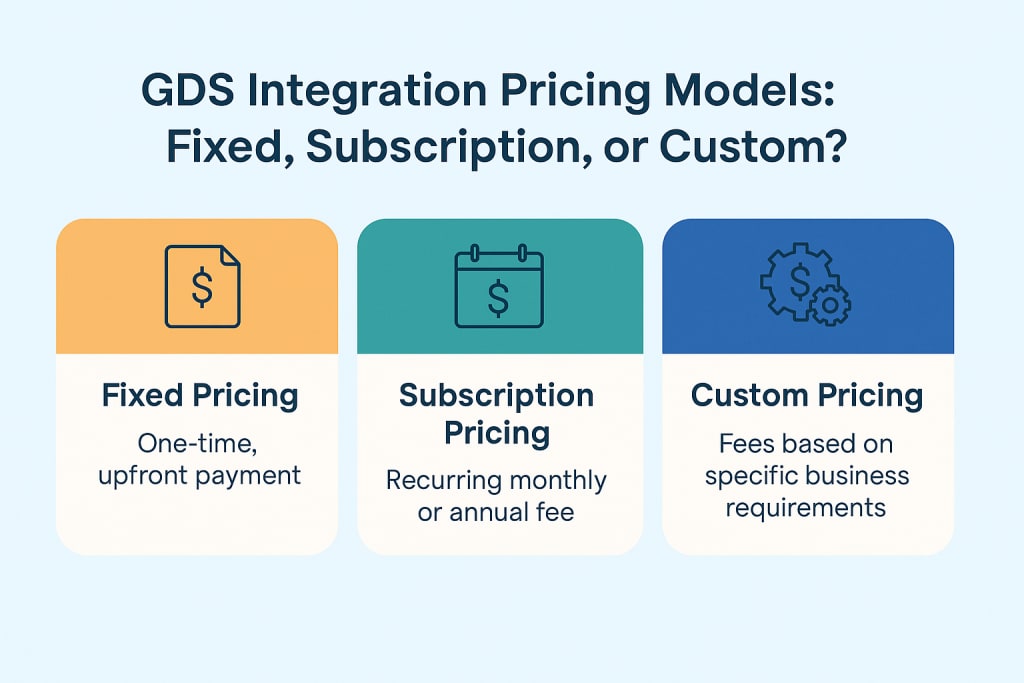
Global Distribution System (GDS) integration is essential for travel businesses looking to access a vast inventory of flights, hotels, car rentals, and more. It connects travel agencies and service providers to major GDS platforms like Amadeus, Sabre, and Galileo, enabling real-time booking and data management.
However, one of the most critical factors that travel companies must consider is the Cost of GDS Integration, which can vary significantly based on the pricing model selected. Understanding these costs is crucial to managing your budget, maximizing return on investment, and avoiding long-term financial strain.
In this blog, we will break down the three most common GDS pricing models—Fixed, Subscription, and Custom/Usage-Based—and highlight the potential hidden costs that travel companies should be aware of.
What Is a GDS Integration Pricing Model?
A GDS Integration Pricing Model simply explains how travel companies pay for access to the GDS platform and its services, such as bookings, features, and transactions.
The Cost of GDS Integration can have a big impact on your business. It can affect how affordable the system is, how easily you can grow, and whether the GDS solution will work for you in the long run.
There are typically three main pricing models that GDS providers and technology partners offer:
- Fixed Pricing
- Subscription-Based Pricing
- Custom or Usage-Based Pricing
Each pricing model comes with its own set of benefits, challenges, and cost factors that can directly influence your financial planning.
Fixed Pricing Model
What Is Fixed Pricing?
The Fixed Pricing Model means you pay a one-time, upfront fee to set up GDS integration. This price usually covers the entire setup, including system configuration, API connection, and basic training.
Key Features:
- You agree on the total project cost before starting.
- Great for businesses with clear needs and stable booking volumes.
- Ongoing maintenance, updates, and support are often extra unless you negotiate them in advance.
Subscription-Based Pricing Model
What Is Subscription Pricing?
The Subscription-Based Pricing Model involves paying a monthly or yearly fee to keep using GDS services. This fee often includes regular system updates, maintenance, and customer support.
Key Features:
- Lower upfront cost compared to fixed pricing.
- Costs are predictable and easy to manage month-to-month.
- Scales as your business grows—your fees may increase if you add more features or process higher booking volumes.
Custom or Usage-Based Pricing Model
What Is Custom/Usage-Based Pricing?
The Custom or Usage-Based Pricing Model is very flexible. Here, your costs depend on your specific business needs, how many transactions you process, or what you’ve negotiated with the provider. Pricing can even change based on seasonal demand or how much you actually use the system.
Key Features:
- Fully customized to your travel company’s needs.
- Costs go up or down based on your actual usage.
- Perfect for large companies or businesses with unpredictable booking volumes.
Hidden Costs to Watch Out For
When choosing a GDS pricing model, it’s easy to miss hidden costs that can quickly increase your total expenses. Here are some extra fees to watch carefully:
- Setup Fees: Initial system configuration and API integration costs that aren’t always included.
- Licensing Fees: Charges for using proprietary software or extra tools.
- Transaction Charges: Fees per booking or even per inquiry that can add up fast.
- Support & Maintenance Fees: Some providers charge separately for technical help, upgrades, or security patches.
- Termination Fees: Early contract cancellation fees that can lock you in.
- Training Costs: Expenses for teaching your staff how to use the system properly.
Conclusion
Choosing the right GDS Integration Pricing Model is key to finding the perfect balance between functionality and cost.
- Fixed Pricing is great if you want a clear, predictable budget and know exactly what you need.
- Subscription Pricing offers flexibility and is perfect for growing businesses that need regular support and system updates.
- Custom or Usage-Based Pricing is ideal for large companies or those with changing booking volumes and unique requirements.
No matter which model you choose, make sure you fully understand all the costs involved, including hidden fees. With the right pricing model and a well-negotiated contract, you can get the most value from your GDS investment and set your travel business up for long-term success.
About the Creator
Nico Gonzalez
Hi, I'm Nico Gonzalez! I'm passionate about technology, software development, and helping businesses grow. I love writing about the latest trends in tech, including mobile apps, AI and more.
Keep reading
More stories from Nico Gonzalez and writers in 01 and other communities.
How a Startup Built a Crypto Exchange in Just 30 Days (A Detailed Breakdown)
Launching a crypto exchange is often perceived as a long and technically demanding process. From regulatory considerations to liquidity integration and platform security, the journey appears complex and time-intensive. However, with the right strategy, structured planning, and access to ready-made technological infrastructure, a startup can significantly reduce development time. This detailed breakdown explains how a startup successfully built and launched a crypto exchange in just 30 days.
By smithtaylor3 days ago in 01
What Is the Best Way to Launch an ICO in Today’s Market?
Launching and promoting an Initial Coin Offering (ICO) in today’s market requires a structured, research-driven, and compliance-focused approach. The early days of ICOs were characterized by rapid fundraising cycles and speculative enthusiasm, but the modern crypto environment demands credibility, transparency, and measurable execution. Investors are more informed, regulators are more active, and competition among blockchain projects has intensified. As a result, launching an ICO now requires strategic planning that integrates legal clarity, sustainable tokenomics, community engagement, and long-term ecosystem development.
By Jack santo5 days ago in 01




Comments
There are no comments for this story
Be the first to respond and start the conversation.