
Future Trends: AI-Optimized Limestone Crusher Machine for Sustainable Cement Production
Limestone Crusher Machine for Sustainable Cement Production


Limestone has long served as the bedrock of cement production, a foundational raw material transformed under heat and pressure into the hydraulic marvels of modern concrete. Over decades, the means of crushing this crucial mineral have undergone a radical metamorphosis. From primitive manual hammers to the adoption of mechanized jaw and cone crushers, the objective has remained constant—improve throughput, minimize waste, and maintain consistent granularity. However, the 21st-century cement industry is navigating a new paradigm. Environmental mandates, volatile energy markets, and mounting pressure to decarbonize are compelling manufacturers to seek smarter, leaner, and more resilient technologies.
The mechanization of limestone crushing was once sufficient to drive productivity. Now, efficiency alone is no longer enough. The sector is embracing AI-driven limestone crusher systems not merely to process more material, but to do so with surgical precision—adjusting operational parameters in real time, curbing energy usage, and ensuring alignment with environmental benchmarks. These advancements reflect an industry poised to transition from volume-based models to value-based ecosystems.
Real-Time Optimization Through Machine Learning
Modern limestone crusher machines embedded with artificial intelligence are fundamentally altering the way raw material is processed. These systems are not just reactive—they are intelligently proactive. By harnessing machine learning algorithms, crushers continuously adjust rotational speed, feed rate, and crushing chamber geometry in response to input variability such as rock hardness, moisture content, and feed size distribution.
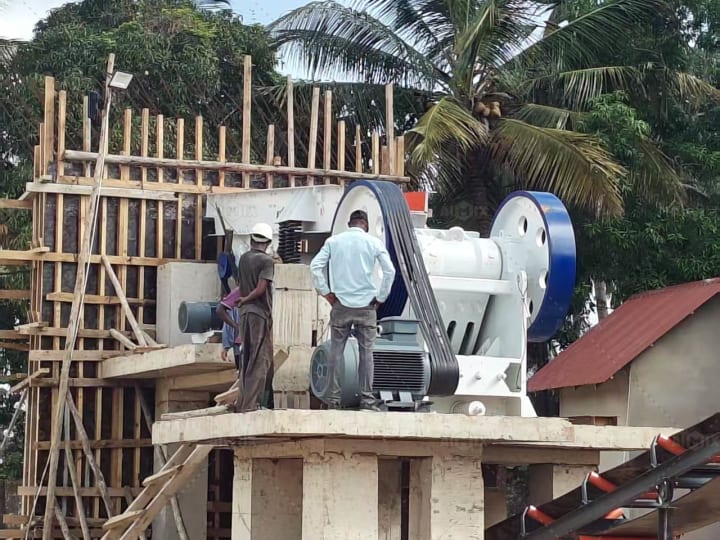
What once required human oversight and periodic recalibration is now autonomously fine-tuned, minute by minute. The result is a crushing process that is significantly more energy-efficient, with minimal overgrinding and reduced dust generation. Operators are no longer burdened by guesswork; they are empowered by real-time dashboards and predictive analytics that optimize every metric, from throughput to wear part longevity.
This algorithmic control layer ensures that limestone is pulverized with maximum mechanical efficacy and minimum ecological disturbance. The implications for cement production are profound—reduced downtime, optimized energy draw, and seamless integration with downstream calcination and blending systems.
Predictive Maintenance and Energy Efficiency Gains
In tandem with operational optimization, AI-enhanced crusher machines are pioneering the frontier of predictive maintenance. By integrating IoT sensors throughout critical components—such as bearings, rotors, and hydraulic systems—these machines forecast mechanical fatigue before failure occurs. This minimizes unscheduled downtime, extends component lifespan, and significantly lowers operational expenditure.
Furthermore, energy consumption in traditional crushing circuits often fluctuates wildly due to inconsistent material input. AI-optimized machines, however, adapt their load profiles dynamically, aligning energy use with real-time demand. This translates to lower kilowatt-hour per ton benchmarks—an essential metric as global cement manufacturers confront rising energy tariffs and carbon penalties.
This dual benefit of efficiency and foresight positions AI-driven crusher machine for sale as central assets in the quest for leaner, greener cement operations.

Enhancing Scalability and Future-Proofing Cement Plants
Sustainability in cement production is no longer a philosophical aspiration—it is a commercial imperative. AI-optimized limestone crusher machines play a decisive role in meeting the environmental, social, and governance (ESG) criteria now driving capital investment in heavy industries. By reducing carbon footprints, minimizing particulate emissions, and optimizing raw material yield, these intelligent machines enable a closed-loop production philosophy.
Moreover, their modular and adaptive architectures allow cement plants to scale without disruptive overhauls. As feedstocks evolve or as production targets shift, AI-integrated systems reconfigure themselves to accommodate new variables. This future-proofing capability is vital in an industry undergoing structural change—where regulatory landscapes and material logistics are in constant flux.
Cement producers who embrace AI in material processing are not merely upgrading their machinery; they are embedding resilience into their operational DNA. The limestone crusher, once a brute-force component of raw material processing, is now reimagined as a strategic node in a sustainable, data-driven manufacturing chain.
About the Creator
consrtuctionmachines
AIMIX is a customer-center-oriented heavy equipment manufacturer and supplier, devoted to production, innovation, combination, one-stop solution, etc.
https://aimixgroup.com/
Keep reading
More stories from consrtuctionmachines and writers in 01 and other communities.
Everything You Need to Know About Apple MacBook Neo
Apple has officially introduced the MacBook Neo, a new entry-level laptop designed to make the Mac experience more accessible to a wider audience. Announced in March 2026, the device is positioned as the most affordable MacBook in Apple’s lineup and is aimed primarily at students, casual users, and first-time Mac buyers.
By Veronica Bennett2 days ago in 01




Comments