
Free Dating Apps Without Payment That Actually Work in 2026
Discover dating apps you can use without hidden fees, paywalls, or upfront charges, real options for real connections.

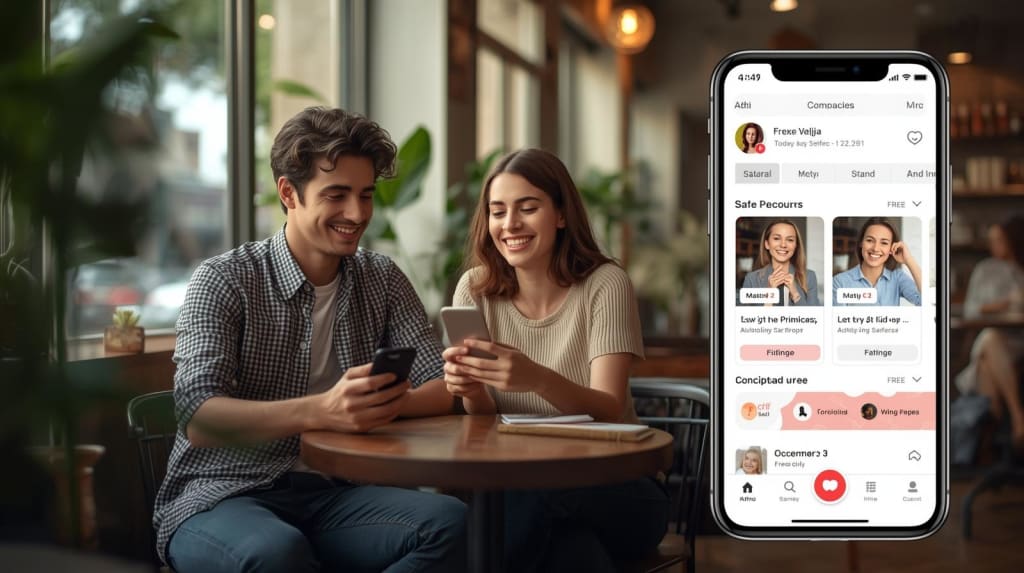
Finding a dating app that doesn’t immediately ask for your credit card when you sign up is honestly kind of rare nowadays. So when you do, it feels like a small win, you know? A lot of people still want to meet others without paying right away, and that’s considered to be pretty reasonable — after all, your time and attention already cost enough.
This write-up is basically meant to cover a few different things: what “free” usually means (which isn’t always as simple as it sounds), seven apps that people still seem to actually use without spending money, a bit about safety and privacy stuff, how these free ones differ from the ones that want you to pay first, and then a short plan you might try if you’re thinking about testing a few apps.
What “Free” Kind of Means
The word “free” gets used in a lot of ways, and it doesn’t always mean the same thing. There are apps that let you sign up, swipe around, match with people, and chat without ever entering your card info.
But then you’ve got others, the so-called freemium ones, where technically you can install and look around for free… except eventually they block a lot of important stuff unless you pay. Normally, it’s things like boosts, better filters, or seeing who already liked you.
It’s worth checking — and this part gets overlooked — whether you can actually start conversations without paying, and also whether replies are limited or not.
Because that’s kind of the difference between something that’s really free and something that’s free only in name, you know?
7 Dating Apps People Still Actually Use for Free
Here’s a quick list of seven apps that, at least right now, normally let you do the basics — like matching or messaging — without forcing payment first. I’ve also added what’s generally free, what’s not, and who tends to use each one.
1. Tinder
You can swipe, match, and chat on the free plan, though honestly you’ll keep seeing little reminders about upgrading. Paid tiers give you things like rewinds, unlimited likes, and boosts so you get seen more. It’s usually best for people who want a huge dating pool and quick interactions.
2. OkCupid
Lets you create a detailed profile, answer those personality-style matching questions, and message people for free. Paid options mostly remove ads and add better filters. Generally liked by folks who want more thoughtful or intentional matching.
3. Plenty of Fish (POF)
POF still allows you to browse and message people without paying, though there are some daily limits on contacting new matches. The free tools work fine, and it’s good if you want to experiment a bit with how you reach out to people.
4. Bumble
Matching and chatting are free here, too, but in straight matches, women always have to send the first message. Paid stuff gets you boosts and more search filters. It also leans heavier on verification features, so people who care more about safety tend to prefer it.
5. Hinge
Free users get a set number of likes per day, but you can still send messages and answer prompts without paying. If you like apps where the conversation is kind of guided, Hinge is considered to be a better fit.
6. Coffee Meets Bagel
This one sends you a smaller set of curated matches daily and keeps messaging free. You can buy coins if you want more profiles. Generally better for people who’d rather have slower, more deliberate matches instead of endless swiping.
7. HER & other niche apps
HER is mostly designed for queer women and nonbinary people, and its basic messaging options are generally free to use. Smaller, niche apps like this often have fewer users overall, but that can actually work in their favor less noise, fewer fake profiles.
Building a platform that focuses on a specific community, like HER does, is considered to be a pretty common aim in mobile app development in Delaware, since it usually involves knowing the audience well and choosing the right tech to support them.
If you’re unsure where to start, you could try one bigger app — like Tinder or Bumble, and one niche app to compare. Just keep in mind, though, these apps keep changing features all the time, so it’s better to double-check the FAQs before assuming what’s free.
“If dating apps feel overwhelming, narrow your intent first — clarity reduces noise and improves matches.” — Matthew Hussey (@matthewhussey)
Safety, Privacy & Choosing the Right Free App
Picking the “right” free app is mostly about matching what you want with what the app lets you do without paying. But also, it’s smart to check safety signals. Things like ID verification, photo checks, and a halfway-decent privacy policy are normally worth looking at.
And just so you know, free apps usually make money through ads or by collecting data, so it’s not a bad idea to dig into privacy settings and turn off anything you’re not okay sharing.
If you’re after something casual with lots of quick chats, you’ll want apps with big user bases. But for relationship-focused stuff, the ones that keep conversation prompts and matching tools free — like Hinge or OkCupid — tend to work better. Usually, it helps to just try an app for a few days and see how the matches feel before deciding if it’s worth sticking with.
“Dating apps work best when users manage intent and timing; features do not replace clarity.” — Matthew Hussey
Free vs Pay-First Apps - How They Really Differ
Truly free apps let you match and keep chatting without having to give up your payment info. Pay-first apps, on the other hand, let you browse profiles but block a lot of the real interaction — like starting chats or seeing who already liked you — unless you pay.
This does change how people behave. Some folks buy boosts to get more visibility, while others just stick to slower, organic matching. If you want faster results, yeah, paid extras can help. But if avoiding payment is the priority, focus on apps that let you actually message people without forcing upgrades.
Wrapping It Up & Next Steps
First, decide what you want — whether it’s casual dating, a serious relationship, or just meeting people through a community vibe. Then, try out two apps for a couple of weeks: maybe one bigger, mainstream one like Tinder or POF, and another that’s considered to be more relationship- or community-driven, like Hinge, OkCupid, or HER.
Before you sign up, skim through the privacy and verification pages and turn off anything you’re not okay with sharing. Build one solid profile with three good photos (a close-up, one mid-shot, and an “activity” photo), a short bio that actually says what you’re looking for, and one or two prompts that invite replies.
Use each app for two weeks, keep track of how many matches and conversations you get, and don’t hesitate to switch if things aren’t working. Free dating apps can work fine without paying, but only if you know what to expect and are willing to experiment a bit. And honestly, if an app keeps pushing you to upgrade too soon, it might just be easier to move on — or even try local groups where you can meet people without dealing with all the swipes and paywalls.
About the Creator
Eira Wexford
Eira Wexford is a seasoned writer with 10 years in technology, health, AI and global affairs. She creates engaging content and works with clients across New York, Seattle, Wisconsin, California, and Arizona.
Keep reading
More stories from Eira Wexford and writers in 01 and other communities.
Top Apps that pay $100 for a day in 2025
These days, just having your phone is often considered to be enough to start making some real money. People are using apps in all kinds of ways, sometimes to make a little extra cash, and other times to push toward something like a full day’s income. Hitting $100 in a single day is not always easy, but there are quite a few apps that can make it a lot more possible in 2025.
By Eira Wexford6 months ago in 01
Responsible AI Development Design, Testing, and Governance for Teams
Artificial Intelligence is transforming how enterprises operate — from automation and predictive analytics to intelligent customer experiences. In fact, over 90% of firms use AI in some capacity today, with adoption expanding quickly across departments and workflows.
By Jakob Stanely3 days ago in 01
RAG on Mobile: Embedding Vector Databases in Production
The industry is changing. By 2026, we have moved away from cloud AI. We now favor "Local-First" architectures. These systems prioritize user privacy. They offer offline functionality. They also reduce network latency. This shift toward RAG on mobile is a major transition. RAG stands for Retrieval-Augmented Generation. It is a way to give AI better context.
By Devin Rosario7 days ago in 01
Tatt~Master
— Assembly Line Tatt Machine ~ Impressions to Impress — As I begin to understand more about the Tattoo Phenomenon. I've written silly, yet verbatim, dating site anecdotes in 'Frazzled.' So let me ask you: Would you be More attracted to someone slathered with tattoos, or Less?
By Jay Kantor4 days ago in Humor




Comments
There are no comments for this story
Be the first to respond and start the conversation.