
Foster Business Growth with Social Login
Integrate social networks into your eCommerce site to drive engagement and the number of registered users.
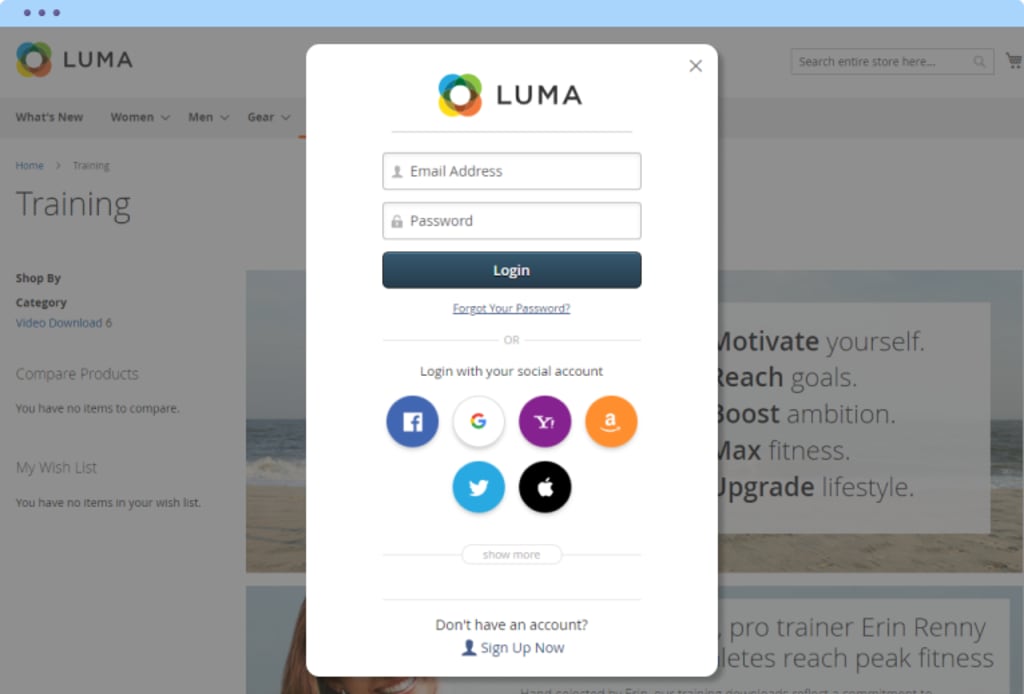
The concept of social login is nothing new to the online shopping industry. A lot of eCommerce sites have already implemented this feature. The idea behind social login is to make the registration process easier and faster, reducing the number of abandoned carts due to tedious registration process. According to research by Forrester, about 67% of consumers prefer to log in or register on eCommerce sites using their social network accounts.
Why Implement Social Login in Online Stores
It is time-consuming for people to create an account on an eCommerce website to buy things. They want to get the job done with as little effort as possible, without filling out long registration forms. Social login can help them do just that. Moreover, there are decisive benefits of social login in eCommerce for store owners:
How Does Social Login Work
Social Login works via API (Application Programming Interface) - a software-to-software interface, providing a secure and standardized way for applications to work with each other and deliver the information or functionality requested without user intervention. Acting as messengers, APIs deliver one application's request to another and return a response in real-time.
Regarding social login, an eCommerce website requests user credentials and some of the profile data from a user's social network account. This data is used to create a new account quickly and hassle-free for users, without having to provide all the information manually.
How to Integrate Social Login in eCommerce Websites
In order for social login to work on your website, you need to create an API application on the network side and integrate it into your eCommerce store. You can find instructions for integrating with each service on their respective developer pages. However, it requires excellent web development skills. So, what to do if there is no web developer on your team?
There are different ways of implementing social login without development skills, depending on your eCommerce platform. For example, if you're using Woocommerce, you can use their built-in social login plugin. If talking about Magento or Shopify platforms, then there are third-party plugins available allowing you to integrate social login in no time.
For example, this Social Login extension for Magento 2 offers a built-in integration of the most popular social networks and email services, including Facebook, Twitter, and Google (55+ in total). Furthermore, they provide merchants with step-by-step instructions on how to set up the integration on your website in minutes. Among other features, they offer social share, attractive design of social buttons, in-depth statistics to measure the success of each social button, compare social login sign-ups with default sign-up forms, and much more.
With third-party extensions, it's easy as 1,2,3 to implement social login in eCommerce websites.
Final Words
Social login is a popular way to make sign-up easier for your customers. It significantly boosts conversions, making the registration process hassle-free and straightforward.
Since most people use their social media accounts to register for new services and websites, it makes sense for online stores to take advantage of this by integrating Facebook, Twitter, or other social networks.
And if you're concerned about security, don't be — there are many ways to ensure that this feature doesn't sacrifice safety for convenience. In fact, social login is much more secure than traditional forms of registration.
About the Creator
Keep reading
More stories from writers in 01 and other communities.
Twitter Down
Twitter Down When a major social media platform like Twitter experiences technical problems, millions of users immediately search for answers. Twitter, also known as X, plays a central role in news sharing, public discussion, and real time updates, so even short disruptions can feel significant. Recently, many users have reported difficulties accessing Twitter, loading timelines, posting content, or using certain features. This has led to widespread questions about whether Twitter is down, why it happens, and what users should expect. This article answers the most common questions people search for and explains the situation clearly.
By America today 5 days ago in 01
Navigating Cryptocurrency Asset Recovery
The challenging environment of digital asset theft and loss has given rise to a specialized sector focused on recovery. This field consists of companies with distinct operational models, from direct investigation to technical support and foundational analytics. The following outlines five notable entities often referenced in this space, categorized by their primary function.
By Milan Robertsabout 5 hours ago in 01
Ludacris and Nelly draw backlash over bookings at MAGA-coded music festival
Ludacris and Nelly headlining a mostly right-wing event is good for them. It’s also great for the genre of hip hop. The two rap veterans have showcased their talents on other stages. Why can’t they perform for mostly MAGA folks and grab that bag?
By Skyler Saunders6 days ago in Beat


Comments
There are no comments for this story
Be the first to respond and start the conversation.