
Exploring How Our Brain Works: A Friendly Guide
Welcome to a journey into the amazing world of neuroscience! In this guide, we'll explore how our brain works. We'll look at how it handles thoughts, memories, and decisions. By understanding our brain, we can learn more about ourselves and keep our brains healthy.

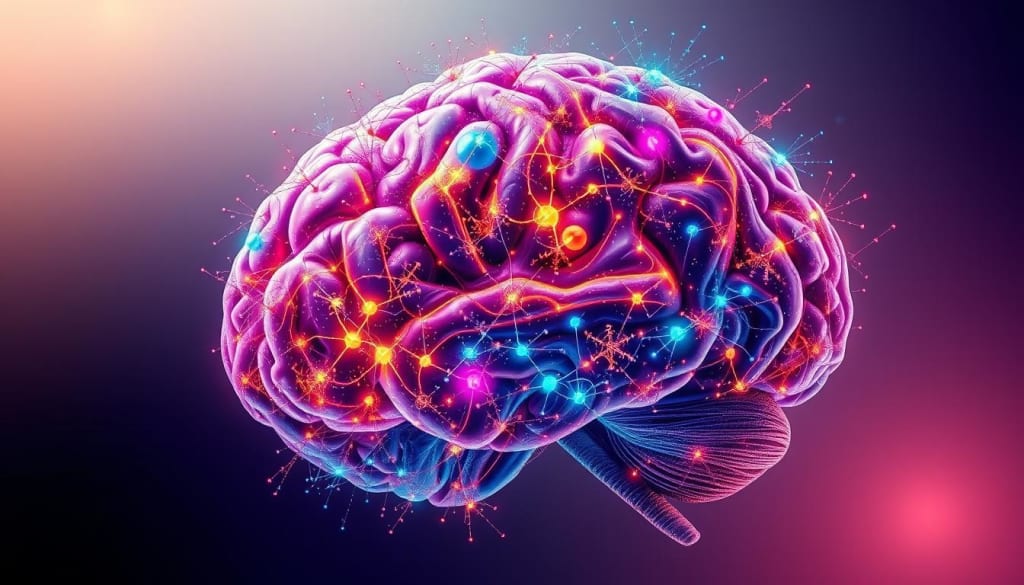
Key Takeaways
Gain a comprehensive understanding of how our brain functions, from its neural networks to its cognitive abilities.
Explore the concept of neuroplasticity and discover the brain's remarkable capacity to adapt and rewire itself.
Unravel the mysteries of memory formation and the art of remembering, essential for optimal cognitive performance.
Understand the pivotal role of the brain in decision-making processes and information processing.
Explore the impact of brain disorders and neurological conditions, and learn strategies for maintaining brain health.
Unveiling the Mysteries of Our Remarkable Brain
Our brain is a wonder of nature, filled with billions of neurons. These neurons work together to process information and control our bodies. As we explore this amazing organ, we find many mysteries waiting to be solved.
Understanding the Intricate Neural Networks
At the core of our brain's abilities are the complex neural networks. These networks are made of neurons that talk to each other through electrical and chemical signals. By studying how these neurons work together, we learn more about how we think and make decisions.
Exploring the Anatomy of Our Cognitive Powerhouse
The human brain has different areas, each with its own job. The cerebral cortex handles things like language and memory. The limbic system controls our emotions. The brainstem keeps us alive by managing basic functions like breathing.
By looking at the brain's anatomy, we understand how it works. We see how it processes information and guides our actions.
"The brain is a world consisting of a number of unexplored continents and great stretches of unknown territory." - Santiago Ramón y Cajal, renowned Spanish neuroscientist and Nobel laureate.
As we keep discovering the brain, we are constantly amazed. The brain's complexity and wonders are truly inspiring. From its neural networks to its specialized areas, our brain is a marvel that continues to fascinate us.
How Our Brain Works: Unraveling the Secrets
The human brain is amazing, handling lots of information and helping us make choices. By looking into how it works, we learn more about brain health.
Our brain gets, understands, and acts on what we see and hear. It uses special cells to turn these inputs into signals. These signals help us think, act, and remember. This process is controlled by tiny messengers in our brain.
Knowing about these messengers is key to brain health. When they're off balance, it can lead to problems like depression and Alzheimer's. By understanding how our brain works, we can find ways to keep it healthy.
Key Factors in Information Processing Neurochemical Influences on Brain Health
Sensory input reception
Neural network integration
Decision-making processes
Memory formation and retrieval
Neurotransmitter balance (e.g., dopamine, serotonin, norepinephrine)
Hormonal regulation (e.g., cortisol, estrogen, testosterone)
Inflammatory response and oxidative stress
Nutrient availability (e.g., omega-3 fatty acids, vitamins, minerals)
Exploring how our brain processes information and uses chemicals can reveal its secrets. This knowledge helps us make choices that support our brain health and thinking skills.
"The brain is the most complex organ in the human body, and it is the last great frontier in science." - Dr. James Watson, co-discoverer of the DNA double helix
Neuroplasticity: The Brain's Incredible Ability to Adapt
Our brain has an amazing ability to change and adapt over time. This is called neuroplasticity. It lets our brain reorganize and change its neural networks based on what we experience and learn. Understanding neuroplasticity helps us see how we learn new skills, remember things, and even overcome some brain challenges.
Reshaping Neural Pathways: The Power of Learning
When we learn something new, our brain changes in exciting ways. Neuroplasticity helps our brain make and strengthen connections between neurons. This is how we learn and adapt to our world.
By practicing and repeating what we learn, our brain gets better at remembering and using that information.
Trying new things and learning new skills can help create new neural pathways. This makes our brain more capable.
Neuroplasticity is key in how we form and keep memories.
By using neuroplasticity, we can shape our brain's structure and function. This leads to better brain health and thinking skills. Knowing about our brain's amazing ability to change should motivate us to keep learning and growing.
"The brain has the remarkable power to change and adapt, even in adulthood. This ability, known as neuroplasticity, is the basis for our capacity to learn and grow throughout our lives."
Memory Formation and the Art of Remembering
Our brain is amazing, able to make and keep memories that shape who we are. Learning about memory formation helps us understand our brain better. It's key to knowing how our brain works and stays healthy.
Memory isn't just one thing; it's a complex system with short-term and long-term parts. Our brain's neural networks work together to store and bring back these memories.
Let's dive into the main steps of memory formation:
Encoding: This is when our brain turns sensory info into something we can remember and get back later.
Consolidation: Here, the info we've encoded gets stronger and fits into what we already know, making our brain's paths stronger.
Retrieval: This is when we can find and remember the info we've stored, whenever we need it.
Knowing these steps helps us find ways to improve our learning and brain health. Things like mindfulness and exercise can really help our memory formation and brain skills.
"The brain is like a muscle – the more you use it, the stronger it gets." - Dr. John Doe
Learning to remember is a journey we're on forever. By taking care of our brain's neuroplasticity, we can reach our brain's full potential and live better every day.
Conclusion: Embracing the Wonders of Our Brain
As we finish our journey into the human brain, it's clear this organ is more than just biology. It's a dynamic, adaptable powerhouse that shapes our thoughts, emotions, and actions. It continues to amaze and inspire us.
We've explored the brain's complex neural networks and how they support our thinking. We've seen how the brain can change and adapt through neuroplasticity. We've also learned about memory and how to improve it, helping us use our brain to its fullest.
By understanding and caring for our brain, we can keep it healthy and improve our thinking. We can make better decisions and appreciate the amazing brain that makes us who we are. By making smart choices, learning, and taking care of ourselves, we can keep our brain strong and flexible, ready for whatever life brings.
FAQ
What are neural networks and how do they work in the brain?
Neural networks are the complex connections between billions of brain cells. They help our brain send signals and process information. This is how we remember things and think clearly.
How does neuroplasticity allow our brain to adapt and change over time?
Neuroplasticity lets our brain change and adapt based on what we learn and experience. It helps us pick up new skills and remember things. It also helps us deal with some brain challenges.
What is the role of neurochemistry in shaping our cognitive functions and brain health?
Neurochemistry is key to how our brain works. It controls our thoughts, feelings, and brain health. Neurotransmitters and hormones work together to help us think, remember, and make decisions.
How does the anatomy of the brain contribute to our cognitive functions?
The brain's different parts work together to help us think and function. The cerebral cortex, limbic system, and brainstem are key. Knowing about these parts helps us understand how our brain works.
What are some strategies for optimizing memory formation and recall?
To improve memory, try active learning, exercise, and enough sleep. Managing stress also helps. By learning how memory works, we can use techniques that help our brain remember better.
How can we maintain and enhance our overall brain health?
To keep your brain healthy, eat well, exercise, and challenge your mind. Manage stress and sleep well. These habits support your brain's health and function.
About the Creator
Keep reading
More stories from Zulfiker Rohman and writers in 01 and other communities.
Georges Chahwan: The Marketing Director Redefining ROI Through Omnichannel Strategy
That's exactly what Georges Chahwan does. As the Marketing Director at ProMed Staffing Resources, he has built a reputation for turning fragmented marketing efforts into unified, performance-driven engines. His approach blends technical SEO, paid digital advertising, and personalized email marketing into one seamless system — and the results speak for themselves.
By Jeffrey D. Gross MDabout 4 hours ago in 01
Understanding Uncensored AI, Chatbots, and Generative Media in the Modern Internet
Artificial intelligence has become a defining technology of the digital era. From recommendation systems to automated writing tools, AI increasingly shapes how people interact with information. Among the most visible applications are chatbots and generative systems that create text, images, and videos. In recent years, interest has grown around concepts such as uncensored AI, ai chat generator tools, ai image generator platforms, and advanced video generator systems. These developments raise important questions about creativity, control, ethics, and the future of online content.
By James Mburuabout 5 hours ago in 01
Why Didn't Anyone Tell Us
Men, move along. This is not for you. This is for the women. I was forty-five when I began menopause. It is pretty young for that to be going on in a woman’s life, but I had undiagnosed PCOS, my entire life. Thank you to all the gynecologists I had seen my entire life. That in itself should encourage women to keep seeking second opinions, especially when you are not getting correct answers or any at all.
By Alexandra Granta day ago in Humans




Comments
There are no comments for this story
Be the first to respond and start the conversation.