
Emojis, Emoticons, and GIFs: What They Really Mean And How to Use Them Wisely
Not all digital expressions are the same.


Digital communication has its own language. Whether we’re texting a friend, posting on social media, or writing an email, we often want to express ourselves in pictures and symbols to enhance our words. Therefore, we can do that in one of three ways.
Emojis, emoticons, and GIFs each carry their own history, tone, and potential pitfalls. Understanding the difference can help us communicate more clearly — and avoid misunderstandings. Those we choose shape how our messages feel. Here are simple ways to use them wisely.
1. Emojis: The Visual Vocabulary of the Internet
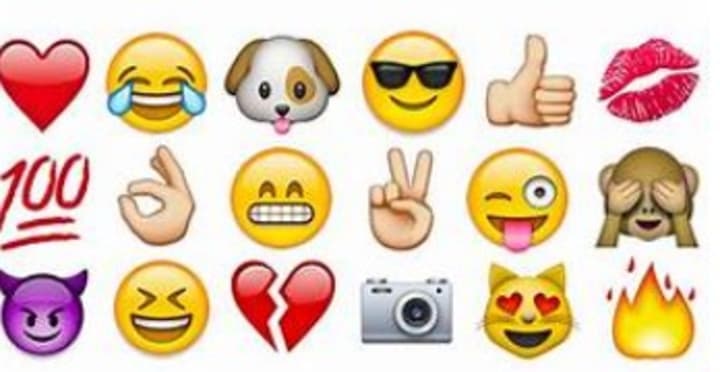
Emojis are the colorful icons built into our phones and keyboards. They’re standardized, meaning a “smiling face” or “red heart” is recognized across platforms, even if the style varies slightly.
Emojis are best for:
- Adding warmth or tone to a message
- Softening direct statements
- Expressing emotion quickly
- Enhancing storytelling in short-form writing
Where to be cautious
- Emojis can display differently on Apple, Android, and Windows devices.
- Some emojis have double meanings depending on age group or culture.
- Overuse can make a message feel less serious or less professional.
Therefore, use emojis to support your words, not replace them. They’re seasoning, not the whole meal.
- Emojis can have unofficial meanings that differ from their literal ones.
- Generational differences play a huge role in interpretation.
- Context is everything — the eggplant emoji can be harmless in a recipe post and inappropriate in a text thread.
- Misunderstandings happen easily, especially across age groups or professional settings.
“Some emojis, like the eggplant or peach, have taken on meanings far beyond their produce aisle origins. If you’re unsure how an emoji might be interpreted, especially across generations, it’s safer to skip it.”
Here are 10 emojis most likely to be misunderstood.
🍆 Eggplant : Often used as a suggestive symbol rather than a vegetable. Avoid using it in professional or cross‑generational communication. In everyday digital culture, the eggplant emoji is widely used as a suggestive symbol rather than a vegetable. It’s become shorthand for something intimate or adult in tone, especially among younger users.
🍑 Peach : Commonly used to represent a backside. It is safe in recipes, but risky in texts.
💦 Sweat Droplets : These mean “effort” or “movement,” but also have suggestive interpretations. Use cautiously outside fitness contexts.
😏 Smirking Face : Often interpreted as flirty, sly, or mischievous. This can dramatically shift the tone of a message.
🙃 Upside‑Down Smiley : This usually means sarcasm, irony, or “I’m pretending to be fine.”
😬 Grimacing Face : This is often used to express awkwardness, embarrassment, or “yikes.”
🔥 Fire : Means “amazing,” “attractive,” or “on trend,” not literal flames. This is positive, but very informal.
👀 Eyes : Used to say “I’m watching,” “I noticed that,” or “spill the tea.” This can feel playful or nosy depending on the context.
💀 Skull : Among younger users, it means “I’m laughing so hard I’m dead,” not death. Older readers may misinterpret this.
🫠 Melting Face : This newer emoji represents embarrassment, awkwardness, or “I want to disappear.”
2. Emoticons: The Original Text-Based Expressions
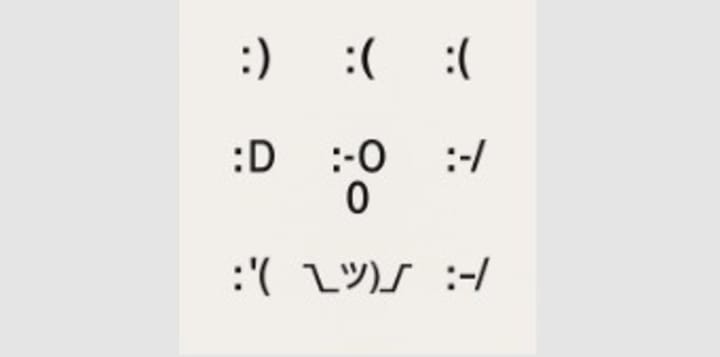
Before emojis filled our screens with bright colors, we used simple text symbols to show emotion. These early expressions — called emoticons — were the first way we softened tone in digital communication.
Many readers over 40 remember using :-) long before emojis existed. Younger readers may barely recognize them. Some people still prefer emoticons because they feel calmer, simpler, or more professional.
“Emoticons still work for some people. They use simple text symbols like :-) to show a smile. Sometimes they communicate more gently than a bright yellow face.”
Emoticons are simple combinations of punctuation marks made from keyboard characters like:
:) — smile
:( — frown
;) — wink
:D — big grin
:-O — surprise
:-/ — unsure
:'( — crying
¯\_(ツ)_/¯ — shrug
What they’re best for:
- A nostalgic or minimalist tone
- Text-only environments where images don’t display
- Conveying subtle emotion without feeling too playful
Where to be cautious
- Some readers may not recognize complex emoticons.
- They can look outdated to younger audiences.
- They rely on the reader interpreting them correctly.
Emoticons work well in writing that aims to feel personal, simple, or retro. They’re also great when you want to keep the tone light without using bright visuals.
3. GIFs: The Moving Mood Setters
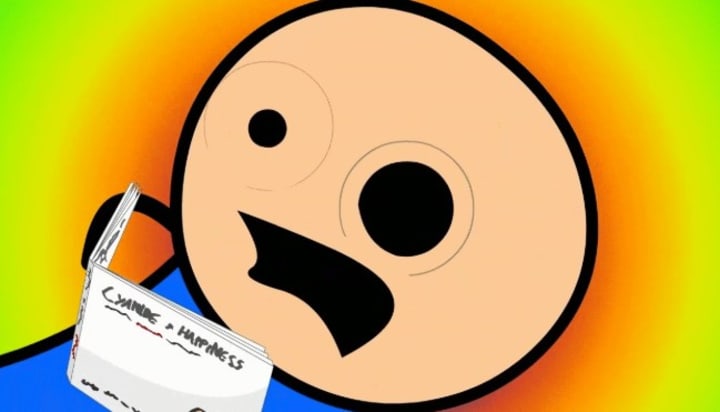
A Graphics Interchange Format (GIF) is short, looping animations — often pulled from movies, TV shows, or memes. They’re expressive, humorous, and sometimes dramatic.
What they’re best for:
- Showing reactions (laughter, shock, excitement)
- Adding humor or personality
- Creating a conversational, relatable tone
Where to be cautious
- GIFs can slow down loading on some devices.
- Not all platforms support them.
- They can feel too informal for professional or sensitive conversations.
- Copyright concerns may apply depending on usage
GIFs are powerful but loud. Use them when you want to make a moment bigger — not when you’re trying to be subtle.
How to Choose the Right One
Emoji: Use in friendly texts or social posts because they are colorful, expressive, warm, and universal.
Emoticon: Use in professional emails to keep the tone respectful. Emoticons are subtle. Therefore, use them instead of emojis when you want:
- A gentle tone without bright visuals
- A simple, minimalist expression
- A smile that feels more “typed” than “cartooned”
- A way to soften a message in professional or mixed‑audience settings
For example, “Thanks for your patience :-)” reads differently than “Thanks for your patience 😊.”
GIF: Use for humor or storytelling because GIFs add personality and timing. They are animated.
Whether you’re sending a quick text or crafting a message that matters, choosing the right GIF can help your words land exactly as you intend.
Guidelines & Gentle Warnings About Using Any One of the Trio
- Be mindful of the tone you want to convey.
- A single emoji can change the meaning of a sentence. A 😊 softens. A 😏 shifts. A 😬 complicates.
- Know your audience.
- What feels playful to one person may feel unprofessional or confusing to another.
- Avoid symbols in serious conversations.
- When discussing grief, conflict, or important decisions, clarity matters more than decoration.
- Don’t rely on GIFs for emotional nuance.
GIFs are fun, but they can also trivialize a moment if used at the wrong time.
- Remember accessibility.
- Screen readers interpret emojis literally (“smiling face with smiling eyes”), which can disrupt the flow for visually impaired readers.
- Less is more.
- A sprinkle communicates. A flood distracts.
A Simple Rule
Use symbols to support your message, not replace it. Clarity first. Tone second. Symbols last.
Call to Action
If this helped you think differently about how to communicate online, feel free to share this article with someone who could use a little clarity or a little smile :)😊.
About the Creator
Margaret Minnicks
Margaret Minnicks has a bachelor's degree in English. She is an ordained minister with two master's degrees in theology and Christian education. She has been an online writer for over 15 years. Thanks for reading and sending TIPS her way.
Keep reading
More stories from Margaret Minnicks and writers in 01 and other communities.
In Defense of AI: A Gentle Response to Misunderstanding
Intelligence (AI) is one of the most discussed tools in today’s creative landscape. Yet, with all the conversation, not all of it is grounded in truth. Some writers complain that they are “not as successful as they used to be” because of AI. Others insist, “AI is taking over.”
By Margaret Minnicks2 months ago in 01



Comments
There are no comments for this story
Be the first to respond and start the conversation.