
Ecommerce Platform: Communication, Analytics, and Automation Tools to Look For
Powerful Tools to Elevate Your Ecommerce Strategy – From Communication to Automation

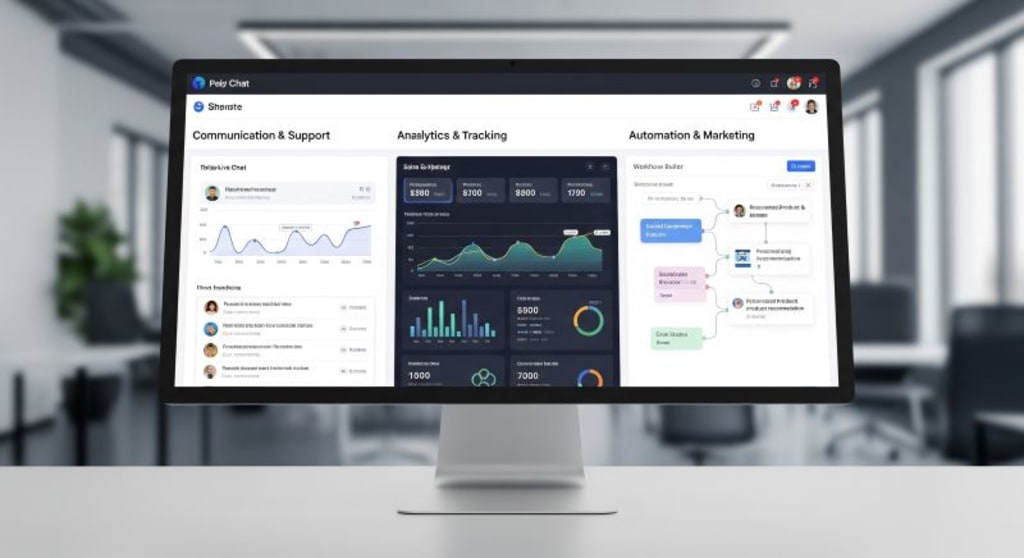
The best ecommerce platform does something really well, and that is to provide you with all the tools you need to succeed online. Yes, it must load fast. That's a given and a general requirement for all websites, not just those launched for online stores. However, it is crucial that it enables sales, marketing, and excellent customer experiences. This can be done through ready-to-use, integrated mechanisms.
Essential Marketing Tools
Marketing tools are particularly important. They'll get you found online. If your potential customers can't find you, you won't get any sales. It's as simple as that. They also boost repeat business, which is vital to growth.
There are various marketing tools, which can be classified into multiple categories. Which do you need?
You definitely want those that can help you expand your reach, such as a way for you to incorporate relevant keywords in your store copy, something to push your products onto your social media accounts, and a system that will enable content creators to promote your products for a commission.
There are also sales and conversion tools. Examples include a mechanism for building unique offers, enabling tiered discounts, inducing abandoned cart recovery, selling gift cards, generating landing pages, and creating pop-ups.
Aside from the above, which give you essential marketing capabilities, you also need systems that enable communication and support, analytics and tracking, and automation.
Communication and Support
Nothing kills a sale faster than bad customer service. Building trust requires keeping in touch with customers and answering their questions quickly.
● WhatsApp integration: So many people use WhatsApp. You’ll want a tool that plugs right into your dashboard on your ecommerce platform. This way, you can chat with shoppers and answer questions directly and easily, without having to constantly switch between apps on your phone.
● Email and SMS marketing: You need good integrations with platforms like Klaviyo or Mailchimp. This way, customers get automatically added to your email and SMS lists, giving you the capability to remarket to already-converted customers. With email and SMS marketing integration, you can orchestrate everything from your dashboard, from sending out a weekly newsletter to following up after a purchase.
● Communication buttons: Your store should have some communication and support buttons that customers can click to get help. They must be obvious and ubiquitous in your e-commerce store. A simple tool like GetButton can add a little chat icon that allows customers to contact you quickly, making support easy, available, and accessible.
Analytics and Tracking
Marketing without data is like flying blind, and you know what will happen if you fly blind: You will (likely) crash. Practically speaking, if you don't track your results, you're just guessing. Are you willing to allocate budget, time, and resources to something you just believe (and do not know) to be right? Indeed, you need tools that show you the hard data on what's working, what's not, and what your customers are actually doing on your site.
● Google Analytics: You have to be able to connect your store to Google Analytics, period. It's the only way to get real data on your store traffic, see where your visitors are coming from, and track how your ads are performing.
● Heatmaps and session recordings: This is the cool stuff. A tool like Hotjar or Clarity will show you exactly where people are clicking on your site and even record their sessions. It's like looking over your store visitors' shoulders, seeing where they are dropping off, where they clicked repeatedly and almost angrily, etc. It's priceless for finding and fixing problems on your pages.
● Pixel tracking: To know if your ads on Twitter or Instagram are actually making you money, you need pixel tracking. It’s a little piece of code that connects your ads to your sales, so you can see your actual return on ad investment.
● Conversion API: With all the new privacy updates, a conversion application programming interface (API) is becoming essential. It just creates a more reliable link between your store and your ad platforms, which means your ad targeting gets better and your performance data is more accurate.
Automation
You can't do everything yourself, and you shouldn't have to when there are systems that will let you put repetitive tasks on autopilot. Automating manual and complex workflows will help you save time and energy.
● Integration automation: Seriously, check if your platform connects with Zapier. A tool like this is a lifesaver. It lets you link your store to thousands of other apps you already use, automating linkages and connected workflows. Think about it: automatically adding new customers to your email list or getting a notification in Slack for a big new order, all without you lifting a finger.
● Sentiment analysis automation: If you can, integrate a sentiment analysis automation tool into your ecommerce platform. You want something that can classify and extract text and integrate with your various feedback systems, such as surveys, reviews, customer support chats, and social media comments. This is crucial to managing your reputation and delivering exceptional customer experiences.
Marketing Tools for Ecommerce
Marketing tools are essential to ecommerce success. When selecting an ecommerce platform, make sure to check if it has an extensive arsenal of digital marketing tools you can use right out of the box.
About the Creator
GrowthCircuit
GrowthCircuit is your go-to hub for smart insights on business, tech, marketing, finance, real estate, and AI - designed to spark ideas, fuel strategy, and power up your growth journey.
Keep reading
More stories from GrowthCircuit and writers in 01 and other communities.
How Long Does App Development Take in St. Louis 2026
St. Louis has solidified its reputation as a "Silicon Prairie" powerhouse. The city has moved beyond its historical manufacturing roots. It is now a sophisticated tech hub. Activity centers around Cortex and the 39 North innovation district. Entrepreneurs and established enterprises have one pressing question. How long does app development take in St. Louis 2026?
By Del Rosarioabout 10 hours ago in 01
📢 Raise Your Voice Thread: 03/05/2026
Our “Raise Your Voice Threads” are hosted most alternating Thursdays at 12PM ET to offer creators more avenues to uncover exceptional stories on Vocal. As we are continuously searching for fresh creators and inspiring stories, this thread provides an opportunity to exchange and discuss the stories that have moved and motivated us on Vocal.
By Raise Your Voice by Vocal6 days ago in Resources



Comments