
Decentralized Energy Markets: How Peer-to-Peer Power Trading Is Changing the Energy Landscape
Brook Lang Seattle

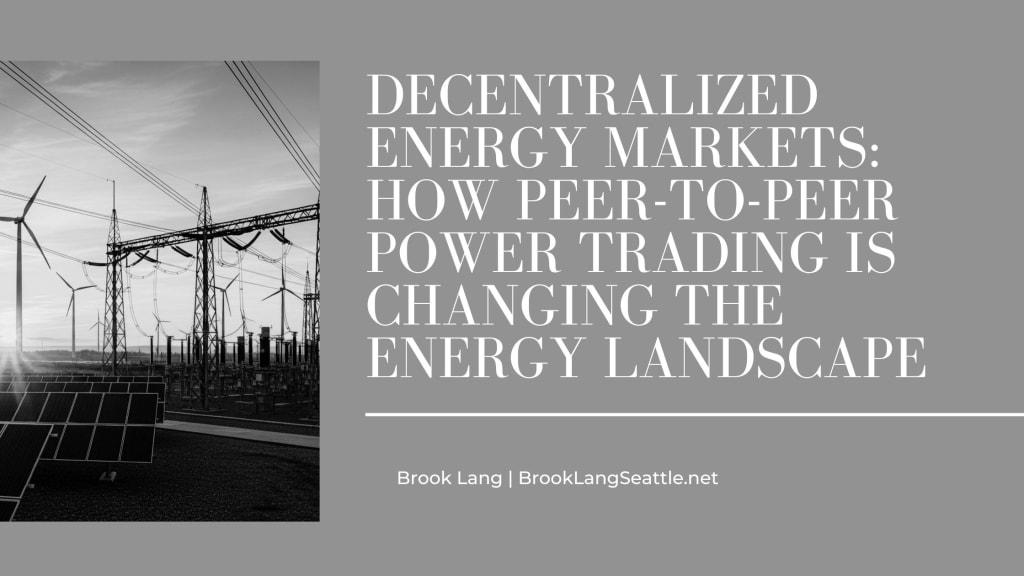
For decades, energy systems have operated under a centralized model: large power plants generate electricity, and utilities distribute it to consumers. But as renewable energy adoption accelerates, a new model is emerging—one where consumers can generate, store, and share their own power. Decentralized energy markets, powered by technologies like rooftop solar, smart meters, and blockchain, are enabling peer-to-peer (P2P) power trading and reshaping how we think about electricity.
What Is Peer-to-Peer Power Trading?
Peer-to-peer energy trading allows individuals, businesses, and communities to sell excess energy directly to others. Instead of relying solely on utility companies, participants buy and sell electricity on a shared digital platform.
Imagine a neighborhood where homes with rooftop solar panels generate more electricity than they use during sunny hours. Instead of feeding that surplus back to the grid at a low rate, homeowners can sell it directly to neighbors at competitive prices. The result is a more democratic, transparent, and efficient energy marketplace.
Blockchain: The Technology Behind the Transformation
Blockchain plays a central role in decentralized energy markets. Its secure, transparent, and tamper-proof ledger system allows participants to track energy generation, consumption, and transactions with precision.
Smart contracts, self-executing agreements embedded in the blockchain, automate energy trades. For example, when a home’s battery storage reaches a certain level, the system can instantly sell extra power to nearby users at a predetermined price. This reduces administrative costs and makes energy exchanges faster and more scalable.
By decentralizing transactions, blockchain enhances trust, reduces intermediaries, and opens the door to micro-transactions that would be impractical under traditional utility systems.
Benefits of Decentralized Energy Markets
Decentralized energy markets offer a range of benefits for both consumers and the broader energy ecosystem:
Greater energy independence: Communities generate and exchange their own power, reducing reliance on distant power plants and centralized grids.
Lower costs: Consumers can buy cheaper renewable energy from local producers and monetize their own excess generation.
Stronger grid resilience: Distributed energy resources like solar panels and batteries reduce pressure on the grid and help maintain stability during peak demand.
More renewable integration: Local energy trading encourages greater adoption of solar, wind, and storage systems.
By empowering individuals and communities, decentralized markets help accelerate the transition to clean energy in a way that is interactive and economically beneficial.
Real-World Examples Around the World
Cities and regions across the globe are already experimenting with P2P power trading:
Australia has pioneered local energy marketplaces where neighborhoods trade solar power using blockchain platforms.
Germany supports “energy communities” where residents collectively generate and exchange renewable energy.
The United States is exploring local trading pilots through microgrids and community solar initiatives.
These early adopters demonstrate that decentralized energy markets can thrive across diverse geographies and regulatory environments.
Challenges and the Road Ahead
Despite its promise, P2P energy trading is not without hurdles. Regulatory frameworks are still catching up, and many regions lack the policies needed to support decentralized markets. Cybersecurity, standardization, and grid integration also remain critical concerns.
However, momentum is growing. As technologies mature and governments recognize the value of decentralized systems, P2P energy trading will become more mainstream.
A New Era of Energy Ownership
Decentralized energy markets represent a fundamental shift in how electricity is produced, shared, and consumed. By giving homeowners, businesses, and communities control over their energy flows, P2P power trading creates a more resilient, efficient, and sustainable energy future.
As innovation continues, the power grid of tomorrow won’t just be something we rely on; it will be something we help create, manage, and exchange.
About the Creator
Brook Lang Seattle
Brook Lang Seattle is a Senior Level Technology Executive. To learn more about him, be sure to check out his websites!
Keep reading
More stories from Brook Lang Seattle and writers in 01 and other communities.
Biomimicry in Renewable Energy: How Nature Is Inspiring Next-Generation Power Solutions | Brook Lang
LEARNING FROM NATURE’S GENIUS Nature has been solving complex problems for billions of years. From energy efficiency to structural design, the natural world offers a rich library of solutions refined through evolution. Biomimicry, the practice of emulating nature’s strategies, is rapidly becoming a transformative force in renewable energy. As global energy needs grow and sustainability becomes more urgent, researchers and engineers are looking to ecosystems, organisms, and natural processes to inspire technologies that are cleaner, more efficient, and more resilient.
By Brook Lang Seattle2 months ago in 01
Twitter Down
Twitter Down When a major social media platform like Twitter experiences technical problems, millions of users immediately search for answers. Twitter, also known as X, plays a central role in news sharing, public discussion, and real time updates, so even short disruptions can feel significant. Recently, many users have reported difficulties accessing Twitter, loading timelines, posting content, or using certain features. This has led to widespread questions about whether Twitter is down, why it happens, and what users should expect. This article answers the most common questions people search for and explains the situation clearly.
By America today 4 days ago in 01



Comments
There are no comments for this story
Be the first to respond and start the conversation.