
Debunking Brain Myths: Separating Fact from Fiction
Separating Fact from Fiction

Introduction
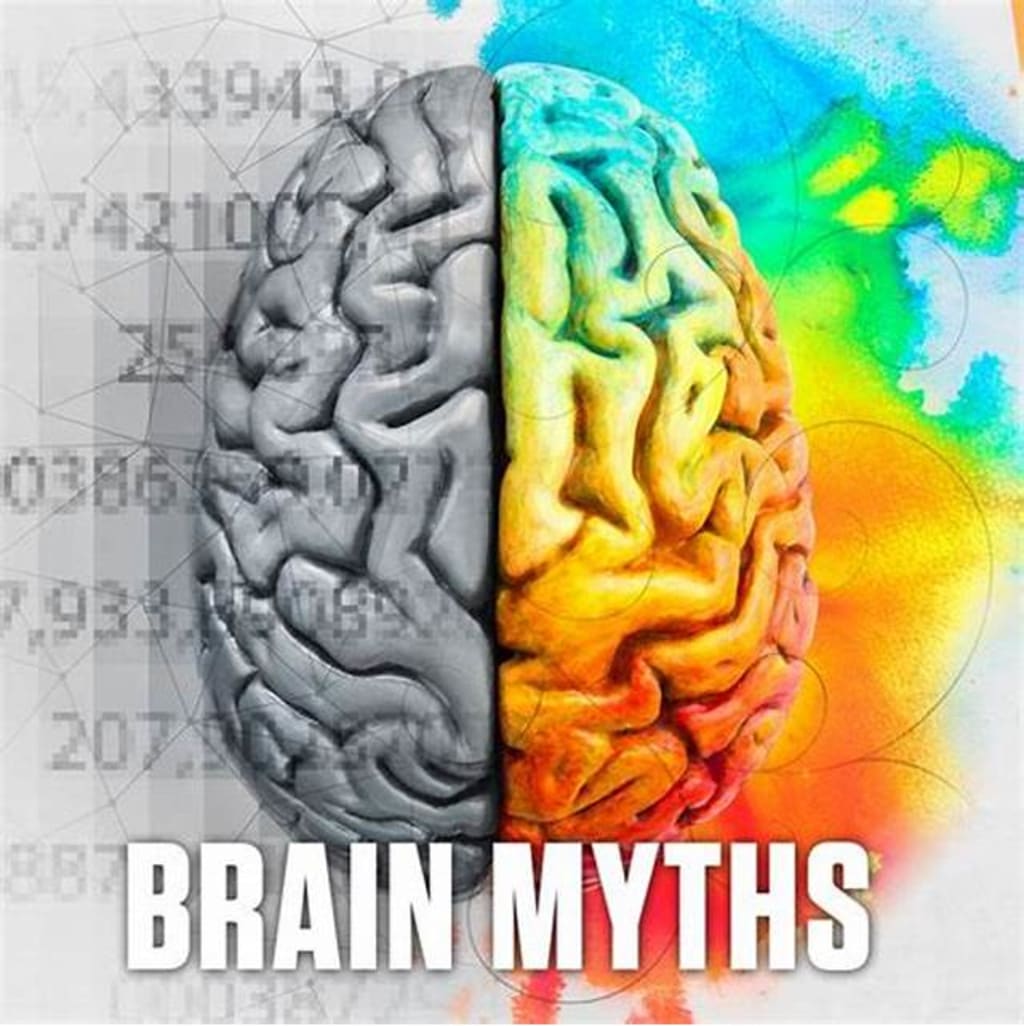
The human brain is one of the most complex and fascinating organs, responsible for everything from basic survival to advanced reasoning and creativity. Yet, despite scientific advancements in neuroscience, many misconceptions about the brain persist in popular culture. These myths often arise from outdated science, media misrepresentations, and a general misunderstanding of how the brain functions. From the idea that we only use 10% of our brain to the belief that left-brained people are more logical while right-brained individuals are more creative, these myths can distort our understanding of human cognition. This essay will debunk some of the most widely held myths about the brain and reveal the scientific truths behind them.
Myth #1: We Only Use 10% of Our Brain
One of the most persistent brain myths is the claim that humans only use 10% of their brain. This misconception has been widely spread through self-improvement books, movies, and motivational speeches, suggesting that unlocking the "unused" 90% would grant people extraordinary abilities. However, scientific evidence has thoroughly debunked this myth.
Neuroimaging studies, such as those conducted using functional MRI (fMRI) and PET scans, have shown that all parts of the brain have functions and are active at different times, even during sleep. While not all regions are engaged simultaneously, the entire brain is used throughout the day, depending on tasks and stimuli. Damage to any part of the brain can lead to noticeable deficits, further proving that no portion of the brain is truly "unused."
Myth #2: Left-Brained People Are Logical, Right-Brained People Are Creative
Another common myth is the idea that people are either left-brained (logical and analytical) or right-brained (creative and artistic). This notion comes from the fact that the brain has two hemispheres, which do specialize in different tasks to some extent. However, research shows that both hemispheres are involved in nearly all cognitive functions, and personality traits or thinking styles cannot be neatly divided between the two sides.
For example, creativity is not exclusive to the right hemisphere. Studies have found that problem-solving, musical ability, and artistic skills require communication between both hemispheres. Likewise, logical reasoning and mathematical thinking also involve multiple brain regions rather than being confined to just one side. Brain scans of individuals performing various tasks show that both hemispheres work together in complex and interconnected ways.
Myth #3: Bigger Brains Mean Greater Intelligence
It is a common belief that a larger brain size automatically translates to higher intelligence. While brain size does play a role in cognitive abilities among species, within humans, size alone is not a reliable indicator of intelligence. The brains of highly intelligent individuals do not necessarily differ significantly in size from those of the general population.
Instead, intelligence is linked more to brain structure, neural connectivity, and efficiency rather than sheer size. Factors such as the density of neurons, the number of synaptic connections, and the speed of information processing are more critical in determining cognitive abilities. Studies have also found that the prefrontal cortex, responsible for reasoning and problem-solving, plays a significant role in intelligence, regardless of overall brain size.
Myth #4: Brain Damage Is Always Permanent
The idea that brain damage is always irreversible is another widely held misconception. While some severe brain injuries can have lasting effects, the brain has a remarkable ability to adapt and reorganize itself, a property known as neuroplasticity.
Neuroplasticity allows the brain to form new neural connections in response to injury, learning, or environmental changes. This means that with proper rehabilitation, therapy, and time, individuals can often regain lost functions after strokes, head injuries, or other neurological conditions. Although the extent of recovery varies depending on the severity and location of the damage, the brain's ability to adapt offers hope for many patients.
Myth #5: Playing Brain Games Significantly Boosts Intelligence
Many people believe that playing brain-training games can dramatically increase intelligence and cognitive function. Companies promoting brain-training apps often claim that their programs can prevent cognitive decline and enhance memory, attention, and problem-solving skills. However, research has shown that while these games may improve performance on specific tasks, they do not necessarily translate into broader cognitive improvements.
A study conducted by the Stanford Center on Longevity and the Max Planck Institute for Human Development concluded that brain-training games do not have significant long-term benefits in preventing cognitive decline. Instead, activities such as regular exercise, social interaction, lifelong learning, and a balanced diet are far more effective in maintaining cognitive health.
Myth #6: Listening to Classical Music Makes You Smarter (The Mozart Effect)
The idea that listening to classical music, particularly Mozart, can make people smarter has been widely popularized. Known as the "Mozart Effect," this belief suggests that exposure to classical music enhances intelligence, particularly in children. While some studies have shown that listening to music may temporarily improve spatial reasoning skills, there is no strong evidence to suggest that it leads to a lasting increase in overall intelligence.
Music does have many cognitive benefits, such as improving mood, reducing stress, and enhancing focus, but it does not inherently make a person smarter. The best way to improve intelligence is through continuous learning, critical thinking, and engaging in intellectually stimulating activities.
Conclusion
The human brain is a complex and highly efficient organ, but misconceptions about its function continue to persist. Myths such as the belief that we only use 10% of our brain, that people are either left-brained or right-brained, and that brain-training games dramatically improve intelligence are all misleading. Scientific research has provided a clearer understanding of how the brain truly works, emphasizing the importance of neuroplasticity, cognitive engagement, and overall brain health. By debunking these myths, we can foster a more accurate and informed appreciation of the brain's incredible capabilities and potential.
About the Creator
Ninette Ferriera
This page will transform your life through medicine, technology, and space exploration, improving healthcare, communication, and transport while advancing sustainability. It will shape your future and unlock endless possibilities
#Subscribe
Keep reading
More stories from Ninette Ferriera and writers in 01 and other communities.
How to Take the Perfect Nap
In today’s fast-paced and demanding world, sleep often takes a backseat to work, responsibilities, and social commitments. However, lack of rest can lead to decreased productivity, impaired decision-making, and increased stress. While a full night’s sleep is essential for overall well-being, a well-timed nap can provide a quick and effective energy boost. However, not all naps are beneficial. The effectiveness of a nap depends on factors such as its duration, timing, and environment. Understanding the science behind napping can help individuals maximize its benefits and wake up feeling refreshed rather than groggy.
By Ninette Ferriera 12 months ago in 01
Taxi Market Size and Forecast 2025–2033: The Future of Urban Mobility Goes Digital
Global Taxi Market Outlook 2025–2033 The global taxi market is entering a transformative era, driven by rapid urbanization, digital innovation, and the changing mobility preferences of modern commuters. According to Renub Research, the Taxi Market is expected to reach US$ 592.96 billion by 2033, growing from US$ 274.6 billion in 2024, at a CAGR of 8.93% from 2025 to 2033.
By Renub Researchabout 4 hours ago in 01
Best React Datetime Pickers for 2026: Top Libraries
Look, I get it. You're staring at your React project right now, wondering why picking a stupid date has to be this complicated. Should've been simple, yeah? But here we are in 2026, and somehow we've got more datetime picker options than there are days in a bloody year.
By Sherry Walker5 days ago in 01




Comments (1)
Nice work, loved the ending!