
Cold, Warm, and Hot Leads: The Key to Streamlining B2B Sales and Marketing
Learn the difference between cold, warm, and hot leads and how segmenting them can streamline your B2B sales and marketing strategy effectively.

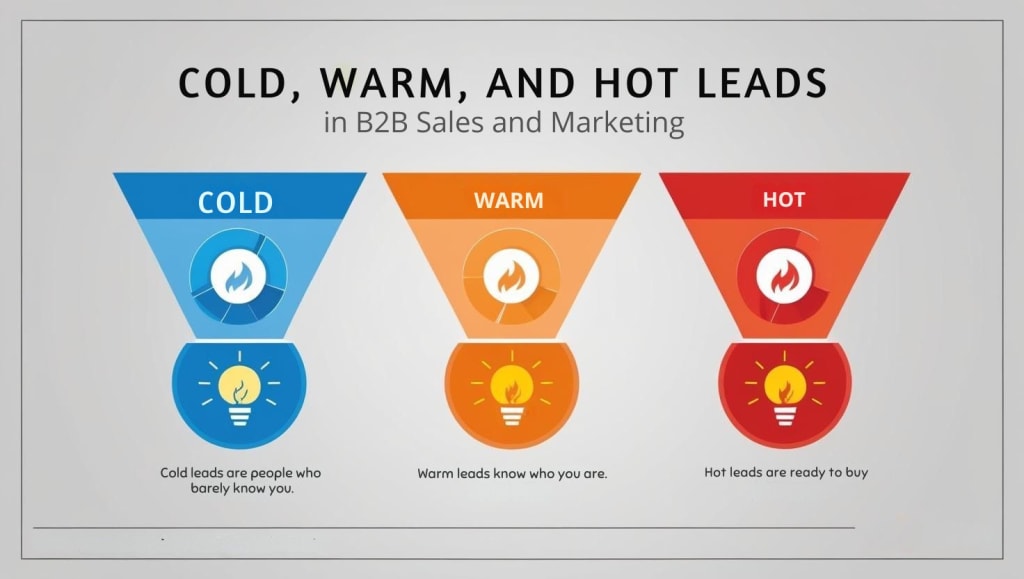
Not all leads are equal. Some are curious. Others are ready to talk. Many are still figuring things out. This is where cold, warm, and hot leads come into play. Understanding them is the key to streamlining your B2B sales and marketing strategy.
Let’s explore how lead temperatures can make or break your funnel.
What Are Cold, Warm, and Hot Leads?
Each lead type represents a different level of interest and intent.
Cold Leads
Cold leads are people who barely know you. They may have visited your website or clicked an ad. But they haven’t shown strong interest yet. These leads are at the very top of the funnel.
Example: Jane downloads a free PDF from your blog. She hasn't visited any other pages. She is a cold lead.
Warm Leads
Warm leads know who you are. They have interacted with your brand more than once. Maybe they opened several emails or signed up for a webinar. These leads are in the middle of the funnel.
Example: Raj watches your demo video and subscribes to your newsletter. He is considering your product. He is a warm lead.
Hot Leads
Hot leads are ready to buy. They may request a demo or ask for a quote. These leads show high intent and match your target profile. They're at the bottom of the funnel.
Example: Lisa fills out a contact form asking to speak with a sales rep. She is a hot lead.
Why Classifying Leads Matters in B2B Sales
Treating every lead the same wastes time and money. Sales teams often chase unqualified prospects. Marketing might push content that doesn’t fit the lead’s journey.
By classifying leads as cold, warm, or hot, your team can:
- Prioritize outreach based on intent
- Deliver the right message at the right time
- Improve sales and marketing alignment
- Boost conversion rates and ROI
Case Study: A B2B SaaS company, CloudPilot, used lead segmentation to filter out cold leads. By focusing on warm and hot leads, they increased conversions by 32% in three months.
How to Identify Lead Temperature
1. Use CRM and Lead Scoring Tools
Tools like HubSpot, Zoho, and Salesforce help track and score leads. Points are based on actions like:
- Website visits
- Email clicks
- Content downloads
- Job title and company size
Higher scores often mean warmer or hotter leads.
2. Track Behavioral Signals
Behavior tells a story. Watch for actions like:
- Clicking a pricing page
- Spending time on feature pages
- Downloading multiple resources
These are signs of growing intent.
3. Fit the Ideal Customer Profile (ICP)
A lead may be active, but not qualified. Check if they match your ICP:
- Industry relevance
- Company size
- Decision-making role
Hot leads usually score high in both behavior and fit.
Marketing Strategies for Each Lead Type
Cold Leads (Awareness Stage)
Focus on education. Help them learn who you are.
Tactics:
- Blog posts
- Social media content
- Infographics
- Introductory videos
Example: Offer a downloadable guide titled "How to Improve Team Productivity."
Warm Leads (Consideration Stage)
Build trust and educate further. Show how you solve their problems.
Tactics:
- Case studies
- Email nurturing sequences
- Webinars
- Comparison content
Example: Invite Raj to a webinar titled "5 Ways to Optimize Remote Collaboration."
Hot Leads (Decision Stage)
Make it easy for them to convert.
Tactics:
- Free trials
- Personalized demos
- Consultations
- Sales calls
Example: Lisa books a call with a sales rep to understand pricing and ROI.
Aligning Sales and Marketing Around Lead Temperature
Sales and marketing teams often misalign. Marketing hands off leads that sales can't close. Sales complains about quality. It creates tension and inefficiency.
Here’s how to fix that:
- Define cold, warm, and hot lead criteria together
- Set SLAs (Service Level Agreements) for handoffs
- Share performance dashboards
- Meet weekly to review pipeline health
Example: A fintech startup aligned both teams with shared definitions. Their lead-to-sale time dropped from 30 to 18 days.
Mistakes to Avoid in Lead Management
- Sending cold leads directly to sales
- Ignoring warm leads who need nurturing
- Treating all leads with the same content
- Not updating lead status in your CRM
Avoiding these mistakes improves pipeline health.
Tools That Help Segment and Nurture Leads
Here are some tools to streamline the process:
- CRM Platforms: HubSpot, Zoho, Salesforce
- Email Automation: Mailchimp, ConvertKit, ActiveCampaign
- Lead Scoring: Leadfeeder, Clearbit
- Marketing Automation: Marketo, Pardot
These tools help assign lead temperatures, trigger workflows, and track progress.
Final Thoughts
Cold, warm, and hot leads aren’t just labels. They represent a lead’s intent and readiness to buy.
When you understand where a lead stands, you:
- Save time
- Improve personalization
- Close deals faster
Start by segmenting your leads. Use tools, track behavior, and communicate clearly. It’s the simplest way to streamline B2B sales and marketing.
About the Creator
Teqo Solutions
Teqo Solutions is a leading B2B lead generation agency that helps businesses accelerate their sales pipeline and achieve measurable growth. Specializing in targeted lead acquisition, data-driven strategies, and customized outreach campaigns
Keep reading
More stories from Teqo Solutions and writers in 01 and other communities.
B2B Marketing ROI: How to Turn Every Dollar into Scalable Growth
Introduction: Why B2B Marketing ROI Matters Marketing is an investment, not an expense. Every dollar spent should generate measurable returns. But many B2B marketers struggle to track performance effectively. Without ROI-driven strategies, businesses risk wasted budgets and stagnant growth.
By Teqo Solutions11 months ago in 01
Who’s Leading Fintech in 2026? Top App Development Companies
When it comes to building secure, scalable, and innovative financial solutions — from digital banking platforms and payment systems to AI-driven risk tools — picking the right partner can make or break your success. In 2026, fintech is evolving faster than ever, powered by AI, cloud-native architectures, blockchain, and embedded finance. Below are the foremost companies shaping the future of fintech technology.
By Aarti Jangid6 days ago in 01
The Path to Salvation
The late autumn evening air filled the monk's lungs, but it wasn't the season that chilled his bones. The heavy-handed presence of evil he had sensed upon entering the woods surrounding this mountain village had not bothered to conceal itself from him.
By Made in DNA3 days ago in Fiction




Comments
There are no comments for this story
Be the first to respond and start the conversation.