
Chandrayaan-3
Chandrayaan-3 is a follow-on mission to Chandrayaan-2

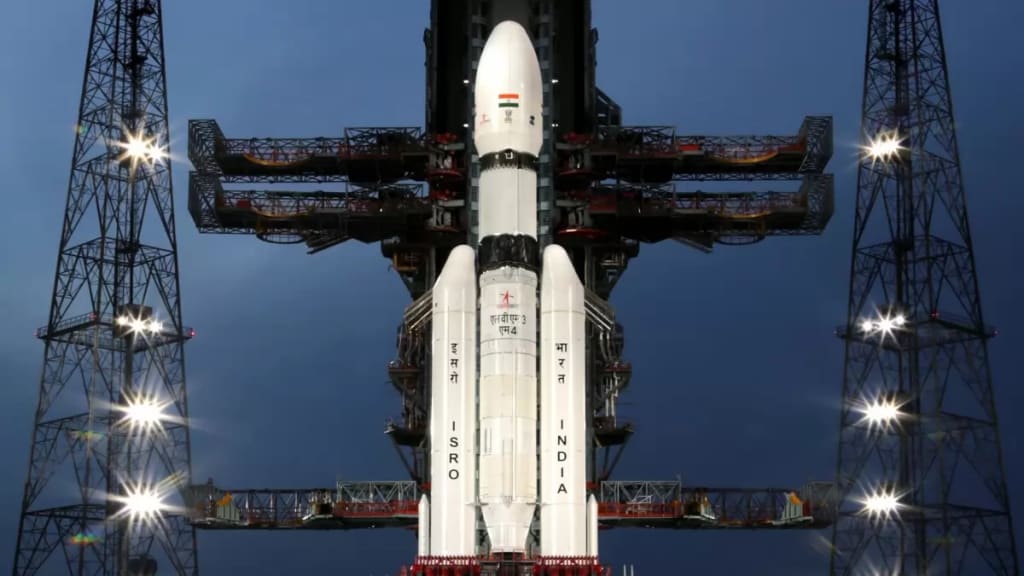
Chandrayaan-3 is a follow-on mission to Chandrayaan-2 to demonstrate end-to-end capability in safe landing and roving on the lunar surface. It consists of Lander and Rover configuration. It will be launched by LVM3 from SDSC SHAR, Sriharikota. The propulsion module will carry the lander and rover configuration till 100 km lunar orbit. The propulsion module has Spectro-polarimetry of Habitable Planet Earth (SHAPE) payload to study the spectral and Polari metric measurements of Earth from the lunar orbit. - ISRO
Langmuir Probe (LP) to calculate the plasma density and its variations; Chandra's Surface Thermophysical Experiment (ChaSTE) to measure thermal conductivity and temperature; Instrument for Lunar Seismic Activity (ILSA) to measure seismicity near the landing site.
For lunar laser ranging studies, space agency NASA has provided a passive Laser Retroreflector Array.
Alpha Particle X-ray Spectrometer (APXS) and Laser Induced Breakdown Spectroscope (LIBS) for deriving the elemental composition in the vicinity of landing site.
India successfully launched a mission to the moon on July 14 2023, prompting congratulatory messages from across the world.
With the aim of developing and showcasing new technologies necessary for interplanetary missions, Chandrayaan-3 is made up of an indigenous Lander module (LM), Propulsion module (PM), and Rover. The Lander will be able to soft land at a chosen location on the moon and release the Rover, which will conduct in-situ chemical analysis of the lunar surface while it is moving.
Chandrayaan-3 is the third lunar exploration mission by the Indian Space Research Organisation (ISRO).
There are scientific payloads on the Lander and the Rover that will conduct lunar surface tests. The main job of PM is to transport the LM from injection into the launch vehicle to the final 100 km circular polar orbit of the moon and then to release the LM from PM. In addition to this, the Propulsion Module has a scientific payload that will operate after the Lander Module separates.
The GSLV-Mk3 launch vehicle has been designated for Chandrayaan-3, and it will place the integrated module in an Elliptic Parking Orbit (EPO) with a size of approximately 170 x 36500 km.
Objectives 🚀
- To show Safe and Soft Landing on the Surface of the Moon🌑.
- To showcase roving lunar rover technology.
- to carry out in-situ scientific research.
As a result of the successful launch of the Chandrayaan 3 mission to the moon, India and in particular (ISRO) made history. Due to its low cost and high efficiency, this successful launch will encourage many developed and developing nations to use ISRO to launch their satellites and spacecraft.
The most reputable space agency prepared Chandrayaan-3 for nearly four years after Chandrayaan-2 failed to soft-land. The space agency has developed a new spacecraft using contemporary technologies in collaboration with numerous Indian businesses.
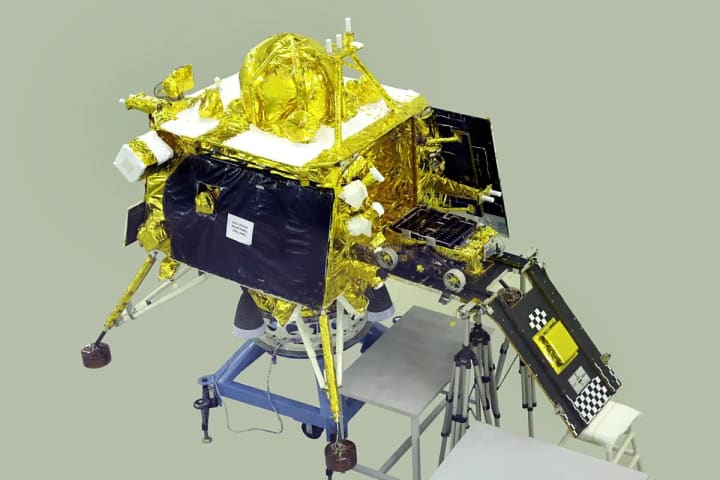
The Chandrayaan-3 mission's lander and rover are conceptually similar to those from Chandrayaan-2. The Chandrayaan-2 Vikram lander successfully descended to a distance of 5 kilometres (3 miles) from the Moon in September 2019 and switched to "fine braking" mode, which would have gently lowered it to the lunar surface. Chandrayaan-2, like its predecessor, was aiming for the south polar region of the Moon, where ice has been discovered inside craters that are always in shadow.
The economy may benefit from the Chandrayaan 3 mission. In exchange for potentially higher profits, it will attract a lot of investment to the industry.
India's most recent space mission serves as a testament to its extraordinary achievements in space exploration and technology.
The project will give Indian private space enterprises a wealth of new opportunities.
The market for space exploration was estimated to be worth USD 486 billion in 2022, and it is expected to grow to USD 1,879 billion by 2032.The Indian businesses and economy will benefit greatly from these investments.
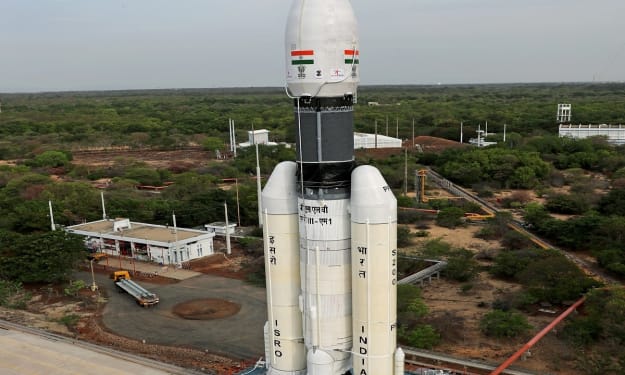
Official pictures of LVM3 carrying Chandrayaan3 to space! 🚀 - ISRO


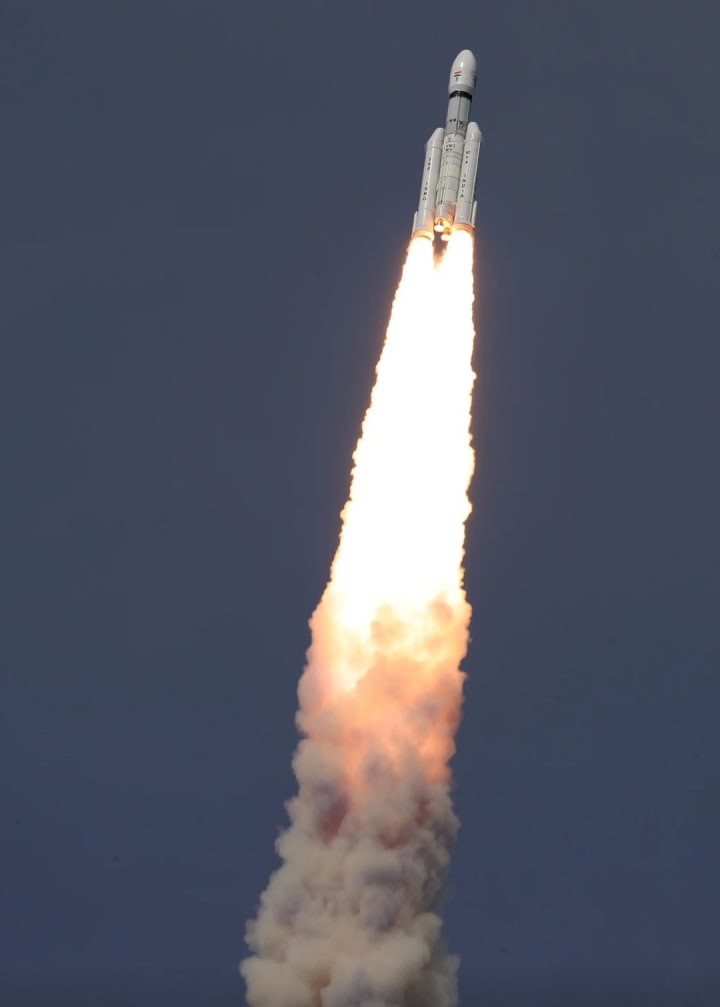

Thanks for reading..!!!
About the Creator
Article Pins
Happy learning!
Keep reading
More stories from Article Pins and writers in 01 and other communities.
Chandrayaan-2 🚀
Did you know exactly what Chandrayaan-2 🚀 is? Chandrayaan-2 was the second lunar exploration mission developed by the Indian Space Research Organisation (ISRO), after Chandrayaan-1. It consisted of a lunar orbiter, a lander, and the Pragyan rover, all of which were developed in India. The main scientific objective was to map and study the variations in lunar surface composition, as well as the location and abundance of lunar water. - Wikipedia
By Article Pins3 years ago in 01
Why Mobile Apps Break When They Start Growing (and How to Build Them So They Don’t)
One of the quiet truths about mobile software is that scalability almost never hurts you at the beginning. Early versions of an app feel fast. Traffic is light, the backend is cooperative, and even questionable decisions don’t cause visible damage.
By Valeriia Shulga5 days ago in 01



Comments
There are no comments for this story
Be the first to respond and start the conversation.