
Caustic Soda Market: Strategic Analysis and Industrial Dynamics
Assessing Capacity Expansions, End-Use Demand, and Global Trade Flows

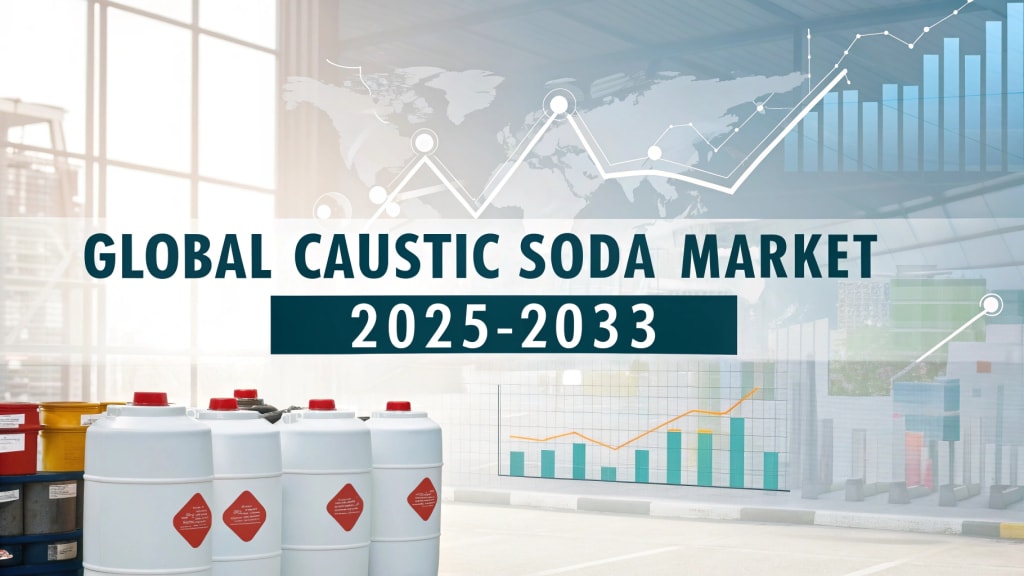
Sodium Hydroxide ($NaOH$), commonly known as caustic soda market, serves as one of the most fundamental building blocks of the modern chemical industry. As a highly versatile strong base, its market performance is often viewed as a leading indicator of broader industrial health, given its ubiquitous use in sectors ranging from alumina refining to soap manufacturing.
1. Primary Demand Drivers by Sector
The demand for caustic soda is diversified across several high-volume industrial applications:
Pulp and Paper: This remains one of the largest consumers. Caustic soda is essential for the chemical pulping process (Kraft process) and the bleaching of paper fibers to achieve high brightness.
Alumina Production: In the Bayer process, caustic soda is used to dissolve alumina from bauxite ore. The growth of the electric vehicle (EV) and aerospace industries, which demand lightweight aluminum, directly correlates with caustic soda consumption.
Chemical Manufacturing: It serves as a vital reactant for producing organic chemicals (like epoxy resins and polycarbonates) and inorganic chemicals (like sodium hypochlorite for water treatment).
Soap and Detergents: Used in the saponification process to convert fats and oils into soap, as well as in the production of anionic surfactants.
2. Production Dynamics: The Chlorine-Caustic Link
Caustic soda is almost exclusively produced via the Chlor-Alkali process, the electrolysis of sodium chloride ($NaCl$) brine. This creates a unique market dynamic where caustic soda is a co-product of chlorine gas.
Technology Shift: Membrane Cell Dominance
The industry has largely transitioned away from older, mercury-cell and diaphragm-cell technologies toward Membrane Cell technology.
Efficiency: Membrane cells are significantly more energy-efficient.
Environmental Impact: They eliminate the use of toxic mercury and asbestos, aligning with global environmental regulations (such as the Minamata Convention).
Purity: Membrane-grade caustic soda is of higher purity, making it suitable for sensitive applications like food processing and rayon manufacturing.
3. Global Supply Chain and Energy Sensitivity
Because electrolysis is energy-intensive, the caustic soda market is highly sensitive to fluctuations in electricity and natural gas prices.
Regional Pricing Disparity: Regions with access to low-cost energy (such as the Middle East and North America) often act as major exporters. Conversely, high-energy-cost regions (like Europe) have seen capacity curtailments during energy crises.
Logistics: Caustic soda is typically traded in two forms: Liquid (Lye), usually at a 50% concentration, and Solid (Flakes/Pearls). The high weight of the liquid form makes maritime logistics and terminal infrastructure critical for global trade.
4. Key Market Trends and Future Outlook
The "Green" Transition
There is increasing pressure on Chlor-Alkali producers to decarbonize. This is leading to investments in "Green Caustic," where the electrolysis process is powered entirely by renewable energy sources (wind or solar), allowing downstream manufacturers to reduce their Scope 3 emissions.
Emerging Markets Growth
While demand in North America and Europe is mature, the Asia-Pacific region—specifically China and India—dominates the market in both production capacity and consumption. Rapid urbanization and the expansion of the domestic textile and automotive industries in these regions are expected to drive CAGR over the next decade.
Pricing Volatility
The market is characterized by cyclicality. Because production is tied to chlorine demand (often driven by the PVC/construction market), a slowdown in construction can lead to reduced chlorine production, which inadvertently tightens the supply of caustic soda, causing price spikes even if caustic demand remains steady.
5. Summary of Market Constants
Factor
Impact
Commodity Type
High-volume industrial chemical
Major Co-product
Chlorine ($Cl_2$)
Key Feedstock
Sodium Chloride ($NaCl$) and Electricity
Regulatory Focus
Energy efficiency and elimination of mercury cells
Conclusion
The caustic soda market is transitioning from a traditional heavy-industrial sector to one focused on operational efficiency and carbon footprint reduction. As the world moves toward lightweighting materials (aluminum) and expanding water treatment infrastructure, the strategic importance of $NaOH$ will only intensify, making supply chain resilience and energy procurement the primary competitive advantages for global producers.
About the Creator
Rahul Pal
Market research professional with expertise in analyzing trends, consumer behavior, and market dynamics. Skilled in delivering actionable insights to support strategic decision-making and drive business growth across diverse industries.
How Digital Engineering and Consulting Services Help Enterprises Modernize Without Rebuilding Everything
Modernizing enterprise technology shouldn’t feel like a demolition project. Yet for many organizations, digital transformation is often perceived as a painful, high-risk exercise that involves ripping out legacy systems, pausing operations, and spending millions before seeing any real value.
By Ian Barnard7 days ago in 01




Comments
There are no comments for this story
Be the first to respond and start the conversation.