
Can An LLC Own Another LLC?
Understanding Ownership Structures


Key Takeaways
• An LLC can indeed hold ownership of another LLC. This arrangement is recognized across all 50 states, making business operations more efficient.
• The parent LLC does not have a day-to-day role with regard to subsidiaries, which are separate entities with their own assets and liabilities. Clear boundaries are no less necessary for legal protection/ accountability.
• Layering LLCs can boost asset protection by isolating valuable assets and containing liabilities, reinforcing business security and investor confidence.
• Though layered LLCs have their uses, they have complexities such as more management and possible higher costs which need to be planned for.
• For business owners, the advantages of pass-through taxation in an LLC can be significant. However, the specific regulations can vary by state, making it essential to grasp these rules for both compliance and the best financial outcomes.
• You should periodically review your structures and operating agreements to be sure they fit your business goals and are legally compliant.
This lets business owners have multiple businesses operating under one parent company, while limiting liability. A holding company isn’t active in day-to-day business, but holds the assets and shares of other LLCs. This arrangement allows for flexibility in managing your investments and can give you tax advantages. It aids in risk management by distributing liabilities across separate entities. What’s cool is that an LLC can be used as a holding company. The next sections will discuss the advantages, prerequisites, and consequences of creating a holding company via an LLC.
How an LLC Owns Another
An LLC can certainly own another LLC, creating a parent LLC structure that provides versatility and limited liability protection.
The Parent-Subsidiary
The parent LLC owns one or more subsidiary LLCs but does not manage them on a day-to-day basis. Each subsidiary is separate, with its own assets and liabilities. For example, a parent LLC running a tech company might have subsidiaries for software development, marketing and customer support.
Separating the parent and subsidiary is important for legal protection. This isolation means that if one subsidiary encounters liabilities or legal trouble, the parent and other subsidiaries generally stay unscathed. Plus, it makes owning multiple businesses under one umbrella much easier.
The Holding Company
A holding company is a type of parent LLC. They have this set up to manage their business interests. For instance, a holding company might own multiple subsidiaries in various industries like real estate, technology, and retail, offering strategic guidance but allowing each to function autonomously.
In addition, holding companies improve asset protection. They contain risks related to individual enterprises, so that the financial difficulties in one does not threaten the whole.
The Series LLC
Each series may have separate assets and liabilities, which provides extra liability protection. This flexibility is particularly useful for entrepreneurs running multiple ventures, as they can create separate series for each line of business.
Series LLCs have their own set of legal requirements in some states, like Delaware and Texas, while others, including New York, prohibit them. In these instances, multiple LLCs are required.
The Legal Mechanics
If you want an LLC to own another, by LLC, for example, you’d need to form your LLC by filing Articles of Organization and keeping the proper paperwork to uphold the legal separation. There should be operating agreements that specify who does what each LLC.
Adhering to state LLC laws is important to prevent legal issues. Ignoring them can make it difficult for your entities to establish their separate existence.
Why Layer Your LLCs?
As a strategic business practice, utilizing a subsidiary LLC structure by having one LLC own another can effectively isolate assets, contain liabilities, and provide operational clarity and strategic flexibility.
Asset Isolation
Layering your LLCs can be a vital protection blanket for your business assets. By chunking daily business operations away from prized assets, owners can protect those assets from liabilities incurred by the LLCs conducting business. In other words, if a property-owning LLC gets sued, the holdings of that LLC could potentially be shielded from claims against a separate LLC operating a retail business.
Dividing valuable assets into separate LLCs not only reduces hazards, it makes your business even more secure. Investors tend to sleep better at night knowing their money is insulated from the operating tables’ legal nightmares. Every business owner should check in with their asset-hoarding strategies periodically to make sure they’re appropriately protecting according to your business structure and potential risk zones.
Liability Containment
Layered LLCs are a crucial component to containing liability risks. A parent LLC can insulate its assets from lawsuits or debts that its subsidiaries take on. Separating this holds corporate separateness—a legal doctrine that assists in preserving liability shields. For instance, if a subsidiary goes under, the parent LLC and its other subsidiaries can be spared.
It’s important for business owners to consider their potential liability exposure when layering their LLCs. This evaluation can help decide how to best layer their LLCs for optimal liability shielding.
Operational Clarity
Operationally, it makes sense to have separate LLCs for different business functions. When each LLC has designated duties, it can help clarify decision making and simplify management. Explicit separation of purposes means that each is accountable for itself.
Periodic organizational audits are essential to confirm that your entity structure supports your changing business objectives. By establishing a clear hierarchy, biz owners can steer their operations better.
Strategic Flexibility
The layered LLC gives you more strategic flexibility. This arrangement facilitates quickly adding new subsidiaries or modifying old ones as the market shifts. For instance, if a new venture emerges, an organization can quickly launch a new subsidiary without affecting the entire enterprise.
For these reasons, this flexibility can be a boon to growth and innovation. Entrepreneurs should harness this flexibility to pivot when business needs shift.
The Inherent Downsides
Although it can be beneficial for an LLC parent company to own additional LLCs, there are some inherent downsides in this subsidiary LLC structure.
• Increased complexity in business operations
• Higher costs associated with formation and maintenance
• Administrative burden from managing multiple entities
• Potential legal risks, including liability exposure
Increased Complexity
Having multiple LLCs can make things confusing from a business perspective – for you and anyone you work with or for. Each might need its own management structure, resulting in overlap and confusion. Juggling activities across these disparate LLCs while remaining compliant with regulations can be tough.
Good communication and thorough documentation goes a long way toward avoiding confusion. Having a management strategy in place can simplify management for all the LLCs. This could encompass weekly meetings, common infrastructure, and centralized management to stay in sync.
Higher Costs
There are additional costs associated with forming and maintaining multiple LLCs. They can be expensive, from attorney fees to filing fees to continuing compliance costs. For example, each LLC needs a registered agent, which adds additional cost.
Entrepreneurs need to plan for these expenses. Determining if the implied advantages of a tiered LLC design justify the associated costs. If the fees are too high, the benefits in this format might fade.
Administrative Burden
The overhead of having to manage multiple LLCs can be significant. Each will require separate accounting, tax filings, record-keeping, etc. It complicates legal and regulatory compliance.
Giving these tasks sufficient resources is important for keeping them under control. If you’re operating at a larger scale, you’ll want to outsource the grunt work. This can help take some of the weight off while maintaining compliance overall.
Navigating Tax Implications
While having several LLCs, such as a parent company LLC with subsidiary LLCs, can be incredibly beneficial, there are key tax implications to navigate. This section will explore the subtleties of tax obligations for limited liability companies, highlighting the significance of savvy planning and adherence to regulations.
Pass-Through Status
LLCs generally enjoy pass-through taxation, allowing profits and losses to pass through to the owners’ individual tax returns. This structure sidesteps the double tax issue encountered by corporations. For instance, if an LLC makes $100,000, the owners declare that income on their personal returns instead of the LLC paying taxes at the corporate level upfront, which is a significant advantage for LLC owners.
Accurate records are essential to maintain this pass-through status. Owners should diligently record all income, expenses, and distributions. Failing to do so could jeopardize the tax advantages of having LLC ownership, especially when considering the complexities of subsidiary LLC structures.
Navigating tax implications of ownership is a key understanding. For example, if an LLC owns another LLC, the parent company’s profits can still pass through, but the details can vary based on the arrangements.
Filing Requirements
Multi-member LLCs must file separately. Each member has to report their share of profits and losses and such can make tax filings difficult.
State-level rules apply as well, since some states have their own LLC tax filing requirements. If you miss a deadline or fail to submit required documents, you may incur penalties, which can affect your LLC’s standing.
Accounting consultations can help navigate these complex filing requirements. They can lead entrepreneurs through the paperwork required to stay compliant and make the best tax decisions.
State Tax Nexus
State tax nexus is the link a business has to a state, which can cause tax liabilities. For LLCs in multiple states, nexus implications are key.
Having LLCs in multiple states can generate tax exposure in those states. For instance, an LLC with operations in California might have nexus in another state such as Texas, meaning it will likely have to file tax returns in both states.
Business owners should review their operations for potential nexus problems. This forward thinking prevents tax issues by keeping you in compliance with local laws and avoiding surprise liabilities.
Strategic Scenarios for Layered LLCs
Understanding these scenarios can help entrepreneurs utilize parent LLCs and subsidiary LLC structures for enhanced asset protection and business growth.
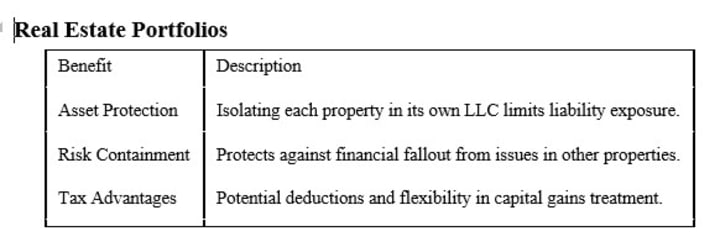
The beauty of using layered LLCs in structuring real estate investments is that you can isolate each property into its own LLC. This arrangement avoids hazard of one property impacting another — a safer bet. So if one property is sued, the others aren’t liable!
Tax benefits may be relevant. LLCs allow for certain tax deductions, particularly with regard to maintenance and management expenses. Real estate moguls take note: here’s a clever way to keep your assets under control and your taxes low.
Franchise Operations
Franchise owners can run several locations with layered LLCs. Each franchise could be a separate LLC, minimizing liability exposure for the owner. This isolation guarantees that the financial or legal woes of one site won’t cascade to others.
Respecting franchising agreements and local laws is important. Franchise owners need to manage these requirements in their optimization. It’s possible to have franchises in separate LLCs and that can be very efficient.
Serial Entrepreneurship
Serial entrepreneurs love layered LLCs when launching multiple ventures. By isolating all of your ventures within separate LLCs, you’re shielding assets and liabilities – a more secure playground for entrepreneurial play.
These layers give you the flexibility to respond to new opportunities. Entrepreneurs can quickly turn on a dime or expand without risking their whole collection. It promotes healthy expansion and variety.
High-Risk Ventures
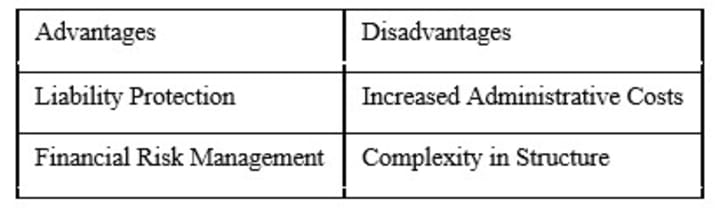
Why isolating high-risk ventures in their own LLCs is so important. Entrepreneurs can control their financial risk by making sure that hazardous activities don’t affect other parts of their venture.
Risk tolerance comes into play when you start structuring LLCs for your jetski-to-the-Mediterranean-high-stakes projects. Entrepreneurs need to know how much loss they can stomach and maximize for growth.
A Guide to Implementation
Creating a layered LLC structure provides business owners with flexibility and limited liability protection. Here’s how to establish a parent LLC and subsidiary LLCs, focusing on compliance and the benefits of LLC ownership options.
Form the Parent
To create a parent LLC, first choose an original name that adheres to state guidelines. Then, submit the formation documents to the state. Be sure to draw up an operating agreement specifying the intention and structure of the parent LLC. This serves as a guide for management and helps avoid conflicts.
State laws are a given—each state has specific requirements. Business owners should think about their long-term plans when setting up the parent LLC.
Create the Subsidiary
Forming daughter LLCs and actually registering each under the parent LLC. Pick names that represent their roles but keep them linked to the parent. Each subsidiary should have delineated roles and responsibilities in its operating agreement to prevent overlaps and confusion.
Clear communication between the parent and its subsidiaries is essential for alignment and operational efficiency. Before formation, evaluate the market potential for each subsidiary to ensure they meet strategic objectives and contribute positively to the overall structure.
Draft Operating Agreements
We wrote very detailed operating agreements for both the parent and subsidiary LLCs. There are crucial aspects of each agreement to be covered such as managing, sharing profits and members’ rights. These deals need to be explicit and understood by all players going forward in order to prevent later strife.
It’s important to review and update operating agreements periodically to reflect any changes in business operations or strategic direction.
Maintain Separation
• Keep distinct bank accounts for each entity.
• Maintain separate financial records to avoid commingling funds.
• Use clear branding for each LLC to prevent confusion.
• Regularly audit practices to ensure compliance with separation requirements.
Of course, maintaining a clear distinction between parent LLCs and subsidiary LLCs is crucial for legal protections and clarity in your business operations.
Conclusion
Layering LLCs can offer obvious advantages, such as liability protection and tax benefits. This arrangement typically aids in risk management yet resource efficiency. It also has its pitfalls, including added complexity and tax considerations. Getting to know these factors is crucial prior to jumping in.
If you decide to take this path, be sure to evaluate your alternatives. Consider your objectives and your business’s particular requirements. Smart planning can give you a rockin’ foundation. Discover what’s possible and plan your LLC strategy.
About the Creator
Keep reading
More stories from Start My Business and writers in 01 and other communities.
What Charlotte Startups Should Know About App Development?
Most Charlotte startups do not fail because the idea is weak. They struggle because the first technical decisions lock them into costs, delays, and dependencies they did not anticipate. App development feels like a milestone, something to “get through” so growth can begin. In reality, it is the point where operational consequences start to compound.
By Samantha Blake4 days ago in 01
Best Companies Building Next-Gen Hotel Booking Apps in 2026
The travel and hospitality industry continues to evolve rapidly, and hotel booking apps have become a central part of how travelers plan and manage their stays. In 2026, users expect more than just room listings and prices—they want personalized recommendations, real-time availability, seamless payments, and smooth user experiences across devices. To meet these expectations, businesses are partnering with experienced development companies capable of building next-generation hotel booking apps that are innovative, secure, and scalable.
By shane cornerus6 days ago in 01




Comments (1)
LLCs can own other LLCs, which is great for flexibility. But watch out for complexities like management and costs. Review your structures regularly.