
Best Ways to Find Long-Tail Keywords for SEO in 2025 (With Tools and Tips)
Dominate Niche Search Results Using Easy-to-Find Keyword Gems


Disclaimer: This content was generated using AI.
Struggling to Rank for Competitive Keywords? Try Long-Tail SEO
If you're finding it hard to compete for short, generic keywords in your niche, you're not alone. The solution? Focus on long-tail keywords. These hyper-specific search terms may have lower individual volume, but they tend to attract more targeted visitors and drive better conversions.
In this updated 2025 guide, we'll cover:
- What long-tail keywords are and why they matter
- How to discover high-converting long-tail keyword opportunities
- Where to use them in your SEO strategy for maximum impact
Let's get into it.
What Are Long-Tail Keywords and Why Should You Care?
Long-tail keywords are phrases made up of three or more words that reflect specific user intent. Think of them as the exact questions or queries people type when they know what they want.
Example: Instead of "headphones," a long-tail version would be "best noise-canceling headphones for travel."
Why they're worth your attention:
- Low competition: Easier to rank for
- High conversion rates: Visitors are ready to take action
- Voice search optimized: Aligns with natural language queries
- Cost-effective for ads: Lower CPC for PPC campaigns
According to data pulled from SEO tools, long-tail searches account for 70%+ of all search queries.
How to Find Long-Tail Keywords (7 Proven Methods)
1. Use Answer Socrates' Long-Tail Keyword Generator
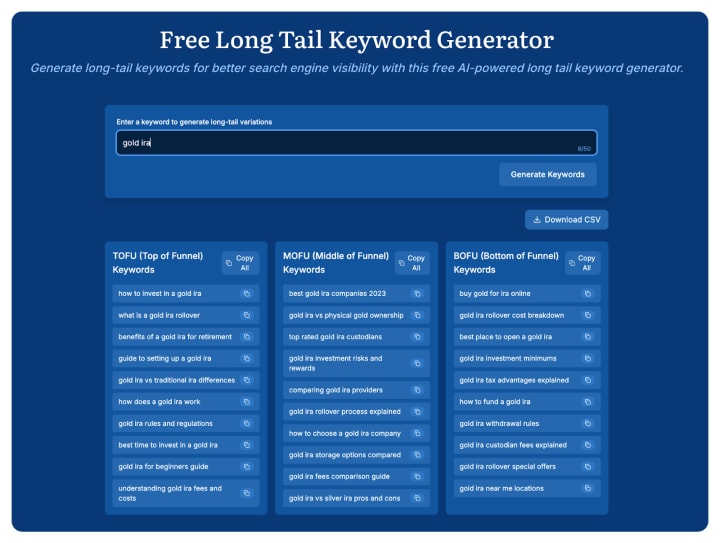
The Answer Socrates platform is one of the most effective tools for uncovering question-based long-tail keywords.
How to use it:
- Enter a broad term like "retirement planning"
- Get hundreds of long-tail variations grouped by intent
- Export the list and sort based on your content goals
Bonus: Filter by informational, commercial, and transactional intent.
2. Explore Google Autocomplete
Start typing your seed keyword into Google and take note of the suggestions.
Pro tip: Try adding words like "best," "how to," or "for beginners" to spark more specific searches.
3. Dive Into Google’s “People Also Ask” Section
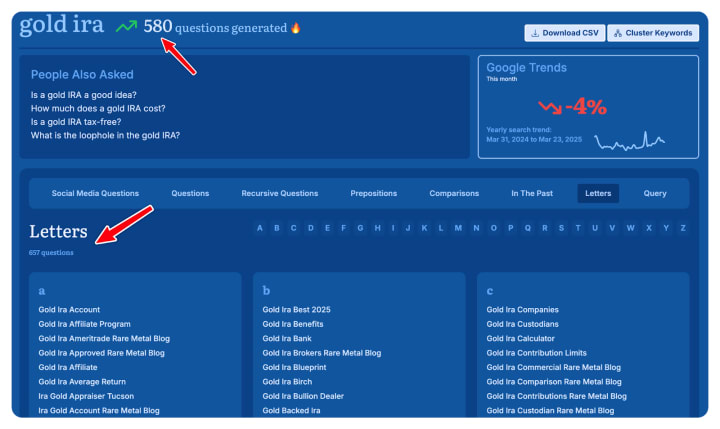
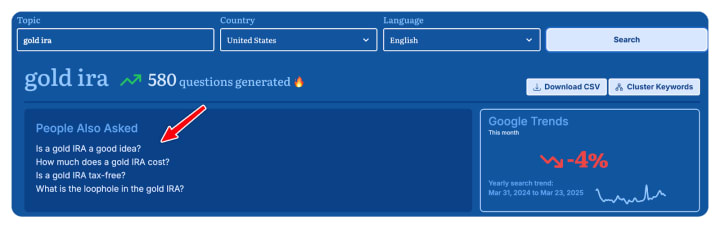
Google's People Also Ask boxes reveal real questions people are asking.
Use these insights to build FAQ sections and support content.
4. Scan the Related Searches at the Bottom of SERPs
Often overlooked, these search queries can guide you to lesser-known but valuable long-tail terms.
5. Analyze Competitors' Top-Performing Pages
Use tools like Semrush or Ahrefs to reverse-engineer what keywords your competitors rank for.
Look for gaps in their coverage you can capitalize on.
6. Use Support Logs and Chat Transcripts
Your sales and support teams have a goldmine of keyword data. Look for common questions and issues.
7. Use Filters in SEO Tools to Find Low Difficulty, Long-Tail Phrases
Filter by KD (keyword difficulty) and longer word count in platforms like Ubersuggest, SE Ranking, or Surfer SEO.
Mapping Long-Tail Keywords to the Marketing Funnel (TOFU, MOFU, BOFU)
TOFU (Top of Funnel): Awareness stage
- Example: "How to save for retirement in your 30s"
- Content: Blog posts, guides
MOFU (Middle of Funnel): Evaluation stage
- Example: "Best retirement investment options for millennials"
- Content: Comparisons, case studies
BOFU (Bottom of Funnel): Decision stage
- Example: "Open Roth IRA account online today"
- Content: Product pages, service landing pages
This structure allows you to target users at every stage of their journey.
How to Use Long-Tail Keywords Effectively in Content
1. Group by Topic for Better Organization
Create content clusters:
- One main "pillar" page
- Multiple sub-pages targeting related long-tail queries
2. Match Intent with Content Type
- Informational? Use blog posts and guides
- Transactional? Use product or service pages
3. Optimize On-Page SEO Elements
- Title tags
- Meta descriptions
- H2/H3 headings
- Image alt tags
4. Use Keywords Naturally in Body Text
Don't stuff! Focus on readability and context.
5. Add Internal Links to Related Pages
Improve site structure and SEO performance.
Avoid These Common Long-Tail Keyword Mistakes
- Keyword stuffing
- Misaligning intent
- Creating shallow content
- Neglecting regular updates
Measure Success with the Right Metrics
Use tools like Google Search Console and GA4 to track:
- Keyword rankings
- Click-through rates
- Time on page
- Conversion rates
Final Thoughts: Long-Tail Keywords Are the Future of SEO
In a crowded digital world, specificity wins. Long-tail keywords help you:
- Reach high-intent audiences
- Improve conversion rates
- Outrank bigger competitors
With tools like Answer Socrates, Google Trends, and competitor insights, you can craft a scalable SEO strategy that brings real business results in 2025.
Need help implementing your long-tail strategy? Share this article or drop your questions below!
About the Creator
James Oliver
I help entrepreneurs build profitable online businesses. Sharing proven strategies and insights as I grow my own affiliate marketing business to $1M per year.
Keep reading
More stories from James Oliver and writers in 01 and other communities.
Best Google Trends SEO Tactics for 2025: A Complete Keyword Strategy Guide
Disclaimer: This content was generated using AI. Ever wonder how some sites ride viral waves at just the right time? Whether it’s holiday shopping or a sudden celebrity moment, they always seem to strike while the iron’s hot.
By James Oliver9 months ago in 01
Navigating Cryptocurrency Asset Recovery
The challenging environment of digital asset theft and loss has given rise to a specialized sector focused on recovery. This field consists of companies with distinct operational models, from direct investigation to technical support and foundational analytics. The following outlines five notable entities often referenced in this space, categorized by their primary function.
By Milan Robertsabout 11 hours ago in 01
Mobile App Development Costs Seattle Companies Need to Know
It usually happens in a quiet conference room or at a kitchen table turned into an office. A Seattle business leader studies a proposal and feels conflicted. The number makes sense on paper. It fits the spreadsheet. Yet something about it feels incomplete.
By Mary L. Rodriqueza day ago in 01



Comments
There are no comments for this story
Be the first to respond and start the conversation.