
Belgium Telecom Market Size and Forecast 2025–2033
Digital Transformation, 5G Expansion, and Competitive Disruption Reshape Belgium’s Telecom Landscape


Belgium Telecom Market Outlook (2025–2033)
The Belgium Telecom Market is on a steady growth trajectory, driven by infrastructure modernization, rapid digital transformation, and rising demand for high-speed connectivity across mobile, broadband, and enterprise communication services. According to Renub Research, the market is expected to expand from US$ 11.02 billion in 2024 to US$ 14.4 billion by 2033, registering a CAGR of 3.02% during 2025–2033.
As one of Western Europe’s most mature telecom environments, Belgium combines strong regulatory oversight with advanced network infrastructure. While market growth is moderate compared to emerging economies, Belgium’s telecom sector continues to evolve through 5G rollout, fiber-optic expansion, service convergence, and the entry of disruptive low-cost operators.
Belgium Telecom Industry Overview
Belgium’s telecom industry plays a central role in enabling the nation’s digital economy. It supports seamless connectivity for consumers, enterprises, and public institutions through a wide array of services, including mobile communication, fixed-line telephony, broadband internet, cloud connectivity, and enterprise networking solutions.
The market is characterized by:
High infrastructure quality, especially in urban and industrial regions
Strong competition among established operators
Regulatory emphasis on fair pricing, service quality, and universal access
Growing convergence of mobile, fixed-line, internet, and TV services
Telecom providers are continuously investing in fiber broadband and 5G networks to keep pace with evolving customer expectations. The industry is also increasingly aligned with broader EU priorities such as cybersecurity, sustainability, and digital inclusion.
A notable shift occurred in December 2024, when DIGI Belgium entered the market as the fourth mobile network operator. Its aggressive pricing strategy significantly altered Belgium’s telecom pricing dynamics and intensified competition in a market long criticized for high data costs.
Key Factors Driving Belgium Telecom Market Growth
1. Expansion of 5G and High-Speed Networks
The rollout of 5G technology is a cornerstone of Belgium’s telecom growth. With ultra-low latency, faster speeds, and massive device connectivity, 5G is reshaping both consumer experiences and industrial applications.
Telecom operators are prioritizing:
Dense urban 5G coverage
Industrial 5G for manufacturing, logistics, and healthcare
Support for IoT ecosystems and smart infrastructure
Regulatory backing for spectrum allocation and public–private partnerships is accelerating nationwide deployment. As businesses increasingly rely on real-time data, automation, and connected devices, 5G adoption will remain a critical growth lever.
2. Rising Demand for Converged and Bundled Services
Belgian consumers are increasingly favoring bundled telecom offerings that combine mobile, fixed-line, broadband, and television services. These converged solutions offer simplicity, cost efficiency, and a unified customer experience.
For operators, bundled services:
Improve customer retention
Enable cross-selling opportunities
Differentiate offerings in a saturated market
In the enterprise segment, bundled packages now often include cloud connectivity, cybersecurity services, collaboration tools, and managed networks, reflecting the growing complexity of business communication needs.
3. Digital Transformation Across Public and Private Sectors
Belgium’s ongoing digital transformation is significantly boosting demand for robust telecom infrastructure. Sectors such as:
Healthcare (telemedicine, digital records)
Education (e-learning platforms)
Government (e-governance, smart public services)
Enterprises (remote work, cloud adoption)
…all rely heavily on secure, scalable, high-capacity networks. Telecom providers are increasingly positioning themselves as digital service enablers, not just connectivity suppliers, by supporting cloud platforms, edge computing, and AI-ready networks.
Challenges in the Belgium Telecom Market
Regulatory Complexity and Competitive Pressure
Belgium’s telecom sector operates under strict national and EU-level regulations. While these rules ensure consumer protection and fair competition, they also:
Increase operational complexity
Limit pricing flexibility
Extend licensing and compliance timelines
Market saturation further intensifies competition, compressing margins—particularly for smaller players that lack the scale to invest aggressively in network upgrades.
Infrastructure Deployment and Rural Connectivity Gaps
Despite strong urban connectivity, some rural and less densely populated regions still face challenges in accessing high-speed broadband and advanced mobile services. High deployment costs and lower returns on investment often slow infrastructure expansion in these areas.
Bridging this digital divide requires:
Public funding and subsidies
Regulatory incentives
Collaboration between telecom operators and government bodies
Ensuring nationwide digital inclusion remains a strategic priority for Belgium’s long-term telecom development.
Belgium Telecom Market Overview by Regions
Antwerp Telecom Market
Antwerp stands out as one of Belgium’s most significant telecom hubs. High urban density, strong commercial activity, and its role as a logistics and shipping center drive robust demand for enterprise-grade connectivity.
Operators in Antwerp are heavily investing in:
Fiber-optic broadband
5G expansion
Smart city initiatives
Public–private partnerships are further accelerating digital innovation, making Antwerp a trendsetter for next-generation telecom services.
Walloon Brabant Telecom Market
Walloon Brabant is emerging as a fast-growing telecom region, supported by:
Knowledge-based industries
Research institutions and universities
Expanding urban infrastructure
Demand for enterprise connectivity, cloud services, and collaborative platforms is rising rapidly. Government-backed digital initiatives and smart infrastructure projects are reinforcing telecom’s role in regional economic development.
Flemish Brabant Telecom Market
Benefiting from proximity to Brussels, Flemish Brabant features a diverse telecom landscape with strong demand from:
Business services
Healthcare institutions
Academic and research centers
The region is a priority area for fiber and 5G deployment, supported by digital government programs and smart city investments. High-performance connectivity is essential for maintaining the region’s competitiveness and innovation-driven growth.
Recent Developments in the Belgium Telecom Industry
April 2025: Telenet launched TADAAM mobile services, offering unlimited data plans starting at EUR 25 per month, including 5G access and eSIM-based activation.
March 2025: Proximus increased mobile data allowances across consumer and business plans without price hikes, strengthening customer value propositions.
December 2024: DIGI Belgium entered the market with disruptive pricing—EUR 5 per month for 15 GB mobile data and EUR 10 per month for 500 Mbps fiber broadband—aiming to cover 30% of households with 5G by 2025.
These developments highlight intensifying competition and a clear shift toward affordability and data-centric offerings.
Belgium Telecom Market Segmentation
By Service Type
Voice Services
Data Services
IoT Services
OTT and PayTV Services
Other Services (Messaging, VAS, etc.)
By End User
Enterprises
Consumers
By Provinces
Antwerp
Walloon Brabant
Flemish Brabant
West Flanders
East Flanders
Limburg
Liège
Namur
Hainaut
Luxembourg
Competitive Landscape and Company Analysis
The Belgian telecom market is dominated by a mix of established incumbents and emerging challengers. Key players include:
Proximus – Market leader with strong mobile, fixed, and enterprise portfolios
Orange Belgium – Known for competitive mobile and converged offerings
Telenet – Strong presence in broadband, TV, and mobile services
DIGI Belgium – Disruptive entrant focusing on ultra-low pricing
Lycamobile Belgium – Niche MVNO targeting international and value-conscious users
Each company is analyzed in the report through:
Corporate overview
Key management
Recent developments
SWOT analysis
Revenue and strategic positioning
Final Thoughts
The Belgium Telecom Market is entering a transformative phase marked by technological advancement, competitive disruption, and evolving consumer expectations. While growth remains moderate, the sector’s strategic importance to Belgium’s digital economy is undeniable.
The expansion of 5G, continued fiber rollout, increasing service convergence, and the entry of cost-disruptive players like DIGI Belgium are reshaping market dynamics. At the same time, regulatory complexity and rural connectivity gaps present ongoing challenges.
Looking ahead to 2025–2033, telecom operators that balance infrastructure investment, affordability, innovation, and regulatory compliance will be best positioned to capture value in Belgium’s increasingly data-driven and digitally connected future.
About the Creator
Janine Root
Janine Root is a skilled content writer with a passion for creating engaging, informative, and SEO-optimized content. She excels in crafting compelling narratives that resonate with audiences and drive results.
Keep reading
More stories from Janine Root and writers in 01 and other communities.
GCC Smart TV Market Size and Forecast 2025–2033
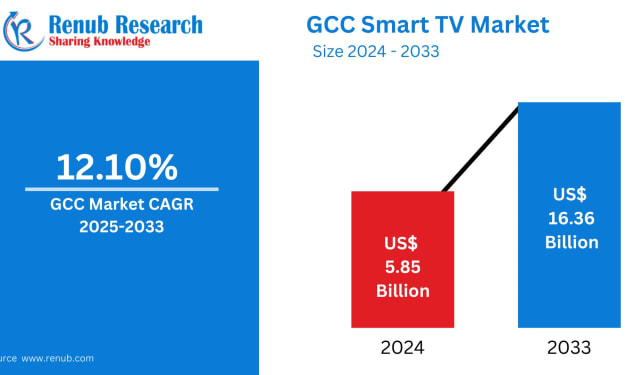
GCC Smart TV Market Overview The GCC Smart TV Market is undergoing a period of accelerated transformation, driven by rapid digitalization, rising internet penetration, and shifting entertainment consumption patterns. According to Renub Research, the GCC Smart TV Market is expected to grow from US$ 5.85 billion in 2024 to US$ 16.36 billion by 2033, registering a robust CAGR of 12.10% during 2025–2033.
By Janine Root 26 days ago in 01
Italian Brainrot: Gen Alpha
If you walk through a bustling piazza in Milan or stand near a school gate in Rome during the afternoon rush, you might hear a conversation that feels like a glitch in the linguistic matrix. You’ll see a group of twelve-year-olds, dressed in matching tech-fleece tracksuits, shouting about "Skibidi," debating who has the most "Aura," and accusing each other of being from "Ohio." To anyone born before the year 2010, this sounds like a collective mental breakdown. But to the architects of this new reality—Generation Alpha—it is the only language that makes sense.
By Teodor Monescu3 days ago in 01



Comments
There are no comments for this story
Be the first to respond and start the conversation.