
Being Human Online: Finding Your Voice in the Age of AI
In a world where content is faster, smarter, and everywhere — staying real might just be your strongest strategy.

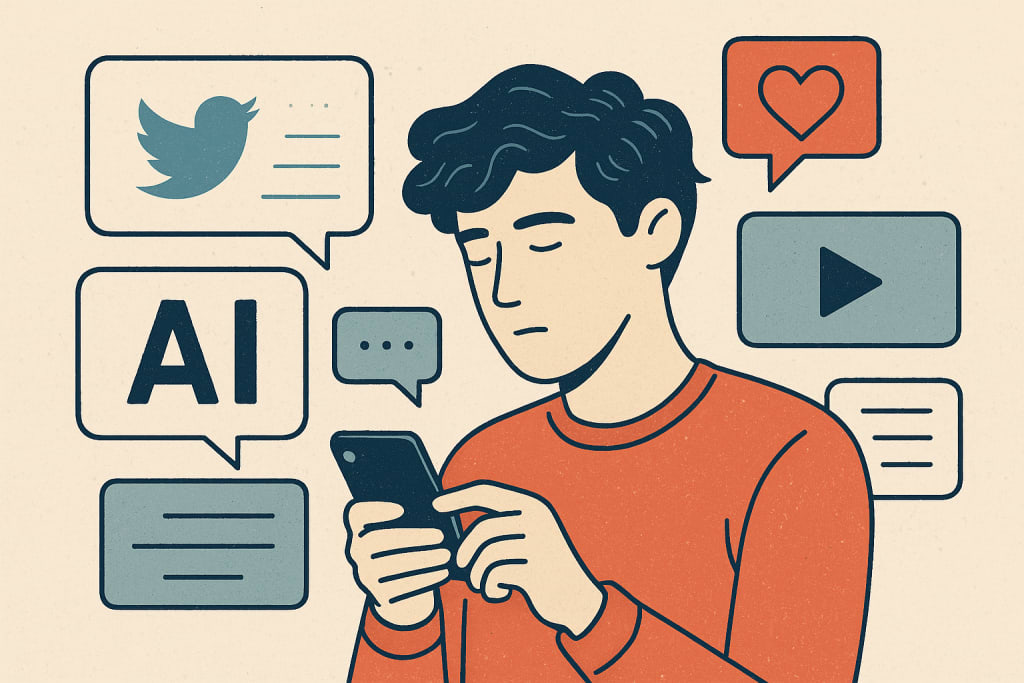
It’s 2025. Every scroll, swipe, and search feels like it’s powered by some version of artificial intelligence. And in a way — it is. AI writes tweets. AI recommends posts. AI even suggests what you should care about today.
So what happens to our own voices?
Whether you're building a personal brand, running a small creative account, or just trying to be heard in the noise, one thing’s becoming clear: authenticity isn’t optional anymore — it’s your only real currency.
Here’s what I’ve learned trying to stay real in a space that’s increasingly... well, synthetic.
1. AI Is a Tool — Not a Personality
There’s nothing wrong with using AI to help write or brainstorm. I use it all the time. But when everything you post feels like it was written by a template, people check out.
The trick is using AI like a flashlight, not a megaphone.
I’ll often ask a chatbot to help structure a messy idea — but then I rewrite it, trim the fluff, add a story or doubt, and make it mine. One of my most shared posts started as a cold AI draft and turned into a real reflection that began:
“Not sure if this will resonate, but I’ve been thinking about…”
That kind of uncertainty? It’s human. And people notice.
2. Don’t Be an Expert — Be a Person
A lot of online advice right now feels like it’s written from a mountaintop. “10 things you MUST do.” “Here’s why everyone else is wrong.”
But when I started writing from the middle of the journey — not the end — people responded more.
Instead of “Here’s how to build an AI product,” I tried “I’m learning how to build with AI — here’s what’s working and what’s weird.”
That shift created space for others to join the conversation. No one likes being talked down to — especially by a stranger online.
3. Imperfection Builds Trust
It’s tempting to polish every post until it’s perfect. AI tools even help you do that. But I’ve found that sometimes, imperfection performs better.
Typos? A weird analogy? A half-formed idea?
As long as it’s honest — it lands.
People are more likely to engage with something that feels like it came from someone, not a corporate ghost.
Think about the last post that made you pause. It probably didn’t look like a press release. It probably looked like a person thinking out loud.
4. Consistency > Virality
There’s a quiet pressure in today’s social media culture: go viral or go unnoticed.
But here’s what I’ve learned from creators I admire — the ones with real communities, not just big numbers: they show up consistently, not explosively.
Whether it’s Twitter, LinkedIn, Threads, or somewhere else, being present three times a week with thoughtful posts does more over time than chasing a viral hit once a month.
One friend of mine grew from 1K to 30K followers by doing one thing: sharing one insight per day. No growth hacks. Just rhythm.
5. Ask Real Questions — Not Just for Engagement
We all know the tricks:
“Agree or disagree?”
“Drop a 🔥 if you relate.”
But real engagement starts with curiosity — not prompts.
Try asking questions you genuinely want answers to. Like:
“Anyone else feeling overwhelmed by how fast AI is moving?”
“What’s one tech trend you hope doesn’t catch on?”
“Do we actually like the future we’re building?”
These aren’t hooks. They’re invitations. And people can feel the difference.
Final Thought: Be a Signal, Not Just Noise
The internet isn’t short on content. It’s short on people willing to show up as themselves.
In a world where AI can write a thousand words in a second, your biggest advantage is being someone others want to hear from — not because you're perfect, but because you're real.
So use the tools. Experiment with the tech. Try new platforms. But don’t lose the thing algorithms can’t replicate:
Your point of view. Your voice. Your presence.
About the Creator
Ava Thornell
share my own experience of using social media
Keep reading
More stories from Ava Thornell and writers in 01 and other communities.
Why Smart Management Matters in the Age of AI-Driven Twitter
I remember when Twitter was chaotic — but in a human way. A place where journalists debated late into the night, comedians tested raw jokes, and ordinary people shared fragments of their day. It was messy, often brilliant, and undeniably alive. Today, it still is all those things — but also something else entirely. Something algorithmic. Something… AI.
By Ava Thornell7 months ago in 01



Comments
There are no comments for this story
Be the first to respond and start the conversation.