
Avoid These 5 Critical BIM Mistakes That Can Delay Your Construction Project
Avoid These 5 Critical BIM Mistakes That Can Delay Your Construction Project

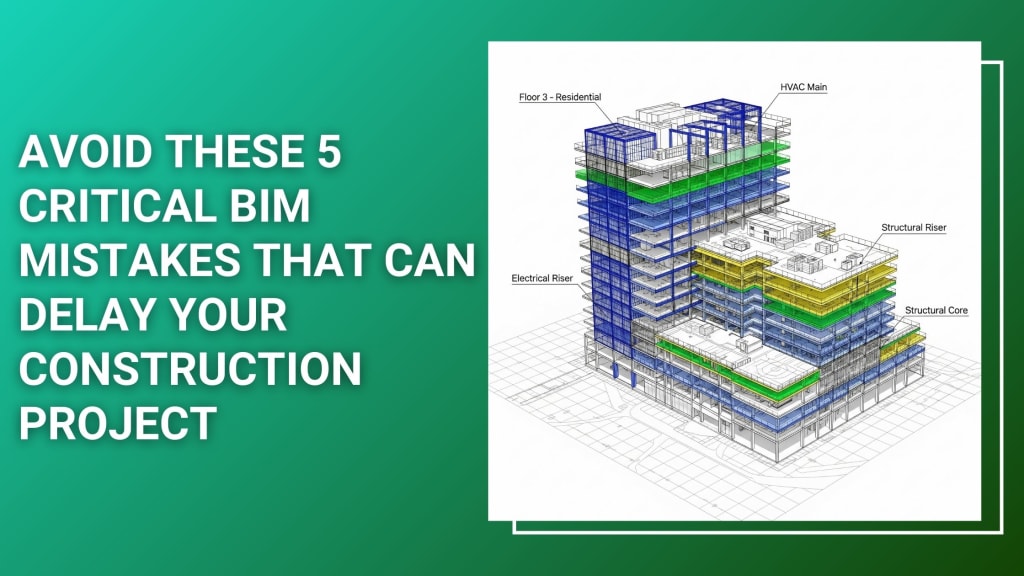
Delays in construction are not just an inconvenience, they cost money, impact reputations, and can derail carefully planned schedules. While Building Information Modeling Services have become a reliable foundation for managing complex projects, the way these services are implemented makes all the difference. Even experienced teams can run into trouble if certain aspects of the process are overlooked.
Below are five critical mistakes that often slow down projects, with insights on how to keep them from disrupting your schedule.
Poor Coordination Between Trades
A structural frame might be modeled perfectly, an HVAC layout might be functional and electrical routing might be accurate but if these elements are not coordinated, the project will eventually hit a standstill. This is where misaligned priorities between teams can become a serious issue.
When each trade works in isolation, their models may clash in ways no one notices until the coordination review, or worse, during installation on site. For example, ductwork placed without considering beam positions might require complete rerouting once steel is erected. That kind of redesign at a late stage means lost time, additional shop drawings, and rescheduling of other activities.
Consistent model exchanges, joint review sessions, and early integration of BIM Shop Drawings keep everyone on the same page. When structural, architectural, and MEP models are updated in sync, potential conflicts are spotted and resolved while they are still manageable.
Inaccurate or Incomplete Input Data
The strength of any model depends on the accuracy of its starting data. If the project begins with outdated floor plans, incomplete survey information or unverified point cloud scans, those errors will travel through every stage of modeling.
In the context of BIM Engineering Services, this problem can manifest as misplaced walls, incorrect slab thickness, or equipment sizes that don’t match real-world specifications. On site, these discrepancies may cause construction crews to stop work while revised layouts are issued, which in turn disrupts other scheduled activities.
Reliable projects begin with validated data. Thorough site verification before modeling prevents the constant back-and-forth of revisions. By feeding accurate measurements into BIM Modeling Services from the start, the resulting output is dependable and project timelines remain intact.
Overlooking Level of Detail Requirements
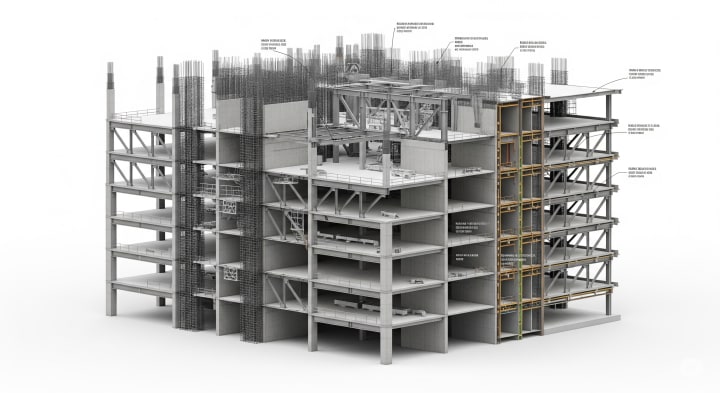
Not every stage of a project needs the same amount of detail. Providing too little detail in early design can lead to assumptions during construction, while adding excessive detail too soon can overload the model and slow coordination reviews.
This becomes especially problematic in projects where BIM Shop Drawings are required for fabrication. Over-modeling small components during the initial design phase wastes resources and complicates updates when design changes occur. On the other hand, if fabrication-level detail is delayed until the last moment, contractors might not have the information they need to proceed without interruptions.
A balanced approach means setting the right Level of Detail (LOD) for each stage and updating it progressively. This allows the model to remain manageable while still providing the necessary information at the right time.
Delayed Clash Detection and Issue Resolution
Leaving clash detection until the end of the modeling process is a common misstep. By that stage, any conflicts discovered are more disruptive, as multiple drawings and schedules may already be in place.
Projects that apply clash detection early and revisit it regularly are far less likely to encounter these last-minute disruptions. Whether it’s structural steel colliding with ductwork or piping crossing electrical trays, early identification avoids the ripple effect of changes that would otherwise hold up work in multiple areas.
Within Building Information Modeling Services, scheduling regular coordination reviews with clash detection tools is one of the most practical ways to maintain steady progress. Small adjustments made early have a fraction of the impact compared to large-scale revisions closer to deadlines.
Weak Change Management Process
No matter how well a project is planned, design changes are inevitable. Clients revise layouts, site conditions demand adjustments, or new equipment specifications are introduced. The problem isn’t the change itself, it’s how the change is handled.
If updates are not tracked, verified and communicated promptly across all teams, inconsistencies begin to surface. A modified floor plan that doesn’t make it into the mechanical layout can cause installation delays. Similarly, a structural adjustment not reflected in the BIM Shop Drawings can halt fabrication until the correct information is issued.
An effective change management process means every update passes through a clear sequence logging, review, approval and model integration. By working with experienced teams providing BIM Engineering Services, you can reduce the risk of outdated information circulating on the project.
Bringing It All Together
Construction delays caused by BIM-related mistakes are often avoidable. Inaccurate starting data, uncoordinated trade models, excessive or insufficient detail, late clash detection, and poorly managed changes all share a common trait, they start small but grow into bigger problems when left unchecked.
By embedding strong coordination practices into your workflow, validating data before modeling, applying the right detail at the right time, addressing clashes early and tracking every change carefully, you can maintain both momentum and accuracy.
BIM Services are at their most valuable when they support a project’s schedule rather than disrupt it. Professionals who treat each stage of modeling as an opportunity to prevent delays rather than react to them, deliver work that is not only accurate but also dependable from design through construction.
About the Creator
lisa Brown
Building Information Modelling delivers high quality out performing designs in Electrical BIM Services. We collectively work as a team and we believe in delivering end to end solutions in electrical designs and drawings.
Keep reading
More stories from lisa Brown and writers in 01 and other communities.
BIM Handoff Issues Between Architects and Contractors | How to Avoid Data Loss
A successful building project relies heavily on accurate data exchange between different teams. One of the most critical points in a construction project is the handoff from architects to contractors.
By lisa Brown6 months ago in 01
Asia Pacific Prebiotics Market Size and Forecast 2025
Asia Pacific Prebiotics Market: A Region Poised for Gut-Health Revolution The Asia Pacific prebiotics market is entering a transformative decade. With rising health awareness, aging populations, expanding functional food industries, and rapid advancements in biotechnology, prebiotics have become a central ingredient in modern nutrition strategies across the region. According to Renub Research, the Asia Pacific Prebiotics Market is expected to reach US$ 5.83 billion by 2033, growing from US$ 2.14 billion in 2024, at a robust CAGR of 11.77% from 2025 to 2033.
By Janine Root 3 days ago in 01
How to Choose a Web Design Agency for Long-Term Product Growth
If you are looking at a site like a catalog of past work and thinking about hiring a web design agency for B2B and product teams, you are probably already past the phase where “making it look good” is the main problem.
By Valeriia Shulga5 days ago in 01




Comments
There are no comments for this story
Be the first to respond and start the conversation.