
Are we ready for the mass adoption of Web3 wallets?
Let's take a closer look at this question and see what's holding us back and what's driving us forward.
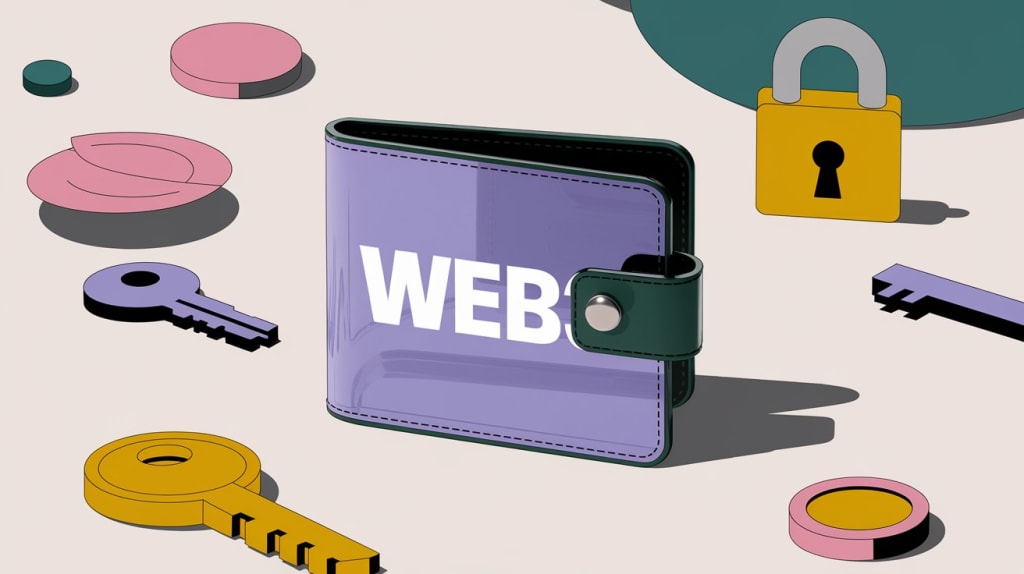
Let's be honest: Web3 wallets are like the Swiss Army knives of the blockchain world. They're multifaceted, complex and endlessly useful, but they can also seem a bit intimidating to anyone who isn't a developer or crypto enthusiast. So, are we ready for mass adoption? Let's take a closer look at this question and see what's holding us back and what's driving us forward.
First, What Exactly Is a Web3 Wallet?
Before diving in, let’s get our definitions straight. A Web3 wallet isn’t just a glorified crypto piggy bank. It’s your passport to the decentralized world. It allows you to store private keys, sign transactions, interact with smart contracts, and access dApps (decentralized applications). Popular examples include MetaMask and Trust Wallet.
Think of it as your control center for blockchain-based activity. But while the idea is fascinating, there’s one problem: Web3 wallets are still far from user-friendly.
The UX Conundrum: Are We Designing for Users—or Devs?
Ever tried explaining how to back up a 12-word seed phrase to someone who just downloaded a crypto wallet for the first time? “Write it down on paper, but don’t save it on your phone. Keep it somewhere safe but accessible.” Doesn’t exactly scream mass adoption, does it?
The reality is that most Web3 wallets are designed for tech-savvy users who know what a private key is and how to avoid phishing scams. The average user? They just want to “click and go,” not play tech support for themselves.
Take the example of MetaMask, one of the most popular Web3 wallets out there. It’s a powerhouse, no doubt. But its interface can feel like deciphering hieroglyphics for a beginner.
A Solution in Sight: Account Abstraction
Thankfully, blockchain developers are catching on to this problem. Enter account abstraction, the tech-world’s answer to making wallets more user-friendly. With this feature, users can execute transactions without managing private keys directly. Instead, smart contract Web3 wallet development (like those built on Ethereum’s ERC-4337) enable features like:
Social Recovery: Lose your keys? Friends or family can help you recover your account.
Gasless Transactions: Transactions where someone else pays the gas fees, making the process smoother.
Multi-Signature Wallets: A wallet that requires multiple approvals for key transactions, adding an extra layer of security.
With these advancements, we might finally have a chance to make Web3 wallets as easy to use as PayPal. If you’re curious, this blog breaks down how ERC-4337 is paving the way.
Security vs. Convenience: A Blockchain Tug-of-War
Let’s talk security. The “not your keys, not your crypto” mantra sounds great until someone loses their private keys or falls victim to a phishing scam. For most people, the thought of managing a private key is as appealing as reading through the tax code.
But here’s where things get even trickier: The more user-friendly we make wallets, the more centralized they often become. Services like custodial wallets (e.g., Coinbase Wallet) offer simplicity but come at the cost of decentralization. On the other hand, fully decentralized wallets give you complete control—but require a steep learning curve.
Can we have both? It’s an open question, but developments like hardware wallets (e.g., Ledger, Trezor) and multi-factor authentication (MFA) for Web3 wallets offer a glimmer of hope.
The Role of Wallet Infrastructure in dApp Ecosystems
Another hurdle? Ecosystem fragmentation. While some wallets support Ethereum, others work exclusively with Solana, Polygon, or BNB Smart Chain. And let’s not even get started on the hoops users have to jump through to bridge tokens between chains.
Interoperability is the name of the game here. Wallet providers need to focus on making their solutions work seamlessly across multiple blockchains. Protocols like WalletConnect are making headway in this area, enabling users to access dApps across ecosystems with a single wallet.
But will we ever have a truly universal wallet? Or is that as mythical as a gas-free Ethereum?
Scaling Challenges: Can Wallets Keep Up with the Masses?
It’s not just about making wallets user-friendly or secure. We also need to ensure that wallet infrastructure can scale to support millions—or even billions—of users.
Layer-2 solutions like Arbitrum and Optimism are helping alleviate some of these issues. They allow users to transact on Ethereum at lower costs, which is critical for wallet adoption. Curious about how they work? This guide dives into the nitty-gritty of Layer-2 scaling.
Education: The Missing Piece of the Puzzle
If Web3 wallets are ever going to go mainstream, we need to talk about education. And no, I don’t mean lengthy whitepapers or YouTube tutorials hosted by crypto bros.
We need relatable, digestible content that helps people understand how wallets work—and why they matter. For instance:
- Why do you need to back up your seed phrase?
- What’s the difference between a custodial and non-custodial wallet?
- How do wallets interact with smart contracts?
Educational initiatives like Ethereum’s Dev Docs and community forums like r/ethereum are excellent resources for anyone looking to level up their knowledge.
So, Are We Ready for Mass Adoption?
In a word: almost.
We’ve made significant progress, no doubt. From account abstraction to Layer-2 scaling, the building blocks are there. But until we solve the trifecta of usability, security, and scalability, Web3 wallets won’t be ready to replace traditional financial tools for the average user.
That said, the future is bright. With continued innovation and a focus on user education, we’re inching closer to a world where Web3 wallets are as common—and as easy to use—as smartphone apps.
So, are we there yet? Not quite. But ask the same question five years from now, and the answer might surprise you.
About the Creator
Steven Sandes
Enthusiastic writer 👀
Keep reading
More stories from Steven Sandes and writers in 01 and other communities.
The Impact of DEXs on Traditional Finance
The financial industry has long been dominated by traditional institutions—banks, brokerages, and centralized exchanges (CEXs)—which have built up significant power and influence over the years. But in the world of blockchain, a new player has emerged that’s turning the tables: decentralized exchanges (DEXs). DEXs, with their promise of eliminating intermediaries, giving users full control over their funds, and offering more privacy and transparency, are starting to challenge the very foundations of traditional finance.
By Steven Sandesabout a year ago in 01
How Mobile App Development Supports Charlotte’s Growing Businesses?
I didn’t always believe a mobile app was a growth tool. For a long time, I saw it as an add-on — something useful once a business was already large, already complex, already stretched. Growth, I thought, came from sales, partnerships, and operations. Technology just followed along.
By Mike Pichai4 days ago in 01
Transforming Developmental Support Through Data-Driven Digital Care Solutions
Operant Systems is at the heart of an emerging trend that is centered around quantifiable improvement and ethical care provision to people with autism spectrum. Centered on clinical rigor and practical implementation, the organization presents solutions that bring technology into the therapeutic objectives. In this context, the application of autism software and operant behavior (ABA) is placed in the role of complementary components that facilitate the process of structured learning, regular reinforcement, and transparent tracking of progress in care facilities in the United States.
By Kashif Khan4 days ago in 01



Comments
There are no comments for this story
Be the first to respond and start the conversation.